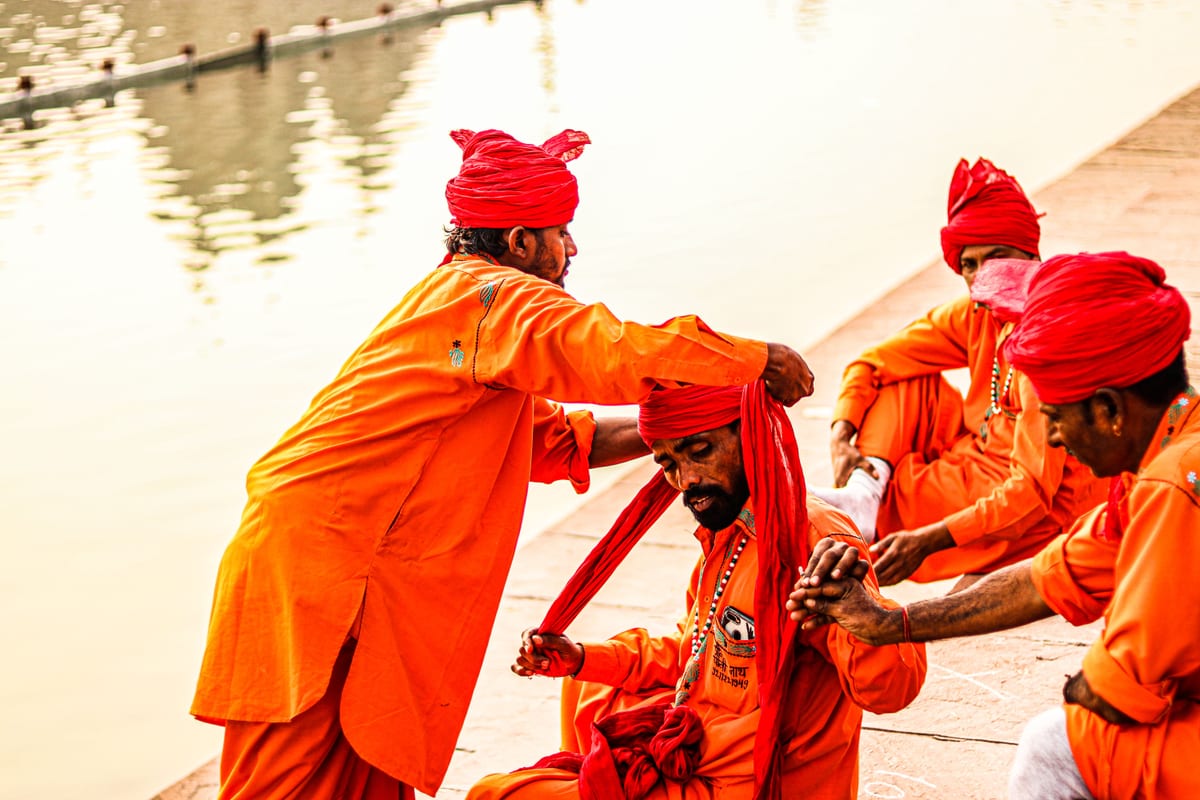
There is a moment, just before dawn, when you stand on the promenade at Somnath and the Arabian Sea is still dark and the temple behind you is lit gold, and you understand — instinctively, without a guidebook — that you are standing inside history rather than merely beside it. Somnath Temple in the Prabhas Kshetra region of Saurashtra, Gujarat, is one of the most consequential sacred sites on earth. It has earned that status through destruction, memory, and an almost unreasonable will to endure.
A Temple Born in Myth, Tested by Time
Somnath is one of the twelve Jyotirlingas — the radiant self-manifestations of Lord Shiva — and tradition holds that the Moon God, Soma, built the original temple here in gold. Ravana rebuilt it in silver, Krishna in wood, and the Yadavas in stone. Whether you receive these accounts as cosmology or poetry, they reveal something important: Somnath has never been understood as a human project. It is understood as a place where the divine made itself permanently available.
Historical scholarship confirms that the temple has stood here, in various forms, for well over a millennium. In 1025 CE, Mahmud of Ghazni came to its gates, drawn by accounts of its wealth and sanctity, and caused the most famous of its many destructions. What followed was swift and determined — local rulers and communities rebuilt the temple and refused to accept erasure. This pattern repeated across centuries, through Mughal rulers and colonial indifference. Each time, Somnath came back.
The Final Reconstruction and Its Meaning
The temple you see today was consecrated on 11 May 1951, with independent India's first Home Minister Sardar Vallabhbhai Patel overseeing the effort before his death. It was a deliberate act of civilisational statement: that a free India would restore what empires had tried to obliterate. President Rajendra Prasad performed the consecration ceremony. Somnath was being reclaimed as evidence that India's memory was intact.
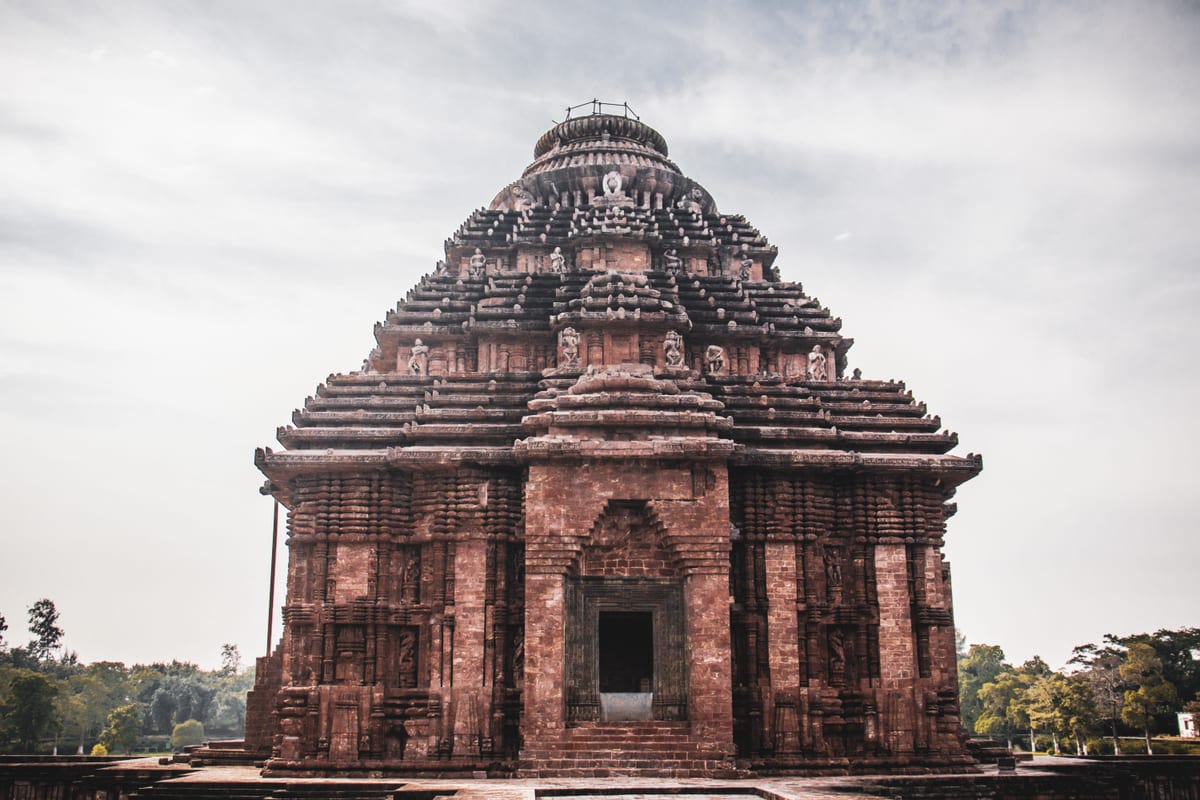
The current structure, built in the Chalukya style using Saurashtra stone, is a masterwork of proportioned elegance. The shikara rises 155 feet and is topped by a golden kalash and flag. A unique pillar — the Baan Stambha or Arrow Pillar — stands on the sea wall facing the ocean, inscribed with the declaration that there is no land between this point and the South Pole. You can learn more about the temple's heritage and significance through the official Somnath Temple page on Incredible India.
What Visitors Experience
To visit Somnath is to experience layered time. The morning aarti and the evening aarti are the anchors of any visit — rituals performed with a sincerity that pulls even the secular traveller into something larger. The sound of the conch, the smell of camphor, the sea wind cutting through the temple courtyard: these sensations feel continuous with something very old.
Beyond the main sanctum, the Somnath Trust maintains a complex that includes the Adi Shankaracharya's shrine, the Triveni Sangam where the rivers Kapila, Hiran, and Saraswati meet the sea, and a museum that places the temple's long history in accessible context. The shore temple of Prabhas Patan — associated with the final earthly moments of Lord Krishna — is nearby, giving the entire region a density of sacred geography.
The Sound and Light show held each evening at the temple is an effective way for first-time visitors to absorb the temple's twelve-destruction, twelve-resurrection history. Narrated with restraint and drama, it turns the ruins and reconstructions into a comprehensible story rather than a catalogue of dates.
Best Time to Visit and How to Get There
The ideal time to visit Somnath is between October and March, when the coastal climate of Saurashtra is mild and the humidity drops significantly. The Mahashivaratri festival, typically falling in February or March, transforms the temple and the surrounding town into a spectacle of devotion. If you can manage the crowds, this is when Somnath is most alive.
Somnath is well connected. The nearest airport is at Diu (approximately 63 km away) or the more frequently served Rajkot airport (approximately 190 km). The Somnath railway station connects to Veraval, which is itself connected to major Gujarat cities including Ahmedabad and Surat. From Veraval — just 6 km away — local transport to the temple is plentiful. By road, Somnath sits on the Saurashtra coastal circuit and is accessible from Junagadh (roughly 80 km) and Porbandar (roughly 120 km).
Nearby Attractions
Somnath is an ideal base for exploring the Saurashtra coast. Gir National Park — the last wild habitat of the Asiatic lion — is approximately 45 km away and represents one of India's great conservation stories. Diu, the former Portuguese enclave with its fort, beaches, and distinctive Indo-Portuguese architecture, is a short drive along the coast. Junagadh, with its ancient Buddhist caves and the Uparkot Fort, offers a different register of antiquity. The region rewards the traveller willing to spend at least three to four days rather than treating Somnath as a single-day detour.
Why Somnath Matters
India has no shortage of ancient temples. What Somnath offers is a visceral, documented narrative of survival. When you stand before the Jyotirlinga in the sanctum, you are participating in a continuity that has defeated erasure twelve times. That is a civilisational encounter. Somnath does not ask you to treat India's past as heritage in the archival sense — preserved, labelled, behind glass. It asks you to recognise that the past here is still breathing, still praying, still lighting its lamps before the sea.
Come for the aarti. Stay for the story. Leave understanding something about India that no museum, however excellent, could ever fully explain.