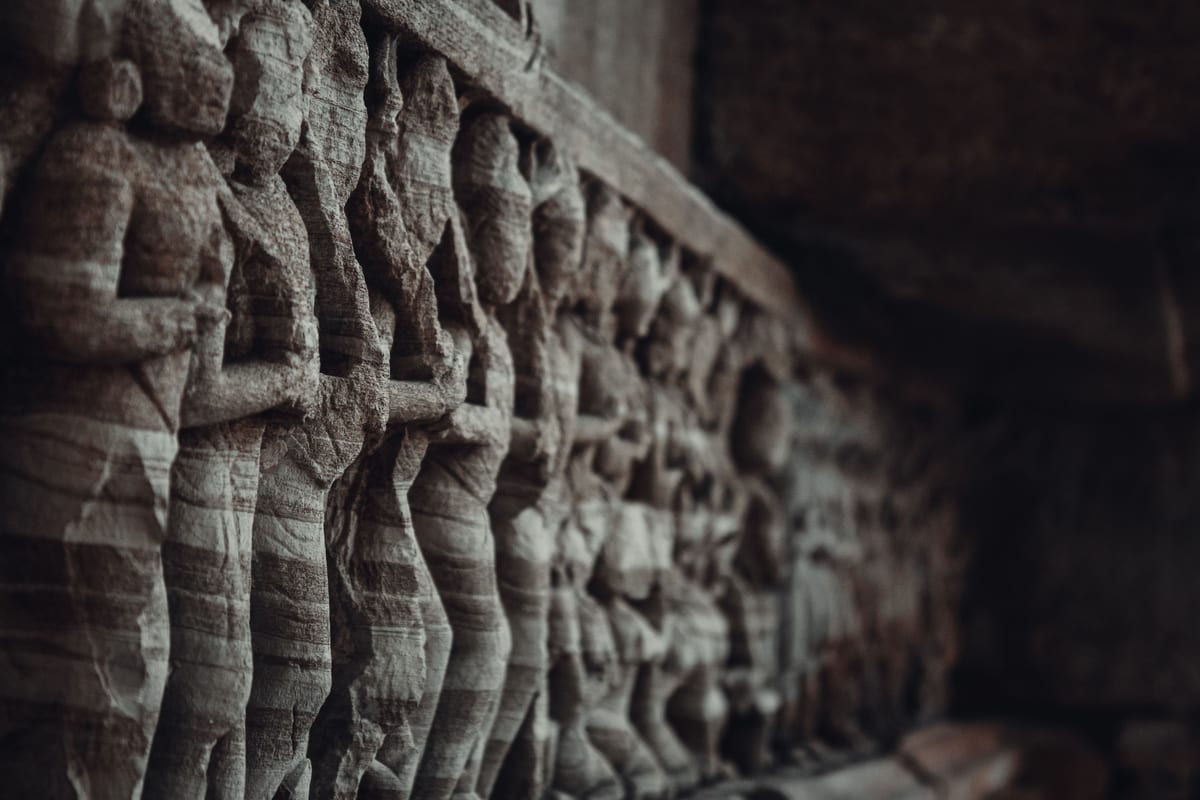
There are cities you visit, and then there are cities that visit you, that settle into your memory and refuse to leave. Varanasi is emphatically the latter. Known across centuries by its other names, Kashi and Banaras, this ancient city on the western bank of the Ganga in Uttar Pradesh does not merely attract travellers; it summons them. Pilgrims, philosophers, poets, artists, wanderers and the simply curious have all made their way here, drawn by something that defies easy description. Call it gravity. Call it grace. Varanasi has both in abundance.
A City That Predates History
Mark Twain, who visited Banaras in the nineteenth century, wrote with characteristic precision: "Banaras is older than history, older than tradition, older even than legend." Varanasi is widely regarded as one of the oldest continuously inhabited cities on earth. According to legend, this is the place where the first ray of light touched the earth, a founding myth encoded in its very name. Kashi derives from the Sanskrit word Kash, meaning "to shine," and the city has worn the title City of Light ever since. Revered as the earthly abode of Lord Shiva, Varanasi holds a place of unparalleled sanctity in Hindu cosmology. It is one of the seven sacred cities of Hinduism, and for millions of devotees, to die in Kashi is to be granted liberation, moksha, from the cycle of birth and rebirth. This is not metaphor. It is a living, daily conviction that shapes the rhythm of every street, every ghat, every flame.
The Ghats: Where the City's Soul Meets the River
If Varanasi has a defining image, it is the ghats, the broad stone stairways that descend from the old city to the edge of the Ganga, stretching for several kilometres along the riverfront. Each ghat carries its own history, its own deity, its own congregation of memory. Together, they form what the Incredible India Ministry of Tourism calls the spiritual heart of the city.
Dashashwamedh Ghat is the theatrical centrepiece of Varanasi's daily life. Every evening, as dusk dissolves into darkness, priests conduct the spectacular Ganga Aarti here, a fire-lit act of devotion that involves brass lamps, conch shells, incense, flowers and Sanskrit chants rising together in a crescendo that seems to lift the very air. To witness it from a wooden boat on the river, with the city blazing along the bank, is to understand why people say Varanasi does not need to be explained, it only needs to be felt.
Assi Ghat, at the southern end of the main ghat sequence, is the gathering point for Subah-e-Banaras, a serene sunrise ritual of yoga, classical music and quiet devotion that greets the dawn each morning. Time slows. The Ganga turns pink. A tabla plays somewhere in the mist. Tourists and locals sit side by side in silence.
Manikarnika Ghat is where Varanasi confronts you most directly with its deepest truth. One of Hinduism's holiest cremation grounds, it burns through the night and through the day, without pause. Funeral pyres are tended by the Doms, the community of cremation workers who have served this sacred role for generations. There is no morbidity here, only the city's quiet insistence that life and death are not opposites but companions. A wedding procession may pass a funeral cortege in the same narrow lane. The sacred and the ordinary are in conversation.
Beyond the River: The Living City
Step back from the ghats and into the labyrinthine lanes, the gallis, of the old city, and Varanasi reveals itself as a place of extraordinary creative energy. Banarasi silk is not simply a fabric; it is a civilisational inheritance. Master weavers, working on handlooms in narrow workshops, produce the gold and silver-threaded brocades that have adorned royal courts and wedding ceremonies for centuries. Watching a weaver at work, the shuttle flying through a dazzling geometry of thread, is to witness craft as meditation.
Varanasi has been a seat of classical learning for millennia. The Banaras Hindu University, founded in 1916, carries forward a tradition of scholarship that stretches back to the ancient gurukuls of Kashi. The city has nurtured some of India's greatest musicians, including the legendary sitarist Pandit Ravi Shankar and the shehnai maestro Ustad Bismillah Khan, who famously said he could not imagine his music apart from the Ganga. Classical music here is not performed, it is offered.
Civilisation, Uninterrupted
What makes Varanasi remarkable in global terms is not its antiquity alone, but its continuity. This is not a city that was great and then fell silent, waiting to be excavated and interpreted. Kashi has never stopped. The same rituals performed on these ghats today were performed a thousand years ago. The same Sanskrit verses echo from the same river. The same lamps are lit at the same dusk. India's civilisational story is often told through monuments, through forts and temples and inscriptions. Varanasi tells it differently: through the living, breathing, chanting, grieving, celebrating human beings who have kept its flame alight across an unbroken arc of history. Indian civilisation is not a memory. It is a presence.
When to Visit and How to Get There
Varanasi is a year-round destination, but the most comfortable time to visit is between October and March, when temperatures range from a pleasant cool to mild warmth. According to Incredible India's climate data, October sees temperatures between approximately 16°C and 36°C, while the winter months of December and January dip to a cool 4.5°C at night, perfect weather for early-morning ghat walks and evening aarti. The summer months from April to June can be intensely hot, with temperatures reaching above 43°C, while July and August bring the monsoon, which lends the Ganga a dramatic, swollen grandeur but makes some ghat areas inaccessible.
The nearest airport is Lal Bahadur Shastri International Airport (VNS), Varanasi, which is well connected to major Indian cities including Delhi, Mumbai and Bengaluru. For those who prefer the romance of rail, Varanasi Junction Railway Station (BSB) is a major hub on the Indian Railways network with connections across the country. Once in the city, auto-rickshaws, cycle-rickshaws and boat rides on the Ganga are the most atmospheric ways to move between attractions.
For further planning and official travel resources, visit the Varanasi page on Incredible India, the Ministry of Tourism's official portal, which also links to Kashi Tourism resources and a downloadable Kashi brochure.
A Final Word
Varanasi does not promise comfort. Its lanes are narrow, its crowds immense, its confrontations with mortality frank and unfiltered. But it offers something rarer than comfort: the sensation of standing inside a story that is still being told. Every traveller who comes here leaves changed, not because Varanasi is picturesque, though it is, but because it is honest. It shows you what endures. And in doing so, it quietly suggests that you might endure too.
Come for the aarti. Stay for the silence between the chants. Kashi will do the rest.