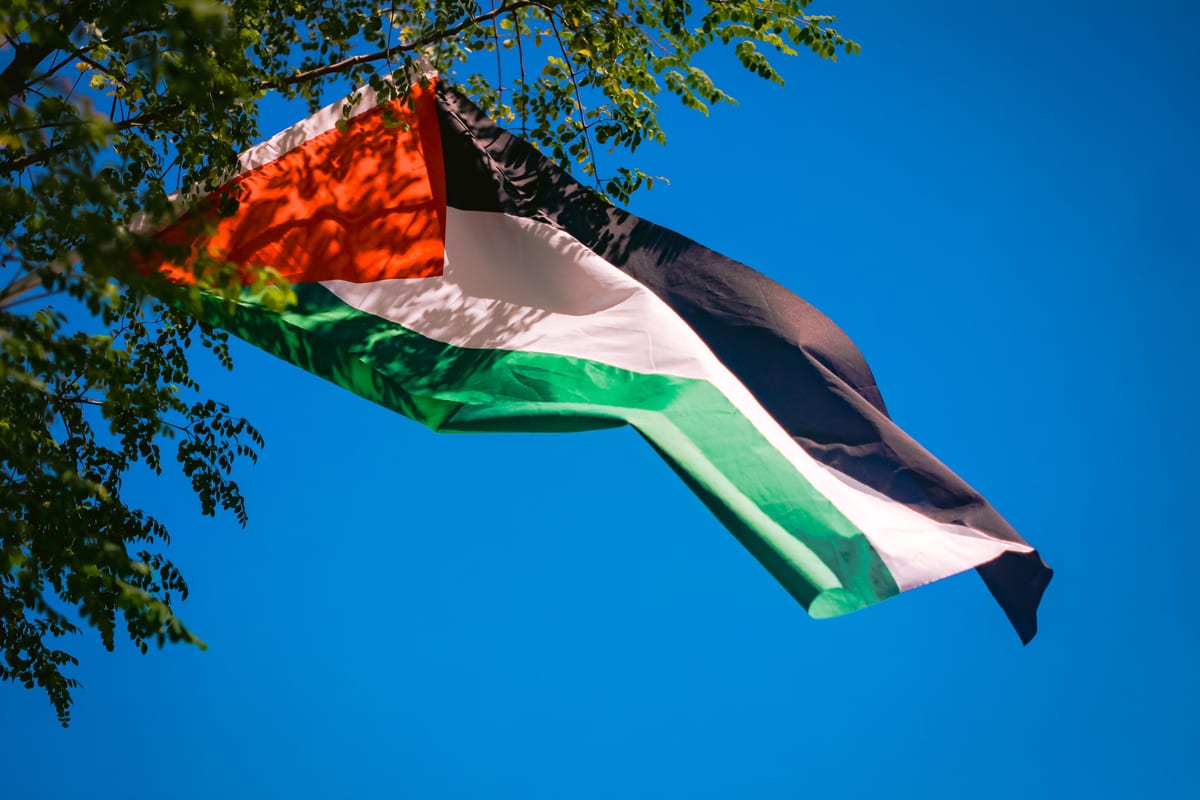
The occupied West Bank is no longer a slow emergency. The UN's human rights office warned this week that settler violence against Palestinian communities has reached an all-time high, with Israeli security forces documented as having "often" acted alongside settlers in attacks on civilian populations. New settlement approvals continue from Jerusalem even as international condemnation compounds. The UN's language — calibrated, bureaucratic, and therefore striking for its clarity — leaves little room for doubt: the occupation's violence is structural, not incidental.
The numbers and patterns the OHCHR describes are familiar to diplomats who track the region. What is new is the simultaneous convergence of documented security-force participation in settler attacks, the pace of settlement authorisation, and growing international demand for concrete response rather than further statements. The Security Council remains gridlocked on Chapter VII enforcement. What moves is opinion — and opinion in the Global South is moving fast.
The Architecture of India's Dual-Track
India has spent three decades building a position on Israel-Palestine that most Western analysts call a contradiction and most Indian strategists call deliberate choice. Since full diplomatic normalisation with Israel in 1992, New Delhi has deepened defence procurement — Heron surveillance drones, Barak air-defence systems, Spike anti-tank missiles — while maintaining its formal UN record in support of Palestinian statehood. The MEA has repeatedly stated that Israeli settlement expansion is inconsistent with international law. India has voted accordingly at the UN General Assembly. And it has continued buying Israeli hardware.
The logic is not cynical. India's defence procurement decisions reflect capability gaps that Israel's defence industry fills efficiently. The I2U2 grouping — India, Israel, the UAE, and the United States — represents a structural bet that West Asian economic architecture can be built around shared interests rather than shared sympathies. None of this requires India to endorse Israeli settlement policy. The dual-track remains internally coherent as long as the two tracks don't visibly converge.
What the OHCHR report does is make that convergence visible. When the UN documents Israeli security forces participating in settler attacks on Palestinian civilians, the political space between "we buy their drones" and "we oppose their occupation" narrows. India's partners in the Gulf — whose collective FDI into India has grown substantially and whose public opinion on Palestine runs high — notice the gap between Indian rhetoric and Indian procurement. India's dual-track will almost certainly survive. The question is what it costs.
The Global South Credibility Calculation
India's campaign for a permanent UN Security Council seat rests on a specific claim: that it represents not just its own interests but a broader constituency of nations historically excluded from the architecture of global governance. The Global South framing, which New Delhi has invested in through its G20 presidency and Voice of the Global South summits, depends on that claim being credible.
Settler violence in the West Bank is precisely the kind of issue where Global South credibility is tested — not by what a country says in a bilateral meeting, but by what it does in a multilateral room. C. Raja Mohan has argued that India's Israel policy is now firmly interest-driven rather than ideology-driven, and that New Delhi sees no contradiction in arming Israel while backing Palestinian statehood at the UN. That framing captures the strategic logic accurately. But Happymon Jacob's counter-observation carries equal weight: studied ambiguity serves short-term bilateral interests while eroding the principled Global South leadership that India is simultaneously trying to project.
The tension is real. But it is not a trap. India has navigated similar structural tensions before — on Russia after 2022, on Iran amid US sanctions pressure, on the South China Sea between ASEAN solidarity and bilateral caution with Beijing. In each case, the resolution was not to choose a side but to create institutional space for India's own voice. The West Bank demands something similar.
What a Constructive Indian Position Looks Like
Former Foreign Secretary Shyam Saran has consistently argued that India's support for Palestinian self-determination is a moral anchor, not a diplomatic bargaining chip — that it predates the defence relationship with Israel and should not be subordinated to it. That argument has strategic purchase beyond its moral content. India's credibility in Arab capitals, its access to Gulf investment, and its soft-power standing among majority-Muslim nations in Southeast Asia all partly rest on the perception that New Delhi's Palestine position is genuine.
Harsh Pant has noted that I2U2 participation signals a structural economic tilt toward Israel even as India preserves its UN voting record. That observation points toward a productive question: can India use its I2U2 presence to push Israel-adjacent economic architecture toward Palestinian inclusion rather than exclusion? Infrastructure investment, capacity development, and institution-building in Palestinian territories would demonstrate that India's Israel ties are not purchased at Palestine's expense — a demonstration that costs relatively little in bilateral terms and pays dividends in regional credibility.
India's non-permanent UNSC experience has equipped its diplomats with precise knowledge of how multilateral mechanisms can be constructed to do real work without triggering veto paralysis. A multilateral humanitarian monitoring mechanism for the West Bank — not a sanctions body, not a tribunal, but a monitoring body — is the kind of proposal India could advance without rupturing ties with Tel Aviv. It is consistent with international law, consistent with India's existing UN voting record, and consistent with the claim that New Delhi is a builder of international architecture rather than merely a consumer of it.
The Cost of Continued Silence
There is a version of Indian foreign policy that treats every difficult multilateral question as an opportunity for calibrated abstention. That version has a track record; it has also accumulated a reputation. The Global South mantle that India has claimed requires more than abstention — it requires the occasional willingness to put a proposal on the table, to risk displeasure with a bilateral partner in service of a multilateral principle.
The OHCHR's all-time-high warning on West Bank violence is not a crisis India caused and not one India can resolve. But it is a moment that will shape how dozens of countries — from Jordan to Indonesia, from South Africa to Brazil — read India's claim to speak for the global majority. The dual-track posture on Israel-Palestine has served New Delhi's immediate interests well. The structural question, arriving now with some urgency, is whether that posture can be upgraded from studied ambiguity into something that actually shapes outcomes. India's answer will say more about its UNSC ambitions than any campaign document.