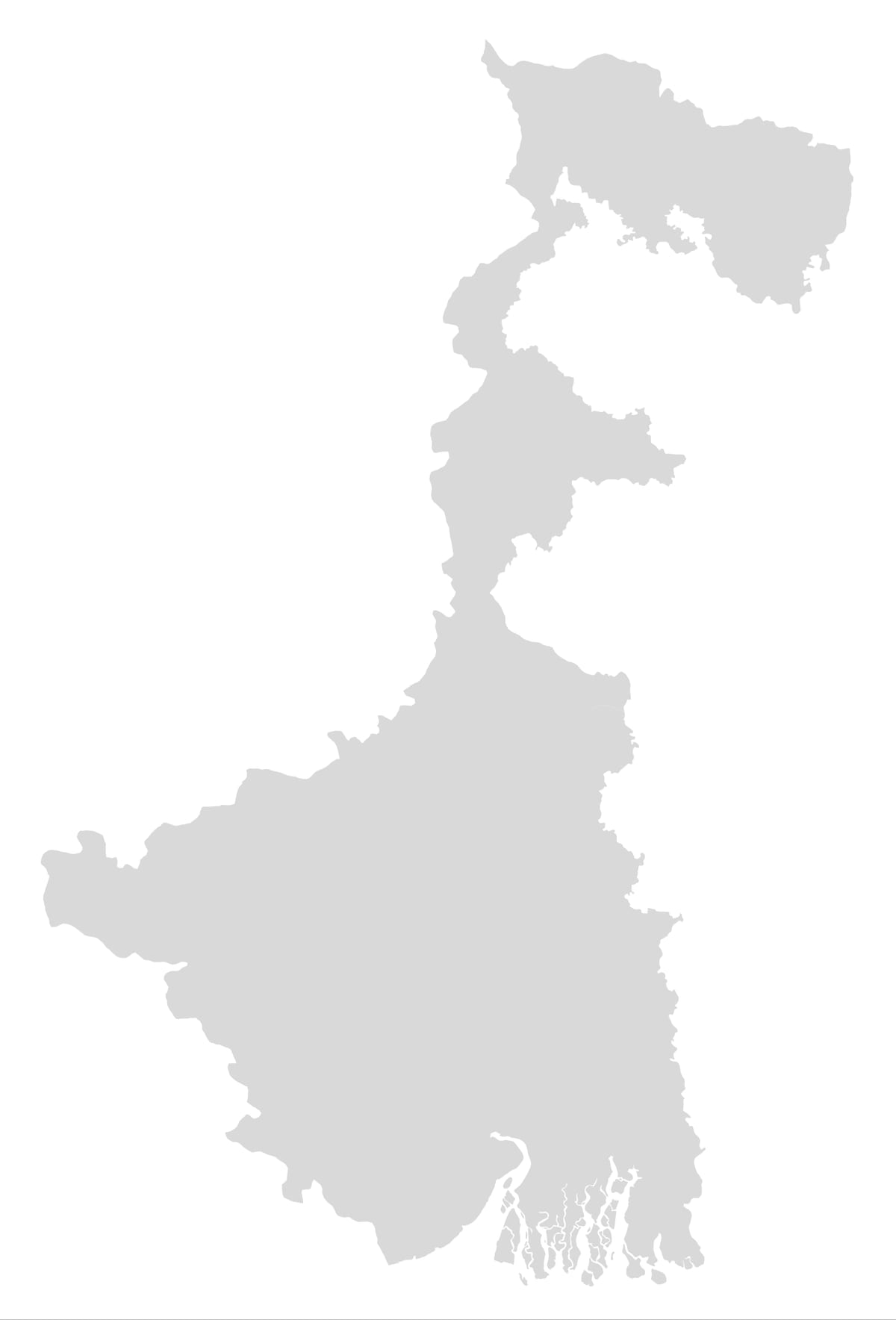
The West Bengal government will table a resolution to rename the state as 'Paschim Banga' in the assembly on December 9, a state cabinet member said after a meeting on Monday. The announcement revives a question that has shadowed the state's identity for over a decade: whether the English name imposed in colonial records should yield to a Bengali formulation.
"The proposal to rename West Bengal as 'Paschim Banga' will be tabled in the House on December 9," the cabinet member told reporters after the meeting. The resolution is the first formal step in a process that no state government can complete alone.
India Today also reported the December 9 date, though its headline misattributed the mover as the Leader of the Opposition, Suvendu Adhikari. The proposal belongs to the ruling Trinamool Congress government, which has long sought a Bengali name for the state.
What a name change actually requires
A state assembly resolution cannot rename a state. Article 3 of the Constitution vests that power in Parliament alone. The procedure is deliberate: the President must refer the bill to the state legislature for its views; only after those views are received, or the prescribed period expires, does Parliament debate and pass a law effecting the change.
West Bengal's assembly can express a preference. It cannot issue a decree. The distinction matters because it keeps the process anchored in the Union's legislative calendar, not in the arithmetic of a single state House. The Ministry of Home Affairs acts as the nodal body, receiving the state's proposal, coordinating the reference, and preparing the legislation for Parliament.
The federal arithmetic
This is not the first time a state government has sought to rename itself through this route. India has previously processed changes such as Orissa to Odisha and Uttaranchal to Uttarakhand. Each case moved through the same constitutional sequence: a state resolution, a presidential reference, a Home Ministry file, a parliamentary law, and finally a notification. West Bengal's proposal enters that queue with one complication: the state has previously floated a different name, 'Bangla', which did not reach Parliament.
That earlier attempt stalled in part over the multiplicity of scheduled-language names. A state's official name appears in the First Schedule to the Constitution in English, and the Hindi version carries its own transliteration. If 'Paschim Banga' is chosen, central agencies will need to decide what appears in Hindi and other scheduled languages. The earlier 'Bangla' proposal faced exactly this friction: 'Bangla' in Hindi could be rendered the same as Bangladesh, creating ambiguity in maps, passports, and statutory references.
Costs beyond cartography
A name change is not a cosmetic edit. Every central ministry, department, regulator, court, and public sector undertaking that operates in West Bengal would need to update its letterheads, seals, signboards, and databases. State government documents would follow. The Election Commission would need to revise electoral rolls. The Survey of India would reprint maps. Passport forms, PAN records, railway station boards, and university statutes carry the state's name; each revision consumes administrative hours and public money.
No central authority has published a cost estimate for the West Bengal proposal, and this omission is itself a problem. When the Union processes a state's name change, it should publish a clear cost-benefit assessment for central and state agencies, just as it would for any legislative change with cross-departmental consequences. The absence of such a figure allows the debate to be captured by sentiment rather than by the practical labour of implementation.
Linguistic identity, twice removed
The Trinamool Congress government has framed the move as an assertion of Bengali linguistic identity against a colonial-era name. 'West Bengal' is a directional English label, useful for administrators in Delhi and London but detached from the language spoken across the state. In Bengali, the state is already referred to as 'Paschim Banga' in everyday speech; the assembly resolution would formalise what citizens already say.
Yet the proposal arrives in a political climate where Bengal's identity is contested. The central government has invested heavily in West Bengal's infrastructure over the past several years, from city gas distribution projects to metro expansion and rail connectivity. That development narrative and the name-change narrative run on separate tracks, and the Union's response to the resolution will signal which track receives priority in the current legislative session.
The union-state calibration
India's federal structure treats a state name change as a legislative request with constitutional steps attached. The Home Ministry's job is to process the proposal transparently, insist on one name across all scheduled languages to avoid the earlier confusion, and move the bill through Parliament without unnecessary delay.
West Bengal should align its assembly resolution with Article 3 and consult opposition parties before the December 9 sitting. A resolution passed by majority without opposition input invites litigation and delay, two outcomes that serve no one's interest. The state's own history with the 'Bangla' proposal suggests that procedural shortcuts do not survive contact with the Home Ministry's file-room.
The deeper question for Indian readers is not whether West Bengal should be called Paschim Banga but whether India's constitutional process can absorb a state's linguistic self-assertion without turning it into a zero-sum contest between Kolkata and Delhi. The republic has done this before. It can do it again, provided the process is treated as a matter of law and administration, not as a gauge of political loyalty.