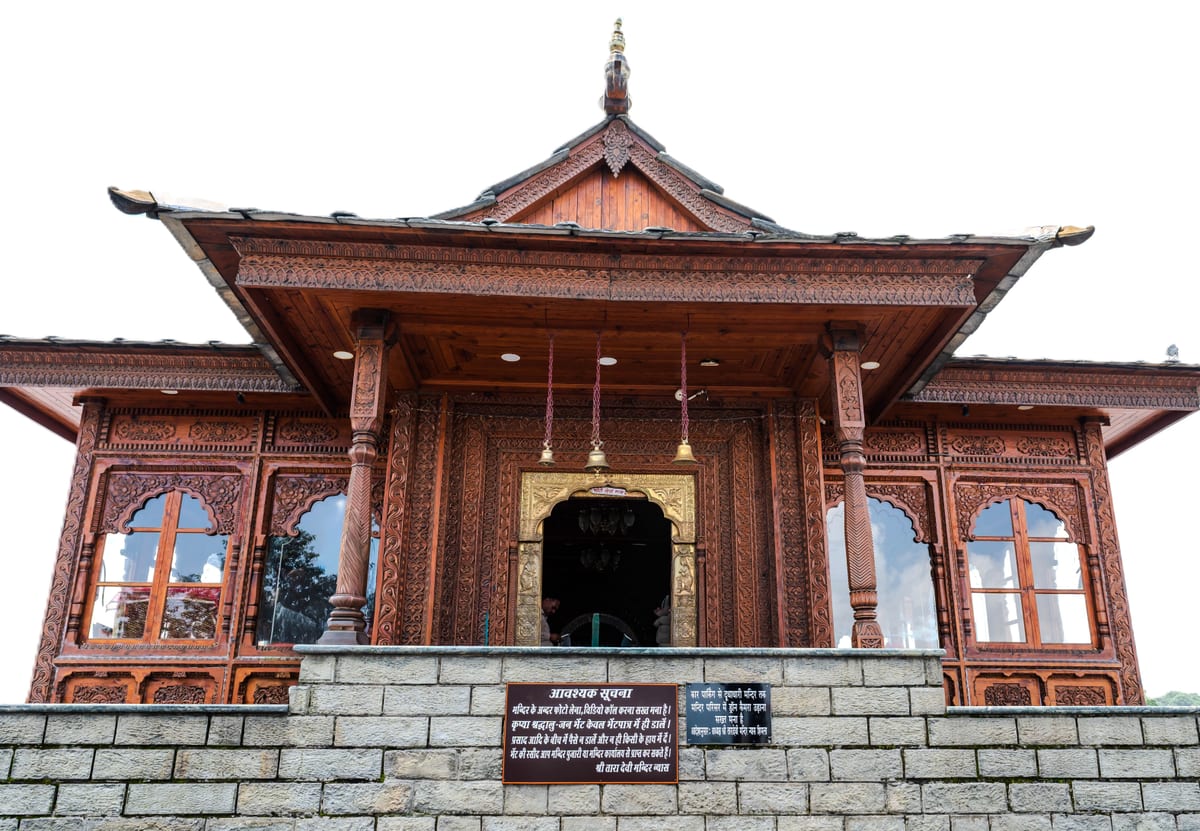
There are temples you visit, and there are temples that visit you, that stay lodged somewhere behind the sternum long after you have returned to the noise of ordinary life. The Hidimba Devi Temple in Manali, tucked inside a grove of ancient deodar cedars with the Kullu Valley spreading below and the Rohtang Pass brooding above, belongs unmistakably to the second category.
A Goddess Born from Complexity
To understand Hidimba Temple, you must first understand Hidimba herself, and she is not a straightforward figure. In the Mahabharata, she is introduced as a rakshasi, a demoness, sister of the fearsome Hidimb. When Bhima, the second of the Pandava brothers, encounters and defeats her brother, Hidimba does something unexpected: she falls in love. She marries Bhima, bears him a son, the mighty Ghatotkacha, and then steps graciously aside as the Pandavas continue their journey. The epic gives her a relatively brief role, but the people of the Kullu Valley transformed her into a presiding goddess.
This elevation of Hidimba from marginal character to deity is not unusual in India's spiritual tradition. India has long found the sacred in the unexpected, looked at a figure deemed dangerous or outside the mainstream and asked not how to exclude her but how to honour her. Hidimba Temple is a monument to exactly that instinct.
The Temple Itself: Wood, Stone, and Five Centuries of Faith
The structure that greets visitors today was built in 1553 CE by Raja Bahadur Singh of the Kullu royal family. What immediately strikes you is how unlike a conventional North Indian temple it looks. There is no soaring shikhara of sandstone here. Instead, the temple rises in a four-tiered pagoda of intricately carved wood, each tier smaller than the last, topped with a brass finial and adorned with carvings of animals, deities, and scenes from local lore. The style is distinctly of the Western Himalayan tradition, shaped as much by the forests that surround it as by the scriptures that inspired it.
The sanctum at the base is built around a natural rock outcropping, and it is this rock, not a sculpted idol in the conventional sense, that forms the primary object of worship. Hidimba's footprints are said to be embedded in the stone. Pilgrims bend low, touch the threshold, press their foreheads to the cool rock. The act is unhurried, unperformed. This is ritual for the goddess.
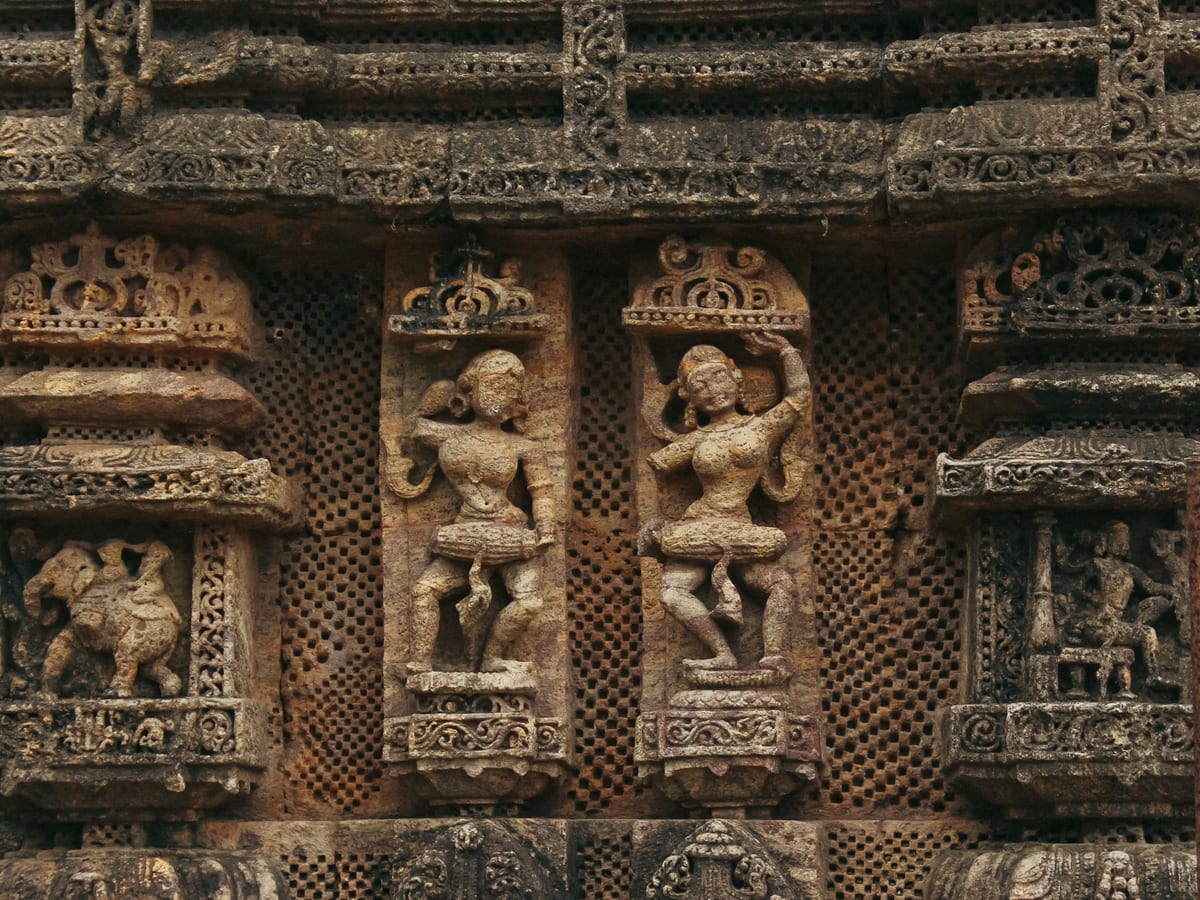
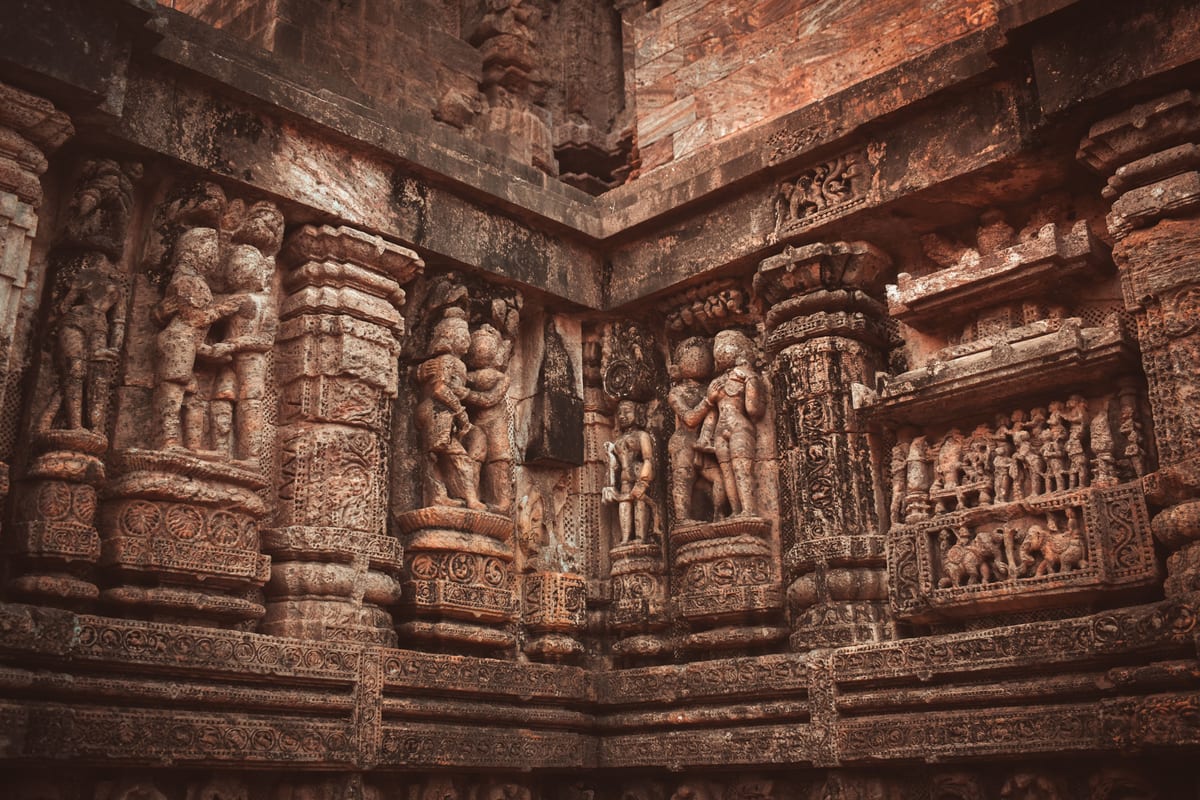
The wooden doorway to the sanctum deserves its own study. It is covered in carved panels depicting animals, deer, elephants, lions, alongside the ten avatars of Vishnu and scenes of hunting and forest life. The craftsmanship is extraordinary, the kind that makes you aware of how much skill and devotion were poured into what was, for its makers, simply an act of worship rather than an artistic statement.
Living Heritage, Not a Museum Exhibit
What keeps Hidimba Temple from becoming merely a heritage site is the fact that it remains a throbbing centre of community life. The annual Hidimba Devi Festival, held each May, draws locals from across the valley in numbers that dwarf the tourist footfall. The goddess is taken out in procession; there is music, dance, and the particular electricity of a town celebrating something it genuinely believes in. The Kullu royal family, whose ancestor built the temple, still maintains a ceremonial relationship with the shrine. That thread of continuity, from 1553 to the present, is not a curated performance. It simply never broke.
Even on an ordinary afternoon, the temple grounds have a quality of lived-in sacredness. Children chase each other around the deodar trunks. Elderly women sit with their backs against the compound wall, talking in Pahari. Yaks, brought in for the tourism season, stand impassively nearby. The air smells of pine resin, incense, and the cold that comes down from the passes even in summer. Past and present simply coexist here.
When to Go and How to Get There
The best time to visit Hidimba Temple is between May and October, when Manali is fully accessible and the deodar forest is a vivid, deep green. May is particularly rewarding if you can align your visit with the Hidimba Devi Festival. The post-monsoon months of September and October bring clarity to the mountain air and thinner crowds. Winter, from November through February, transforms the surroundings into a snowscape of rare beauty, though road conditions can be unpredictable.
Manali is well connected by road from Shimla (approximately 270 kilometres) and from Chandigarh (approximately 310 kilometres), both of which have regular Himachal Road Transport Corporation bus services as well as private operators. The nearest major airport is Bhuntar (Kullu-Manali Airport), about 50 kilometres from Manali town, with flight connections to Delhi. From Manali town centre, the temple is roughly two kilometres, an easy taxi ride or, for those who prefer it, a pleasant walk through the old town and into the forest.
What to Explore Nearby
The temple sits close to several other significant draws. Vashisht Village, just across the Beas River, houses ancient hot sulphur springs and temples dedicated to the sage Vashisht. The Manu Temple in Old Manali, believed to be the only temple in the world dedicated to the progenitor of mankind in Hindu cosmology, is a short distance away. For those drawn to the high passes, Rohtang Pass lies roughly 51 kilometres north and offers views that justify every hairpin bend on the drive up. The Great Himalayan National Park, a UNESCO World Heritage Site, is accessible from Kullu, about two hours south.
Why Hidimba Temple Belongs in India's Heritage Story
India's heritage conversation too often defaults to the monumental, the Taj, the ghats of Varanasi, the cave temples of Ellora. These are deserving of every word written about them. But Hidimba Temple offers something the grand monuments sometimes cannot: intimacy. It is a place where India's civilisational story is told not in marble and proclamation but in carved wood and quiet devotion, in a goddess reclaimed from the margins and a tradition that never needed a revival because it never died.
To stand before that pagoda in the deodar shade, to hear the bells and smell the incense and watch a child press a marigold to the threshold, this is to understand what it means for a culture to be alive.