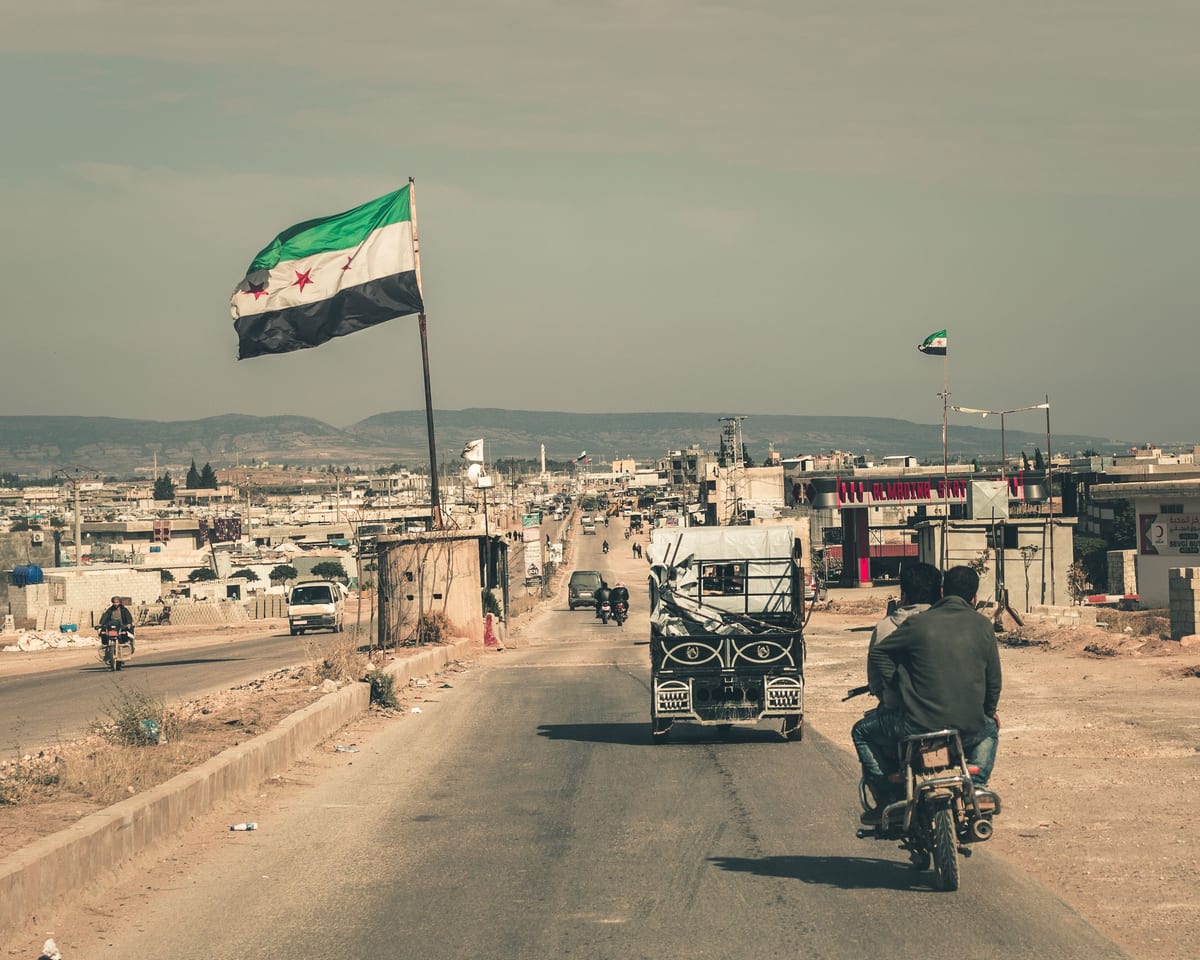
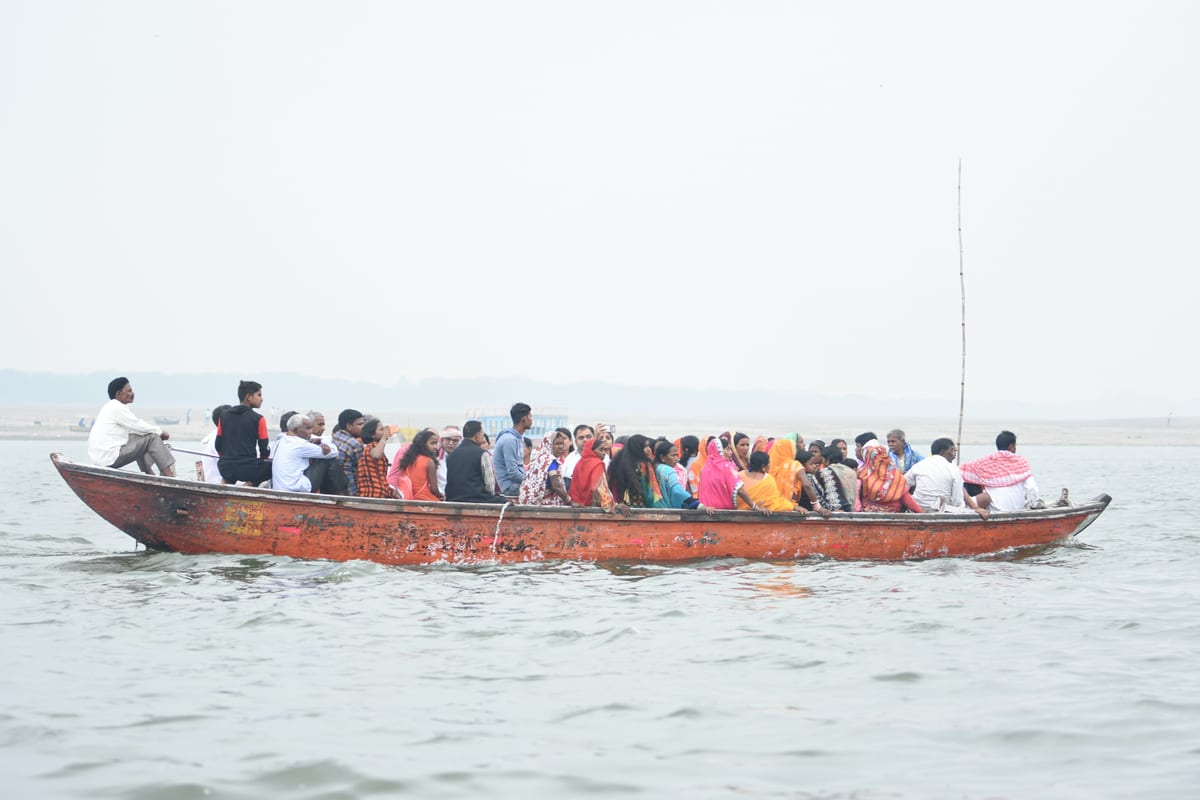
One hundred and forty-four people are dead or missing off the coast of Mauritania. They were not soldiers, not sailors — they were migrants from West Africa who paid whatever they had to board vessels pointed toward Europe, and the Atlantic took them. The UNHCR reported the toll as the result of a series of maritime incidents concentrated in a single week — a grim compression of a catastrophe that has been building across months and years along what migration analysts call the Atlantic route, the longest and deadliest sea corridor into Europe.
The Canary Islands route, as it is sometimes named, traces a path from the coastlines of Senegal, Mauritania, and The Gambia northwest through open ocean toward the Spanish archipelago. Irregular migration along this corridor has surged and subsided in cycles for two decades, but the current wave carries a particular desperation. The Sahel's agricultural collapse, accelerated by climate shifts and compounded by chronic governance failure across a belt of states from Mali to Niger, has produced the conditions that fill these boats. Europe's hardening of its Mediterranean borders has redirected the flow westward, toward a crossing that is longer, more exposed, and deadlier.
A Structural Failure, Not a Natural Disaster
International humanitarian reporting tends to frame tragedies like this one as elemental — the sea, the weather, the human impulse to move. The UNHCR's framing is more precise: these are "tragic maritime incidents," but the word "incident" does not capture the institutional architecture that produces them. People drown off Mauritania because the states they leave cannot provide livelihoods, because transit countries lack the capacity or the will to intercept unsafe vessels, and because destination states have decided that deterrence — making the journey more dangerous — is preferable to addressing why the journey begins.
That architecture has a name in development economics: the governance deficit of the post-colonial Sahel, a region where state capacity was never built to absorb the demographic pressures now arriving. The population of West Africa is among the fastest-growing in the world. Youth unemployment across the region runs at levels that no economy could absorb through formal channels. The rainfall patterns that small-scale farmers depend on have become unreliable in ways that no subsistence system can plan around. The causal chain from Sahelian underdevelopment to Atlantic drownings has been documented in UNHCR reports, World Bank analyses, and African Union frameworks for years. The gap is not diagnosis. It is political will and development finance.
Where India's Global South Claim Meets Its Limits
India has built a substantial rhetorical architecture around its role as the voice of the Global South. The Voice of the Global South Summits, convened by New Delhi in successive years, articulated a framework in which the world's developing nations deserved not just a seat at the table but a restructured table — one where debt relief, climate finance, and development governance were set by the communities that live with their consequences, not the creditor states that fund them. At the G20, India used its presidency to push the African Union's inclusion as a permanent member. These are genuine diplomatic achievements reflecting a coherent strategic vision.
But the test of that vision is not in summit communiqués. It is in whether India engages with the specific, structural failures that the Global South rhetoric is meant to address. West Africa's migration crisis is one of the clearest examples of those failures. Analysts at institutions tracking India's Africa engagement have noted a consistent pattern: Indian diplomacy on the continent is strong where commercial interests are clear — energy, pharmaceuticals, infrastructure contracts — and thin where the stakes are purely humanitarian or developmental in the slow-moving sense that migration crises represent. The gap is not unique to India; it mirrors the pattern of every major power's Africa engagement. But India's claim to a different relationship with the Global South makes the gap more visible.
This is not a criticism of intent. India's development finance capabilities are genuinely constrained relative to China's or the Gulf states'. The Indian Technical and Economic Cooperation programme, Lines of Credit through the Exim Bank, and South-South partnerships in agriculture and digital infrastructure represent real commitments. But they are calibrated toward bilateral relationships with governments, not toward the sub-state, community-level developmental investments — in irrigation, in vocational training, in local food systems — that determine whether a young man in Mali or Mauritania boards a boat or does not.
The Framing India Can Offer
What India can distinctively contribute to this conversation is not money — at least not at the scale the problem demands — but framing. The dominant European response to the Atlantic migration corridor has been deterrence: agreements with transit states to intercept boats before they leave, externalization of border controls, and development aid conditioned on migration management cooperation. This framing positions African states as migration policemen for European anxieties, and it has not worked. The death tolls continue because deterrence without development simply redirects desperation.
India's alternative framing — consistently articulated at multilateral forums, though rarely connected explicitly to West African migration — is that irregular migration is a development governance failure requiring structural investment, not a security problem requiring enforcement solutions. That framing aligns with positions India has held at the UN on refugee and migration issues, and it aligns with the self-interest of African states that chafe at the conditionality embedded in European migration diplomacy. The question is whether India will connect those dots explicitly, in the specific context of tragedies like the Mauritanian coast deaths, or whether the framing remains at the level of abstraction that never reaches the policy corridor between Dakar and Las Palmas.
Credibility Is Built in Specifics
Former Foreign Secretary Shyam Saran has written that India's multilateral credibility depends on consistent engagement with humanitarian norms, not selective invocation when bilateral interests are clear. The Mauritanian tragedy tests that proposition. There are no Indian nationals in these boats, no Indian diaspora community in Mauritania whose interests the MEA must manage, no strategic asset along the Atlantic route that New Delhi is protecting. The absence of a direct Indian stake is precisely what makes engagement meaningful — and its absence is noted.
The practical instruments are available. India's G20 engagement produced frameworks for development finance reform that remain largely unimplemented. The IBSA platform — India, Brazil, South Africa — brings together three Global South anchors with particular credibility in African development discourse. A structured call through IBSA for a development-led response to West African migration, timed to the UNHCR's reporting and framed as an alternative to Europe's enforcement architecture, would cost India little diplomatically and would build exactly the kind of substantive credibility that distinguishes a rising power's Africa strategy from a transactional one.
One hundred and forty-four dead in a week off one coast. The Atlantic is not waiting for summit architecture to catch up. The question India must answer — not in a press statement, but in the architecture of its multilateral engagement over the next year — is whether Global South solidarity is a posture assumed when convenient or a framework applied when inconvenient. West Africa's drowning migrants did not factor into any Indian strategic calculus. That, arguably, is the point.