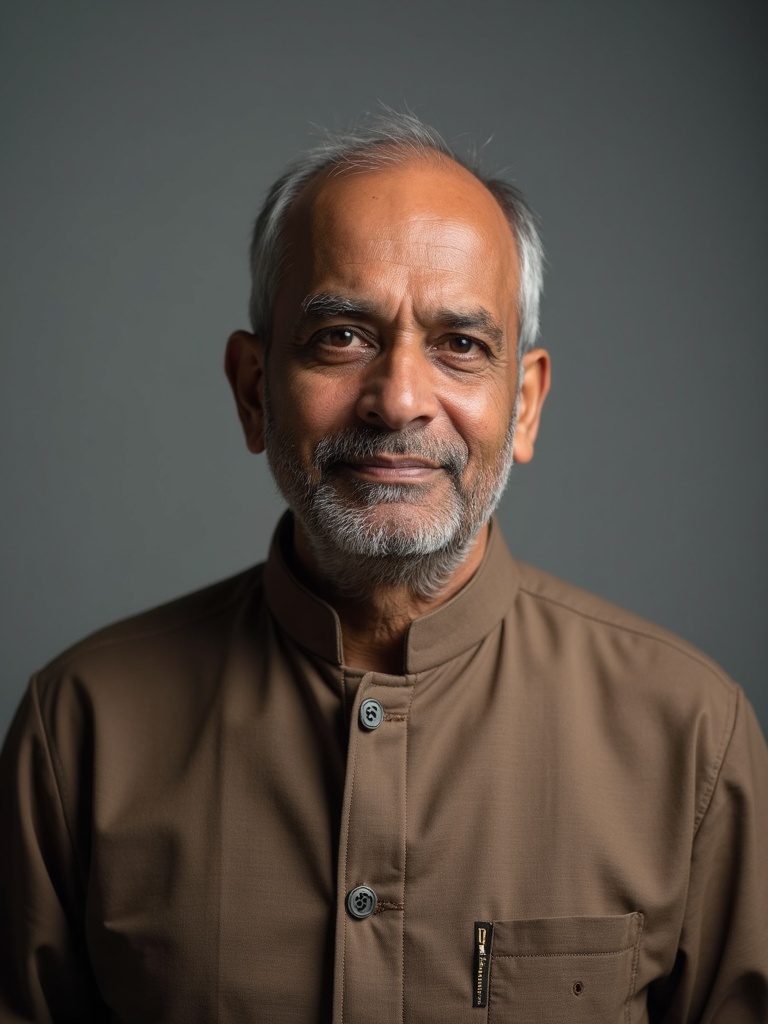
Ajinkya Shinde, organisation in-charge of the Cockroach Janta Party, has assumed leadership of the Jantar Mantar agitation following the detention of founder Abhijeet Dipke. His first instruction to supporters was both tactical and legally consequential: keep moving toward the designated protest ground, and wherever the police stop you, constitute the protest on that spot. The directive, reported by NDTV, transforms a fixed-location demonstration into a distributed civic action, reducing the party's dependence on any single site while raising the operational burden on Delhi Police. The target of the agitation remains unchanged: the resignation of Chief Election Commissioner Gyanesh Kumar over what the party alleges are irregularities in electoral rolls.
The succession was not improvised. In a pre-recorded message, Dipke named Shinde as the leader who would carry the protest forward while Dipke, Saurav Das, and Ashutosh Ranka remained in detention, according to LiveMint. The existence of a pre-recorded contingency demonstrates organisational preparation; it suggests the leadership anticipated arrest and built a command reserve. Shinde's formal title, organisation in-charge, places him at the centre of a hierarchy designed to survive the removal of its top tier.
The scale of preventive action has been substantial. LiveMint's live coverage reported that more than 1,500 people were detained in Delhi amid heavy security, mobile internet suspensions, and restrictions at several metro stations. The detentions cut across party lines: former Delhi chief minister Arvind Kejriwal and West Bengal chief minister Mamata Banerjee were among those taken into custody. The presence of elected chief ministers from opposition-ruled states on a detention list compiled for a protest over an institutional appointment shows how rapidly a narrow grievance can broaden into a general confrontation over democratic space.
Delhi Police have not, in the sourced material, articulated the specific legal provisions underpinning each detention. That absence creates a problem for public accountability. Preventive detention is a serious tool; without clear disclosure of the statutory basis, the line between maintaining order and suppressing permissible assembly becomes difficult to discern. The restrictions on mobile internet and metro movement compound the sense that the state is managing a threat rather than enabling a constitutional exercise. When the physical and digital pathways to a protest are closed before a single slogan is raised, the state's own actions invite scrutiny beyond the immediate question of who was arrested.
India's constitutional framework protects peaceful assembly subject to reasonable restrictions in the interest of public order. A refusal to permit a demonstration at a designated protest site, followed by mass detentions and the closure of transit nodes, raises the question whether the restrictions are calibrated to a specific, articulable disruption or are designed to smother the event entirely. Courts have long held that the power to regulate is not a power to prohibit. The CJP's demand, however aggressive its rhetoric, is directed at a constitutional functionary whose removal is a political question, not a public-order threat.
Shinde's instruction to stage the protest wherever supporters are stopped changes the tactical geometry. A fixed site such as Jantar Mantar concentrates the crowd and allows police to establish perimeter control; a mobile, stop-wherever-blocked protest disperses the crowd and forces authorities to manage dozens of potential assembly points simultaneously. The legal risk is equally clear: if a supporter, acting on Shinde's instruction, refuses to disperse after being told to do so, the resulting arrest can be framed as lawful enforcement of a prohibitory order. The CJP's leadership is betting that the optics of mass detention will outweigh the legal cost.
The personal stakes of the weekend became starker with the death of Dipke's paternal grandmother. LiveMint reported that Savitribai Dipke, aged 85, died at the family's native village in Maharashtra's Hingoli district hours after Dipke was detained by Delhi Police. No causal connection has been established, and none should be assumed; the timing will colour the party's public messaging and may strengthen the emotional pull of the agitation. A political movement that loses a founding leader to preventive custody and then loses an elder in the same news cycle is rarely in a mood for judicial patience.
The Election Commission's silence throughout this episode is itself a datum. The institution has not issued a statement on the allegations of electoral roll irregularities, nor has it commented on the demand for the Chief Election Commissioner's resignation. That silence can be read as institutional discipline or as a refusal to be drawn into a street-level contest. Either way, it leaves the field to the protesters and the police, two actors whose incentives rarely converge on calm. A constitutional body under public challenge does not strengthen itself by remaining mute while the streets around it fill with khaki and barricades.
For Indian democracy, the management of this protest is a test of the intermediate zone between order and speech. The state possesses legitimate tools to prevent violence and protect public property; it does not possess the authority to make assembly contingent on prior political approval in every case. The more the police rely on preventive detention and infrastructure closure, the more they concede the protest's central premise: that the normal channels of petition have failed. A designated protest site such as Jantar Mantar exists precisely to accommodate such demands within a controlled frame. When that site is denied by default, the state forfeits its own instrument of containment.
The organisational lesson from Shinde's succession is that arrest is no longer an effective way to decapitate a digitally networked protest. The pre-recorded message, the named successor, the explicit instruction to treat every barricade as a new assembly point; these reflect how this party understands Indian preventive detention and has built its tactics around it. That does not mean the CJP's claims are valid or its methods beyond reproach. It means the state's response cannot rely on the old arithmetic of custody. It must engage with the grievance, the evidence, and the institutional remedy, or it will find itself fighting a decentralised, iterated protest that no number of detentions can exhaust.
What should Indian readers take from this? The right to peaceful assembly is not ornamental; it is the mechanism by which citizens transmit pressure to constitutional institutions between elections. The CJP's demand may be procedurally aggressive, and its founder's arrest may have been lawful under existing orders. But a democracy that treats every unauthorised gathering as a public-order emergency will eventually produce either a cowed citizenry or a cynical one. The better course is transparent, proportionate enforcement with a visible path to legal redress. New Delhi's October weekend will be judged less by who was detained than by how quickly the constitutional conversation resumes.