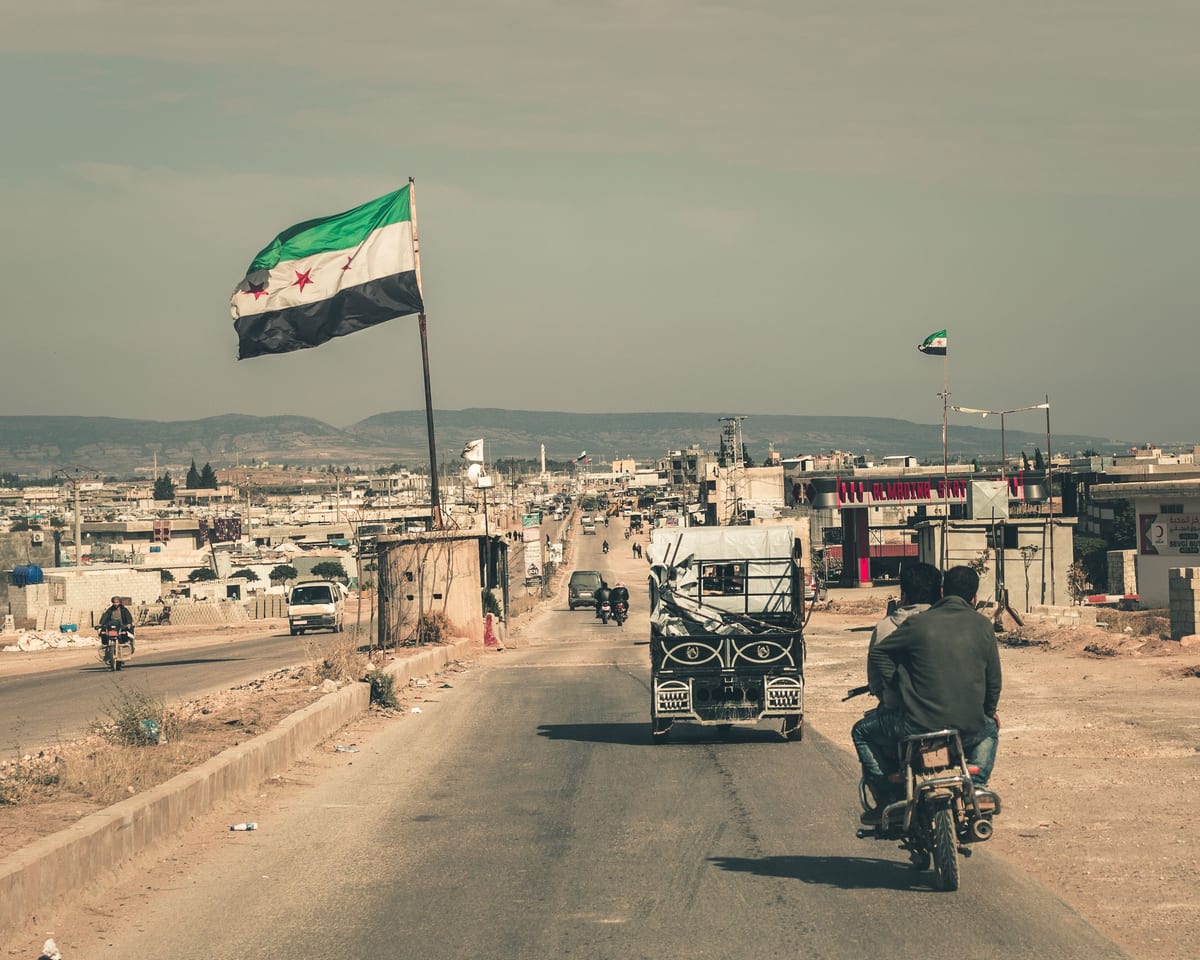

Arson attacks on mosques in Qusra and Kour. Lethal confrontations in Deir Jarir, Beit Furik, and Tel. Israeli settlers and Palestinians killed in the same spiral of violence. These facts drove the UK's Foreign, Commonwealth and Development Office to issue a formal statement on 30 July 2026, with Minister for the Middle East Stephen Doughty demanding that Israel protect the Palestinian population of occupied territory and prosecute settler perpetrators who have, in his words, "acted with impunity."
The statement names settlement expansion as illegal under international law, links impunity for settler violence to the growth of extremism, and commits Britain to a two-state solution as the only credible path to peace. It places London within a Western consensus tightening its language on the West Bank as conditions there deteriorate.
New Delhi has watched this consensus form for years. It has not joined it.
The Geometry of India's West Bank Position
India has a two-state position of its own — longstanding, formally articulated, and real. The MEA has called for restraint and dialogue repeatedly. India has voted in favour of multiple UN General Assembly resolutions affirming Palestinian rights. It maintains diplomatic relations with both the Palestinian Authority and the State of Israel, a dual posture it has held continuously even as the Gaza conflict and West Bank escalation have forced other nations toward harder choices.
What India does not do is adopt the specific condemnatory framework that characterises Doughty's statement — the naming of Israeli government conduct as the primary driver of insecurity, the framing of settlement expansion as requiring external sanction, the suggestion that punitive measures against Israeli authorities represent a proportionate response. These are not positions India contests at the conceptual level. They are positions India declines to make its own vocabulary.
Britain's statement is a sovereign policy expression; so is India's silence on it. The difference is that Britain has chosen pressure, while India operates from mediation-readiness — present to all parties, condemned by none, useful precisely because it has not pre-committed its credibility to one side's framing.
Analysts like C. Raja Mohan have observed that India's dual relationship with Israel and the Arab world demands calibrated messaging rather than alignment with Western condemnation frameworks. Former Ambassador Anil Trigunayat, a West Asia specialist, has argued that India's diplomatic value in this region flows from its refusal to adopt country-specific condemnatory stances that would constrain future flexibility. Happymon Jacob has noted that India's pattern of abstentions at the UN on Israel-Palestine resolutions reflects a deliberate effort to preserve operational partnerships with Israel while maintaining the trust of Arab partners.
Defence Procurement and the Cost of Alignment
India's defence cooperation with Israel runs deep — drones, missile systems, surveillance technology, electronic warfare platforms. These are operational dependencies built over decades that directly support India's security requirements, particularly along its northern and northwestern frontiers.
ORF analysts have noted that this defence import relationship creates a structural incentive to avoid joining Western pressure campaigns that could disrupt bilateral cooperation. Britain, with no comparable Israeli defence supply chain to protect, can afford a sharper declaratory posture. India cannot replicate that posture without costs that its security planners would have to absorb.
The defence angle alone does not explain India's approach. The fuller picture includes the Gulf.
Gulf Partners Are Watching
Saudi Arabia and the UAE — both central to India's energy supply, remittance ecosystem, and emerging strategic partnership — are deeply invested in the Palestinian question. The Palestinian cause carries weight across the Gulf Cooperation Council in ways that are not merely rhetorical. When India deepens its strategic engagement with Riyadh and Abu Dhabi, it does so knowing that those governments track how New Delhi positions itself on issues that matter to their own domestic and regional legitimacy.
This creates a different kind of pressure than the one London applies. Britain's statement asks the international community to condemn Israeli government conduct. Gulf partners ask India to signal — through word or vote or diplomatic visit — that it has not simply outsourced its Palestine position to Israeli preferences. India navigates this by maintaining the formal two-state commitment, by voting affirmatively on Palestinian rights at the UN, and by ensuring that its bilateral defence relationship with Israel does not translate into public diplomatic cover for Israeli conduct in occupied territories.
It is a narrow path, but India has walked it with consistency. The question the West Bank escalation poses — arson on mosques, civilian deaths, settlement expansion announced in the same breath as violence — is whether that consistency can hold as the gap between Western condemnation and Israeli conduct widens.
The Structural Divergence
The Doughty statement exposes a fault line in how different states read the West Bank conflict. Western nations — Britain, France, the EU — have moved toward a human-rights-centric reading: settler violence is criminal conduct enabled by state impunity, and external pressure is a legitimate tool to change that calculus. India reads the same conflict through a state-sovereignty lens: the path to resolution runs through negotiated agreements between recognised states, not through external condemnation of one party's domestic enforcement failures.
Neither reading is inherently wrong. They reflect genuinely different diplomatic philosophies, shaped by different historical experiences of conflict resolution. Britain's post-colonial settlements, Northern Ireland, Hong Kong — these inform a worldview in which external naming and shaming shifts political incentives. India's experience of partition, of territorial disputes managed through bilateral frameworks, of development as the precondition for peace — these inform a worldview in which process and dialogue take precedence over public pressure.
The divergence will only sharpen. If Western nations move toward coordinated sanctions targeting Israeli settlers or settler-enabling authorities — a prospect the Doughty statement implicitly gestures toward — India's non-participation will be visible. It will be read, depending on the audience, as principled non-alignment or as complicity-by-silence. New Delhi's task is to ensure the former reading dominates, and the instrument for that is a clear, affirmative articulation of its own peace framework — two states, UN-led process, multilateral guarantees — rather than reactive silence that others can fill with their preferred interpretation.
India already has the position. What the West Bank's deepening crisis demands is that New Delhi use its growing engagement with Gulf partners, its credibility with the Global South, and its seat at multilateral tables to give that position active diplomatic expression — not as a response to London's statement, but as a sovereign contribution to the only conversation that can actually end the violence.