
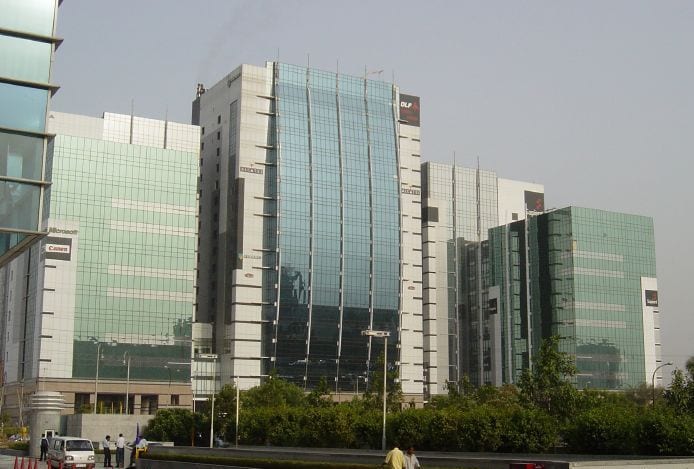
Gurugram district administration has ordered private offices to shift 50 per cent of their workforce to work-from-home and has restricted construction activity from Tuesday, November 4, following directions from the Commission for Air Quality Management (CAQM). The order, reported by NDTV, applies across the district and tightens the emergency pollution response for one of the National Capital Region's largest corporate hubs.
The move comes as Delhi has already tightened vehicle rules for the winter season. According to LiveMint, vehicles registered outside Delhi that conform to BS-IV or older emission standards are barred from operating in the capital from November 1 to January 31, 2027. India Today reported that the capital's winter pollution plan includes vehicle curbs, a construction ban, and staggered office attendance. Gurugram's order extends these curbs into Haryana's employment centre.
What the order means on the ground
For the private corporate offices that dominate Gurugram's skyline, the order means half the desk-based workforce will log in from home. That is not a remote-work culture choice. It is an emergency imposition, triggered by ambient air that has turned hazardous. Construction and demolition activity, a major source of coarse dust in the satellite towns around Delhi, has been halted or restricted under the same directive.
The burden falls unevenly. Firms with distributed cloud infrastructure and remote workflows absorb the disruption with relative ease. Firms whose work depends on physical document handling, on-site client meetings, or laboratory floors face a harder adjustment. The order does not exempt them. It simply compresses their in-person operations.
The economic geography of the measure
Gurugram's office towers house global capability centres, IT firms, and financial services operations that anchor formal employment across the National Capital Region. A 50 per cent work-from-home cap reduces commuting demand, cuts footfall in the retail and services economy around office parks, and shrinks the daily productivity surface of the district. The productivity loss is real but uneven, and it lands on top of the public-health burden that poorer residents and migrant workers cannot escape by logging in from a spare bedroom.
The order also reveals a recurring tension in how Indian cities manage air pollution. Emergency curbs are framed as public-health measures, but their enforcement falls on the same workforce that keeps corporate India running. The district administration does not choose between health and output. It orders a simultaneous reduction in both, betting that a short disruption is cheaper than a prolonged episode of hazardous air.
Why the airshed defeats local patches
Air pollution does not respect district lines. Stubble burning in Punjab and Haryana, vehicular tailpipes, construction dust, and industrial emissions mix into a single airshed. A Gurugram-only order can reduce local emissions but cannot stop the transboundary smog that settles over the National Capital Region. That is why the Commission for Air Quality Management matters as a coordinating body. The fact that a district collector in Gurugram is acting on CAQM directions, not on a standalone impulse, is the relevant governance signal.
Delhi's ban on older vehicles from outside the capital is one attempt to close the airshed loophole. A BS-IV car registered in Noida can still pollute the same air that Gurugram employees breathe unless vehicle restrictions cover the entire National Capital Region. Gurugram's construction curbs address a different but equally local source. The patchwork is moving from individual city responses to a coordinated airshed response, but it remains seasonal.
Between emergency and year-round planning
The structural fault line lies between winter crisis management and year-round infrastructure planning. Work-from-home orders reduce commuting and office energy loads for a few weeks, then disappear when the air clears. They do not finance electric bus fleets, enforce industrial stack norms, or pay for crop residue management in the fields where paddy straw is still burnt. Each winter, the same emergency machinery starts up. Each spring, it shuts down.
For the residents and migrant workers who cannot work from home, the construction ban and vehicle curbs do not solve exposure. They still wait at bus stops, walk to unfinished sites, and sleep in rooms without air purifiers. The order protects a slice of formal employment while leaving the informal economy of the same geography largely exposed. That is the blind spot in relying on work-from-home as a primary response.
The next step for Haryana and the Centre is whether the state can pair these winter curbs with a longer-term transition in mobility, dust control, and industrial enforcement. Gurugram's own dependence on private vehicle commuting remains visible every weekday. If that dependence stays unchanged, the district will be back under the same order next November.
What Indian readers should take from this is not that Gurugram has rediscovered work-from-home. It is that the National Capital Region's most productive district is being managed through emergency instruments designed for a public-health crisis that arrives on the calendar every year. The more demanding question is whether Haryana and the Centre will move from ordering halts to building the infrastructure that makes halts unnecessary. That question does not expire when the air clears.