
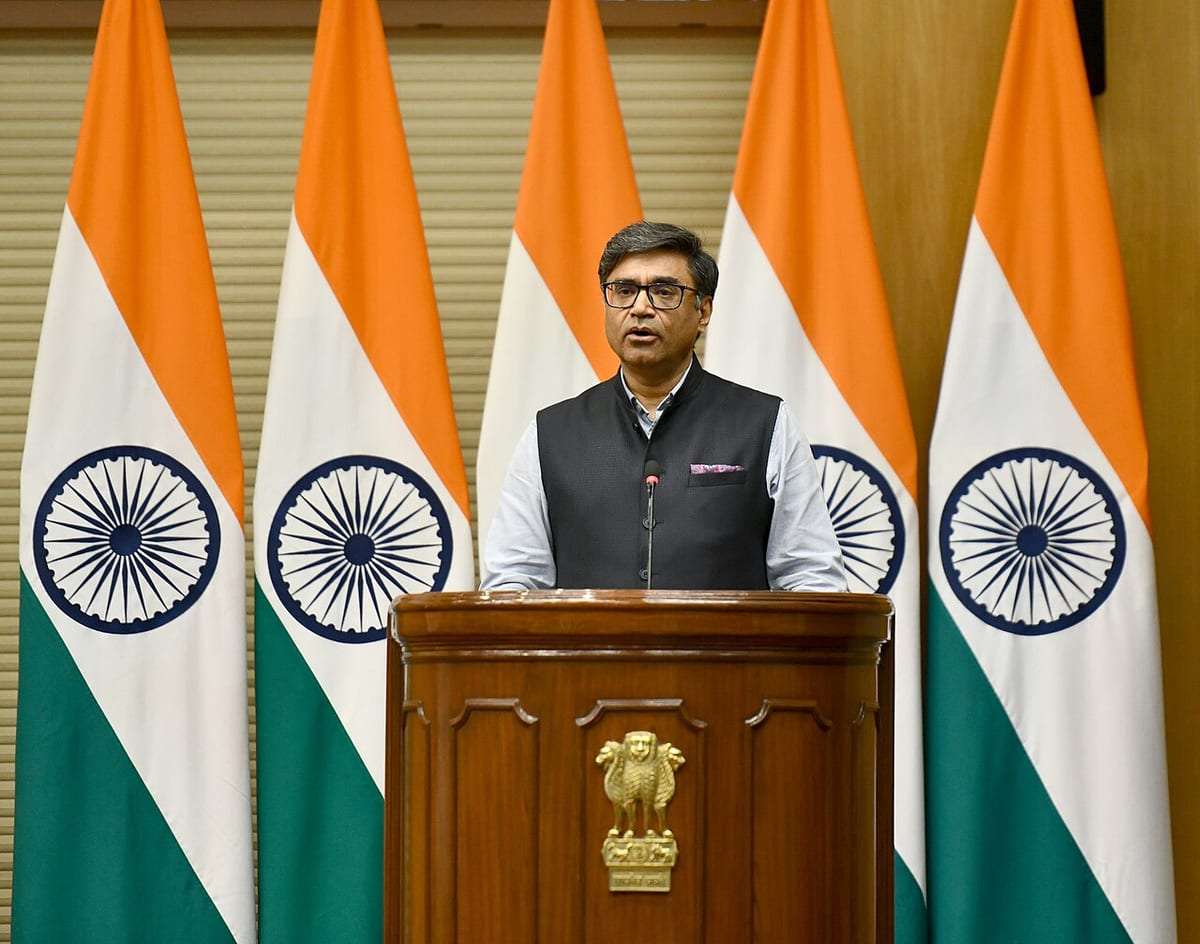
Foreign Secretary Vikram Misri begins a two-day visit to Kathmandu on November 4, laying the groundwork for a proposed India trip later this month by Balendra Shah, the Kathmandu mayor widely known as Balen Shah. Some early reports misidentified Shah as Nepal's prime minister; he holds the mayoral office, and his visit would be his first bilateral engagement with India after his political rise. The visit, at the invitation of Nepal's Foreign Secretary Amrit Bahadur Rai, is working-level diplomacy that precedes high-level engagement.
The Ministry of External Affairs said Misri would discuss bilateral, regional and global issues of mutual interest. Nepal's Ministry of Foreign Affairs framed the talks as an opportunity to:
review the entire range of bilateral relations and explore ways to further strengthen cooperation.
Those are boilerplate phrases, but they mask a specific purpose: converting a long list of pending projects into a short list of announcements for the principal's visit.
Shah's proposed India trip, expected in the last week of November, would be his first bilateral visit to India, according to PTI quoted in the LiveMint report. Misri is scheduled to meet senior Nepalese dignitaries and call on Shah, the report said. The New Indian Express described Misri's visit as groundwork for Shah's India trip; The Times of India reported that Nepal would seek aid and investment during the first visit.
The Economic Geography That Shapes Every Meeting
India and Nepal share what their leaders call the Roti-Beti relationship, a phrase that has survived changes of government in both capitals. The landlocked Himalayan economy depends on India for trade, transit and access to the sea. A large share of Nepal's imports comes from or passes through India. That geography makes connectivity boring but decisive. Every foreign secretary visit has a commercial core, even when the public readout lists only bilateral ties.
Connectivity means the cross-border rail spur that cuts transit time for Nepalese goods to Indian ports, the petroleum pipeline that removes tanker queues at the border, and the transmission towers that turn Nepal's monsoon runoff into bankable export revenue. Each of these has been discussed for years. The preparatory visit is the moment when Indian officials decide which files are ready for the leaders' meeting later in November and which will slip into another cycle of committee meetings. The commercial stakes for Nepal are immediate: faster customs, lower logistics costs, and a more reliable supply of fuel. For India, the stakes are structural: a neighbour whose economic incentives point south rather than elsewhere.
Energy is the sharpest edge. Nepal has surplus hydropower potential that India's northern grid can absorb, and both sides have spent years negotiating transmission lines, tariff structures and regulatory recognition. The source article notes energy cooperation as a formal agenda item. The preparatory visit is where Indian officials can signal which projects will move from memorandum to commercial operation. The New Delhi interest is not charity: Indian industry and Indian utilities want certainty that Nepalese power will arrive on predictable terms, at predictable voltage, within predictable timeframes.
The Boundary and the Larger Strategic Backdrop
No India-Nepal conversation proceeds far without touching Lipulekh, Limpiyadhura and Kalapani. The long-standing territorial dispute resurfaced in May, according to the LiveMint report. Neither side expects a preparatory visit to resolve a boundary question; what Delhi can do is ensure the dispute does not contaminate the economic agenda. The visit's success will be measured partly by whether the two foreign secretaries can keep the boundary file away from the power-purchase agreement, the rail spur, and the petroleum pipeline.
The larger backdrop is the steady expansion of Chinese infrastructure projects in Nepal, from roads to hydropower. India treats Nepal as a priority neighbour whose transport and energy networks should integrate primarily with India's market, not become corridors whose orientation Delhi cannot shape. Misri's visit is one instrument of that preference: not a rebuff to Kathmandu's sovereign choices, but a working demonstration that Indian connectivity offers faster commercial returns.
What the Visit Should Deliver
The most useful outcome of these two days would be a transmission-line schedule that allows Nepalese surplus power to reach Indian buyers without bureaucratic friction, paired with a structured mechanism to address Nepal's persistent trade deficit using logistics, standards alignment and tariff facilitation rather than ad hoc aid. Border management is the third file, and it needs a protocol that takes Kathmandu's stated concerns over Lipulekh seriously while keeping the strategic frontier settled. A foreign secretary visit cannot announce these final agreements, but it can narrow the gap between Nepalese expectations and Indian implementation timelines enough for the leaders to sign on arrival.
The absence of a formal Indian statement beyond the MEA's announcement reflects the normal rhythm of Neighbourhood First diplomacy: the foreign secretary does the technical spadework, the leader converts it into a public deliverable. The Times of India's reporting that Nepal will seek aid and investment fits that pattern. Kathmandu asks; Delhi structures.
Why the File Matters Beyond November
For Indian readers, the Nepal file is a measure of whether neighbourhood policy can move from episodic diplomacy to integrated infrastructure. Misri's two days in Kathmandu will not generate dramatic headlines, but the agreements his visit sets in motion will determine whether Nepal's next generation of power plants and roads are built to Indian standards, financed by Indian capital, and connected to Indian demand. That is the standard against which a preparatory visit should be judged, well after the photographs are filed.