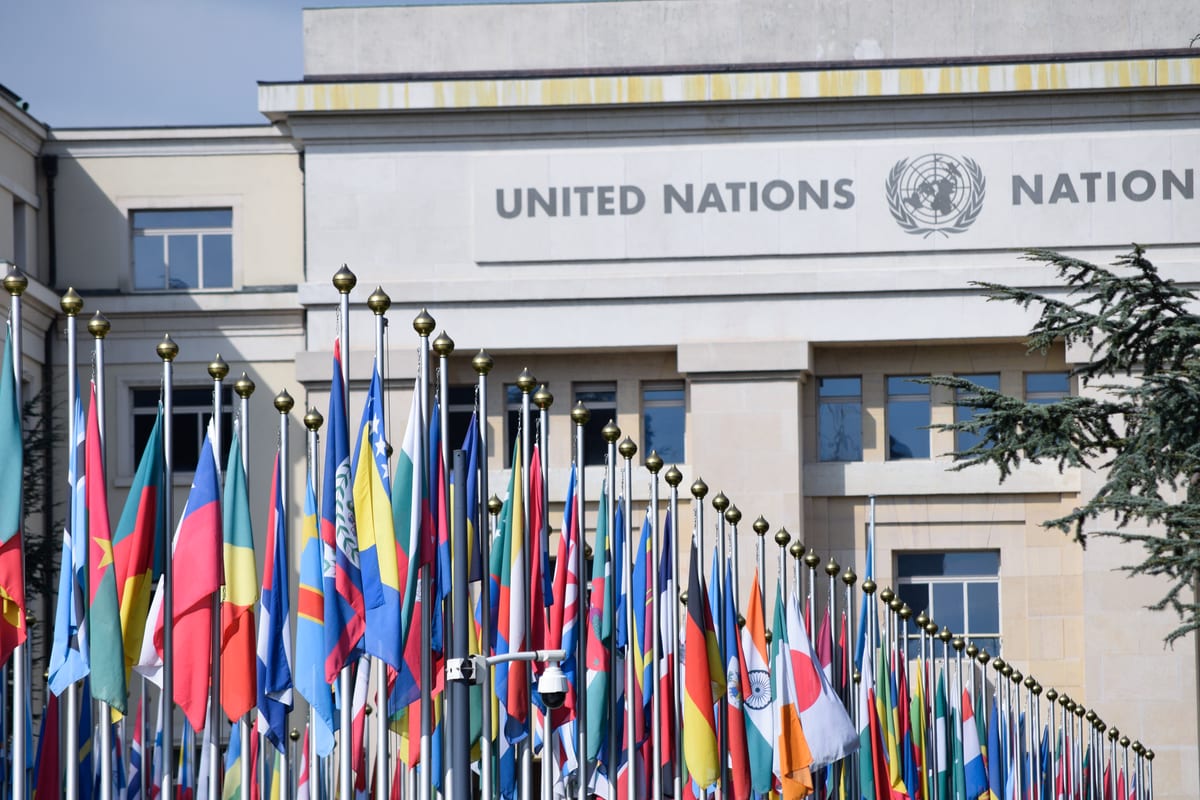
Eighty-one years ago on a Thursday morning, a single aircraft released a device over Hiroshima that erased a city in seconds. The United Nations, which did not yet exist when the bomb fell, marked the anniversary this week with the language it reaches for every August: humanity brought "face to face with the catastrophic power of nuclear war." The language is right. The architecture for responding to it remains fractured.
What the commemoration does not announce, but every foreign ministry in Geneva, New York, and New Delhi understands, is that Hiroshima Day is also the annual high-water mark of normative pressure on states outside the dominant disarmament frameworks. For India, a nuclear-armed state with a declared doctrine, a modernising triad, and a principled refusal to join the Treaty on the Prohibition of Nuclear Weapons, the anniversary is as much a diplomatic occasion as a historical one.
The Architecture of Refusal
The Treaty on the Prohibition of Nuclear Weapons entered into force in 2021 with genuine momentum from non-nuclear states, Pacific nations, and Global South civil society. India has not signed it, and the Ministry of External Affairs has explained why in consistent terms: the treaty is discriminatory, it does not engage the actual nuclear-armed states, and it asks non-NPT countries to disarm in a strategic vacuum that the P5 created and have never dismantled. India's position is that disarmament must be global, verifiable, and non-discriminatory, or it is theatre.
This is not evasion. It is a structural argument with the virtue of accuracy. The TPNW's moral force is real; its strategic architecture is thin. It does not bind China, which is expanding its arsenal at a pace that alters the Asian nuclear balance. It does not bind Pakistan, whose doctrine is explicitly first-use. It asks India to dismantle a deterrent that exists precisely because the regional security environment the P5 framework helped create remains unresolved. India's refusal to join is not a failure of conscience, it is a refusal to pretend that the problem is simpler than it is.
What India does less well is fill the vacuum its refusal creates. The TPNW coalition speaks with moral clarity, even when that clarity outruns strategic reality. India's counter-argument, comprehensive, phased, verifiable disarmament, is correct but dormant. The last time India put serious diplomatic architecture behind it was Rajiv Gandhi's 1988 Action Plan at the UN General Assembly, which proposed a time-bound framework for nuclear abolition that remains, by the assessment of analysts who study such things, the most comprehensive disarmament proposal ever tabled by a non-P5 state. It has not been revived.
No First Use as Moral Vocabulary
One element of India's nuclear posture does active diplomatic work, and Hiroshima is the occasion that gives it maximum salience: No First Use. The doctrine's meaning becomes visceral every August. Hiroshima was not a response to a nuclear attack, it was a first use, a deliberate choice to deploy a weapon of mass destruction against a civilian population. India's commitment not to be the state that fires first is not merely strategic signalling; in the context of the bombing's anniversary, it carries genuine moral weight.
Both of India's nuclear-armed neighbours hold different positions. China's No First Use pledge is longstanding but has attracted increasing scepticism as its arsenal modernises and its doctrine evolves. Pakistan has explicitly rejected No First Use, maintaining the right to employ nuclear weapons in response to conventional military pressure, a posture that exists, in no small part, to offset India's conventional superiority. When Hiroshima's lesson is framed as the horror of a first nuclear strike against civilians, India's doctrine aligns with that lesson more directly than either neighbour's.
Manpreet Sethi at the Centre for Air Power Studies has argued this point with precision: India's No First Use and credible minimum deterrence constitute a morally coherent nuclear posture, and India should use anniversaries like this one to make that distinction loudly, not quietly. The argument is sound. India tends instead to restate its standard disarmament boilerplate, which carries less impact each time it is repeated without institutional freshness.
The Modernisation Tension
Here is where the Hiroshima anniversary confronts India with its sharpest internal tension, not one imposed from outside, but one that India must manage on its own terms. India's nuclear deterrent is expanding. The Arihant-class submarine programme has given India a sea-based second-strike capability, completing the nuclear triad. The Agni series of missiles has extended range and, reportedly, acquired multiple independently targetable re-entry vehicle capability. These are developments consistent with credible minimum deterrence, India is not pursuing numerical parity with China or Russia, but they are developments nonetheless.
The gap between a state that calls for global disarmament and a state that is actively expanding the sophistication of its deterrent is a gap that critics will exploit, and they do. Global South civil society, which India courts through forums like the Voice of Global South Summit, includes significant TPNW advocacy communities. India cannot simultaneously claim leadership of the Global South's multilateral aspirations and vote against UNGA resolutions that the Global South majority supports without cost, not a catastrophic cost, but a reputational drag that compounds over time.
The answer is not to stop modernising. Credible minimum deterrence requires that the deterrent remain credible as adversary capabilities evolve. The answer is to invest in the diplomatic vocabulary that contextualises the modernisation: transparency measures, doctrine articulation, and a positive disarmament agenda that India owns rather than borrows from frameworks designed for others.
The 1988 Blueprint, Gathering Dust
Former Foreign Secretary Shyam Saran has made a consistent argument that India's 1988 Rajiv Gandhi Action Plan represents an underused diplomatic asset, a phased, multilateral, comprehensive framework for nuclear abolition that predates the TPNW by three decades and is structurally superior to it. The plan proposed specific timelines, verification mechanisms, and the engagement of all nuclear-armed states. It was serious statecraft, not rhetoric.
India has not updated it, reintroduced it, or built a diplomatic coalition around it since. The Conference on Disarmament in Geneva, where former Ambassador Arundhati Ghose conducted some of India's most sophisticated multilateral nuclear diplomacy in the 1990s, has been largely deadlocked for years, but India's posture within it has settled into a reactive holding pattern rather than proactive agenda-setting.
The Comprehensive Nuclear-Test-Ban Treaty and a Fissile Material Cutoff Treaty represent the near-term disarmament steps that Indian diplomats have historically identified as achievable, more achievable than the TPNW because they engage the actual nuclear states. India signed the CTBT in spirit, having conducted its last tests in 1998 and observed a unilateral moratorium since, though it has not ratified the treaty. Pushing for FMCT negotiations in the Conference on Disarmament, where India has consistently supported beginning such talks, would be a concrete, credible, and strategically coherent move that aligns India's modernisation narrative with a verifiable disarmament commitment.
What the Ceremony Demands
The Hiroshima commemoration has never been only about the past. The hibakusha, the survivors, understood this. Their decades of testimony were not historical recitation; they were a sustained argument about the future. The argument is addressed to every state that holds nuclear weapons, not only to the United States that dropped the bomb in 1945.
India holds nuclear weapons. It holds them, it says, for deterrence alone, and its doctrine structures that deterrence around a pledge not to strike first. That pledge, taken seriously, is the most direct institutional response to Hiroshima's lesson that any nuclear-armed state has embedded in its formal doctrine. The diplomatic task now is to make that argument with the same seriousness that the argument deserves, through revived multilateral proposals, through Happymon Jacob's observation that India's nuclear exceptionalism gives it a unique platform for reformed disarmament architecture, through the kind of sustained engagement that transforms a doctrine into a diplomatic constituency.
Eighty-one Hiroshima anniversaries have passed. The world has not disarmed. The frameworks designed to produce disarmament have not engaged the states that matter most. India's own framework, comprehensive, phased, non-discriminatory, has the architecture to do better. Reviving it, modernising it, and putting it back on the multilateral table would be a more fitting response to August 6th than a press release reaffirming commitments made in 1988 and left to accumulate the weight of unfulfilled promise.