The World Health Organization said on Tuesday that its staff and Ebola responders were trapped in a hospital in Ituri province, eastern Democratic Republic of the Congo, as heavy fighting continued nearby. The UN agency's update, carried by UN News, framed the incident within a deepening pattern of violence against women and girls.
The siege is not a contained humanitarian incident. Ituri has long been among the DRC's most insecure provinces, where armed groups contest supply routes and the civilian population absorbs the cost. When a hospital holding Ebola workers becomes a flashpoint, the ordinary protection tasks of the UN stabilisation mission there, MONUSCO, stop being routine.
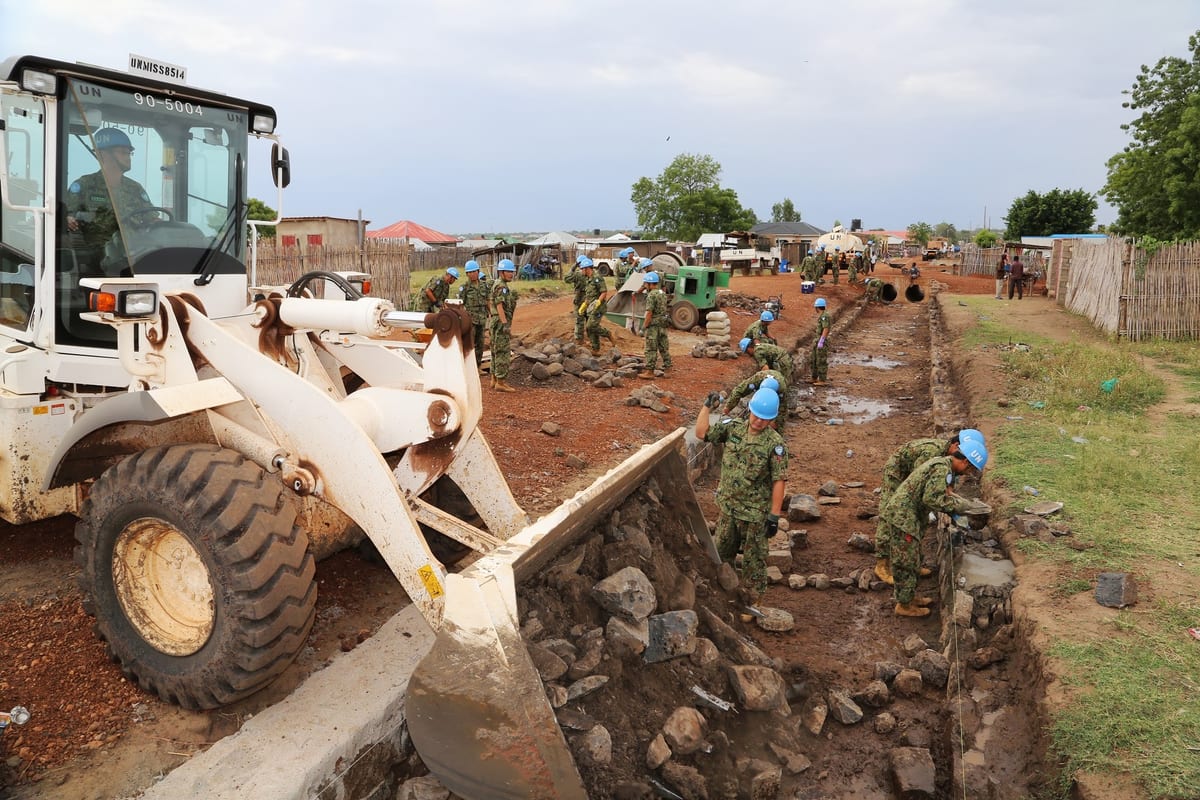
For India, the escalation carries an immediate operational weight. Indian personnel have served in the DRC under MONUSCO's mandate, including in the eastern provinces where the protection of civilians is the core duty. A breakdown of security around a medical facility holding international responders changes force-protection calculations across an entire mission area.
A health emergency inside a security vacuum
The WHO update did not, in the material made public, offer a precise count of those trapped or detail the identity of the armed groups involved. What became clear was the compound nature of the threat: Ebola response workers, already operating in one of the world's hardest epidemiological environments, are now cut off by fighting. The UN dispatch's specific reference to violence against women and girls signals that the security breakdown has wider implications. Displacement, destroyed health infrastructure, and the absence of safe passage all raise the exposure of women and girls to sexual and physical violence.
The UK Foreign, Commonwealth and Development Office has published guidance on how governments can develop ambitious, measurable national pledges to address violence against women and girls. But in a conflict zone, pledges require a security floor. A hospital corridor under fire is not a place where a national action plan can be implemented; it is where the absence of one becomes fatal.
India's peacekeeping equation
India's contribution to UN peacekeeping places it among the system's most reliable troop contributors. In the DRC, that contribution has included service in the volatile eastern terrain now engulfing Ituri. For New Delhi, the incident raises a familiar tension: Indian peacekeepers are deployed under mandates crafted in the Security Council, where India does not hold a permanent seat. The rules of engagement, the extraction protocols, and the decision to draw down or reinforce are not New Delhi's alone.
That structural reality does not diminish India's agency. It defines it. India has used its presence in African missions to build exactly the kind of Global South credibility that its diplomacy emphasizes. The question after Ituri is whether that credibility can be converted into influence over mission safety. A hospital full of trapped health workers is a case study in the gap between contribution and command.
New Delhi has not issued a formal statement on this specific incident. Its established position supports MONUSCO's protection-of-civilians mandate and the WHO's health-emergency response. The absence of a statement reflects India's practice of letting the UN agencies lead on operational crises while it works through bilateral channels. But continued deployment without a visible diplomatic posture leaves Indian personnel exposed to decisions made elsewhere.
India's influence in UN deliberations on MONUSCO is real but bounded. Indian diplomats served on the Security Council as recently as 2021-22, and they have consistently pressed for mandates that prioritise the protection of civilians. The Ituri episode could sharpen New Delhi's argument for mission rules that include explicit force-protection standards as a precondition for continued troop contributions. That is not a retreat from peacekeeping; it is the logical demand of a major contributor that sends its personnel into harm's way.
The Global South frame
India has repeatedly positioned itself as a voice for the Global South, not least through the Voice of Global South summits it has hosted. Those summits stress shared capacity, South-to-South cooperation, and health security as a collective good. The DRC is the kind of theatre where those ideas meet reality. Ebola containment depends on safe corridors, functioning supply chains, and the ability of international staff to move without becoming targets.
An Indian offer of additional medical or logistical support to the WHO response would fit within that framework, but only if the security environment allows delivery. Health diplomacy cannot be separated from physical protection. The two are one problem.
The most durable Indian contribution may not be a new pledge or a bigger troop number. It may be sharper diplomatic effort to shape the rules under which its peacekeepers and their humanitarian counterparts operate. The gap between India's willingness to deploy in high-risk African theatres and its limited capacity to influence mission mandates is the structural fault-line this incident exposes. India can reinforce its reputation as a security provider, but a reputation is built on outcomes, not intentions.
The image of WHO teams trapped in a hospital while fighting rages outside is precisely the scenario UN peacekeeping was designed to prevent. For India, it is a measure of whether its Global South leadership can translate into the hard currency of safe corridors and protected workers, not just summit language. The answer will be written in the operational details that follow.