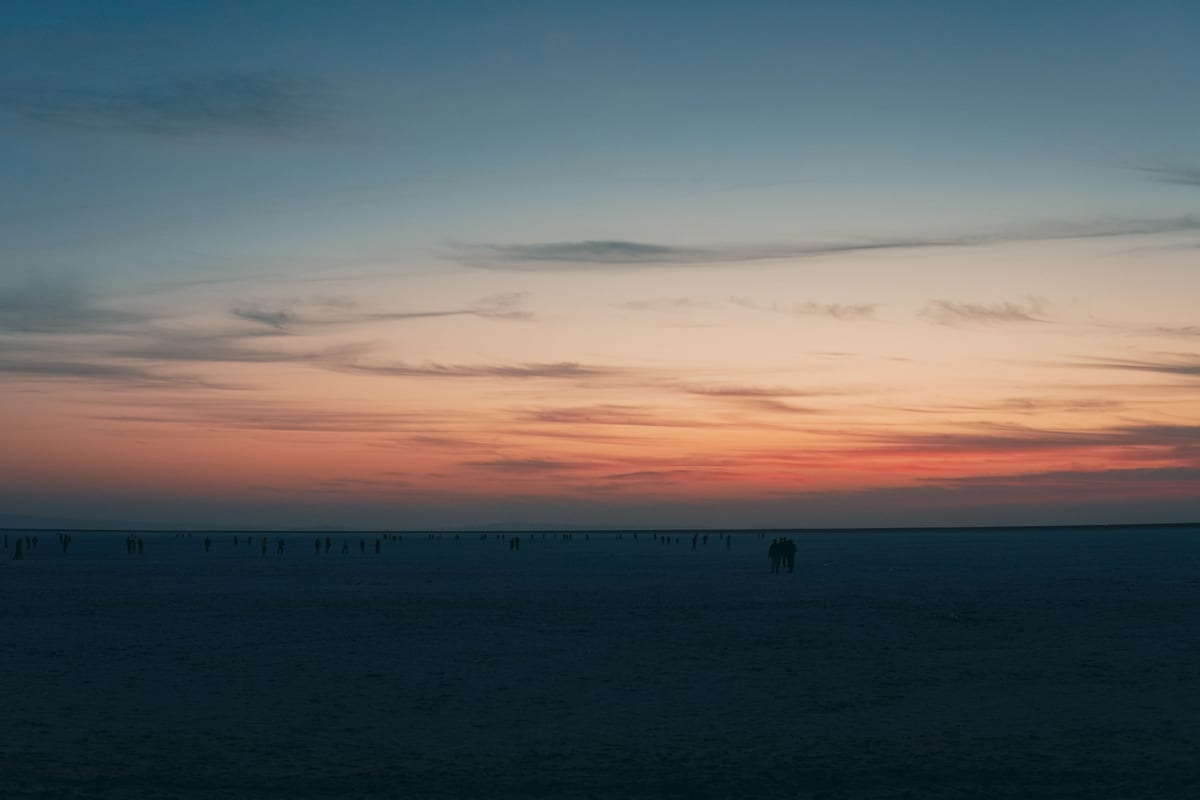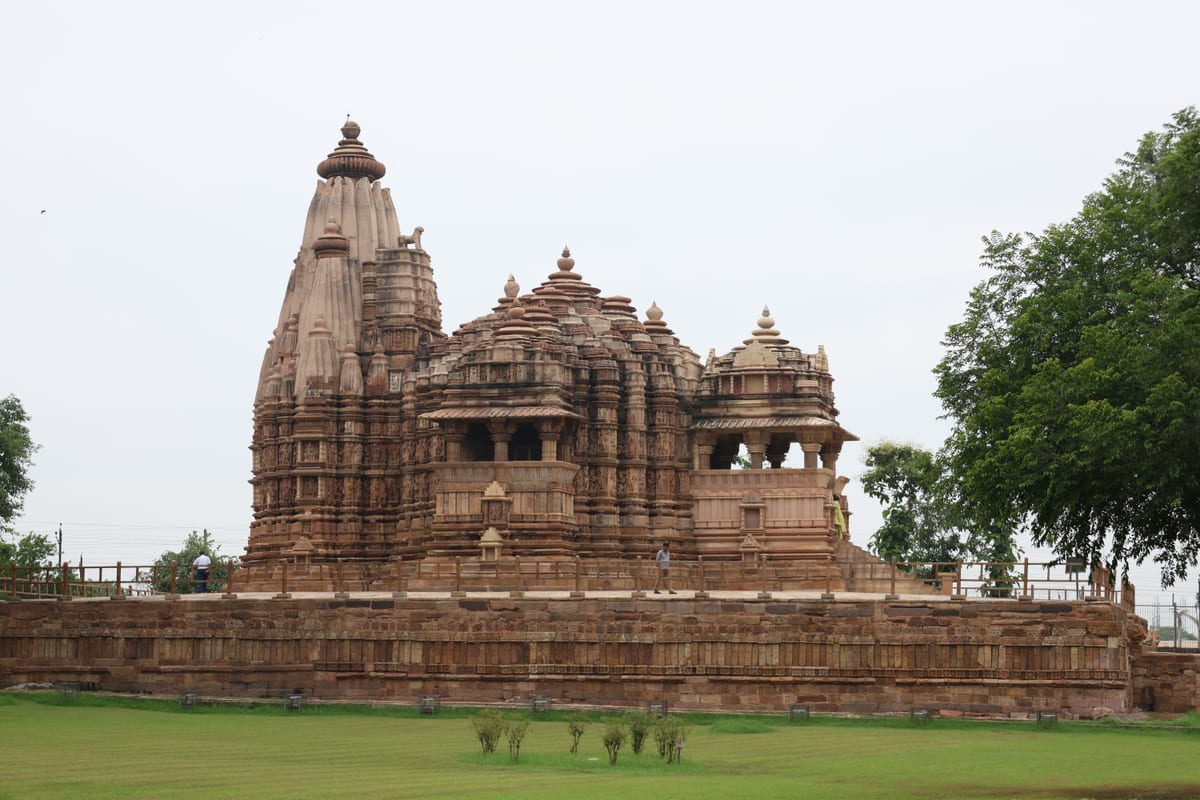
There are places that make you feel small in the best possible way. Konark is one of them. Standing before the Konark Sun Temple on a clear Odisha morning, with the sea wind rolling in from the Bay of Bengal just three kilometres away, you understand almost immediately that this is not merely an archaeological site. It is a statement, bold, monumental, and intimate, about what a civilisation believed, dreamed, and dared to build.
A Chariot Frozen in Eternity
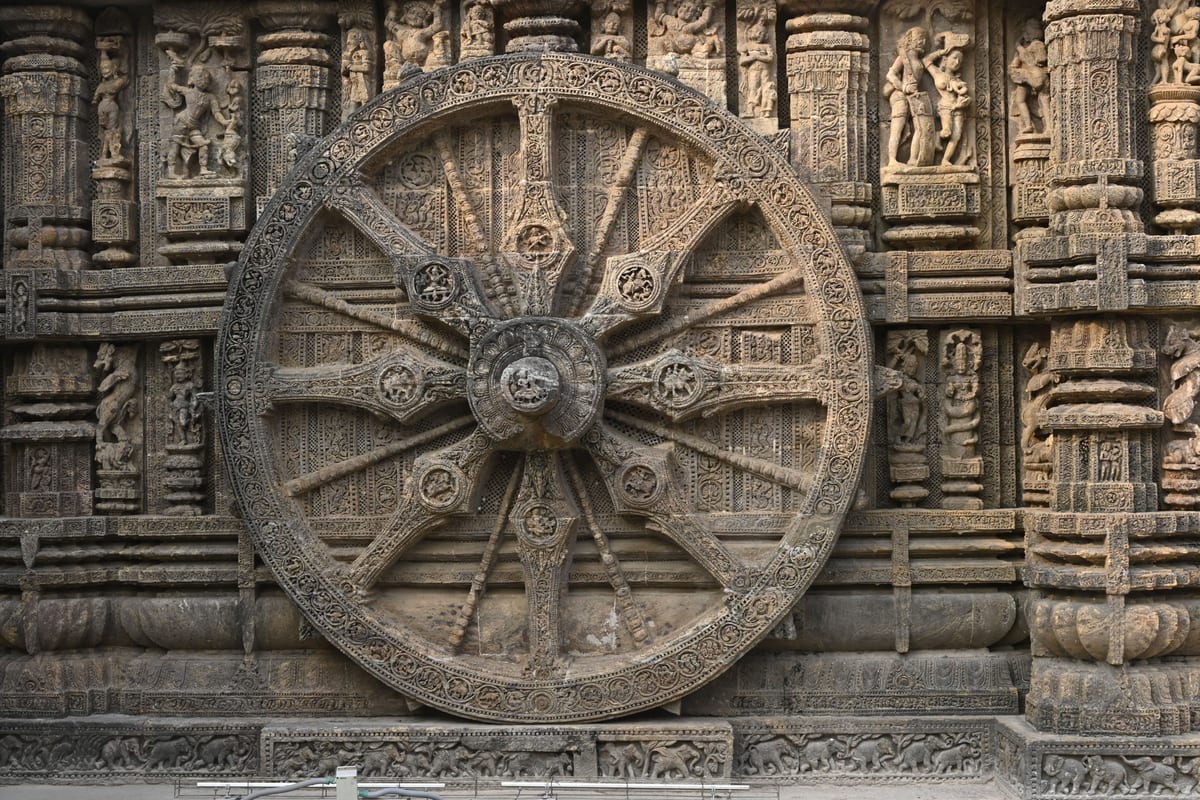
Conceived in the 13th century by the Eastern Ganga king Narasimhadeva I, the Konark Sun Temple was designed as a colossal stone chariot for the sun god Surya. Twenty-four intricately carved wheels, each nearly three metres in diameter, ring the base of the temple platform, while seven horses once strained at the structure's northern face, pulling this cosmic vehicle across the sky of time. The number 24 is no accident: it corresponds to the hours of the day. The wheels themselves function as precise sundials, their spokes casting shadows that ancient priests could use to tell the time to the minute.
Locally known as the Black Pagoda, a name sailors once used as a navigational landmark, Konark was constructed from khondalite stone, a dark, fine-grained rock quarried from the Eastern Ghats. The temple complex originally comprised the main sanctum (deul), an audience hall (jagamohana), a dance hall (nata mandira), and a dining hall (bhoga mandapa). Of these, the towering sanctum collapsed centuries ago, some say it was damaged by invaders, others blame the structural ambition of the builders themselves, but the jagamohana and the lower platform remain, still capable of stopping a person mid-step.
Stone That Speaks in Many Languages
What overwhelms the visitor at Konark is not just the scale but the density of meaning. Every surface is carved. Elephants, horses, soldiers, celestial musicians, erotic couples in elaborate embrace, lotus medallions, and marine creatures tumble across tier after tier of stone. The erotic sculptures, the mithuna figures, are not gratuitous. They form part of a philosophical and devotional tradition rooted in Tantric thought, where the full spectrum of human experience, including desire, is acknowledged as part of the divine order. To understand Konark is to understand that ancient India did not flinch from wholeness.
The sculptures of Surya himself appear three times on the temple's exterior, east, west, and south, each depicting the god at a different hour of the day: dawn, noon, and dusk. These figures are among the finest examples of medieval Indian sculpture, clothed in elaborate royal dress, their serene expressions radiating the warmth of a star that has presided over civilisations long before ours and will outlast ours entirely.
Konark was designated a UNESCO World Heritage Site in 1984, recognised by the Ministry of Tourism under the Incredible India initiative as one of India's foremost cultural landmarks. No UNESCO plaque fully captures why this place matters. Konark matters because it is evidence, in stone, that India was asking the largest possible questions about light, time, divinity, and beauty, and answering them with the confidence of a civilisation that knew exactly who it was.
The Living Pulse: Konark Dance Festival
India's heritage does not simply sit behind glass. Every year in December, the Konark Dance Festival transforms the open-air theatre adjacent to the temple into one of the country's most atmospheric cultural stages. Classical dance forms, Odissi, Bharatanatyam, Kathak, Manipuri, are performed against the floodlit backdrop of the ancient temple for five consecutive evenings. Watching an Odissi dancer move before the stone sculptures that inspired her tradition's vocabulary of gesture is a civilisational experience: a living art form in conversation with its own origins. If your travel dates allow, arrange them around this festival.
When to Go and How to Get There
The ideal time to visit Konark is between October and March, when Odisha's coastal climate is temperate rather than punishing. The monsoon months bring dramatic skies over the ruins but also heavy humidity and occasional flooding. Summer, from April to June, is best avoided unless you have a high tolerance for heat that arrives direct from the tropics.
The nearest major city is Bhubaneswar, Odisha's capital, which is well-connected by air and rail to Delhi, Mumbai, Kolkata, and Chennai. From Bhubaneswar, Konark is approximately 65 kilometres, roughly an hour and a half by road. Shared taxis and state buses run regularly from Bhubaneswar and from Puri, the famous pilgrimage town situated just 35 kilometres from the temple. Many travellers combine Konark with Puri, home to the Jagannath Temple and one of India's most sacred beaches, and with Bhubaneswar's own remarkable cluster of medieval temples, completing what tourism planners call the Golden Triangle of Odisha.
Nearby Attractions Worth Your Time
Three kilometres from the temple lies Chandrabhaga Beach, one of Odisha's quietest and most beautiful stretches of coastline. The Konark Museum, located within the temple complex, houses displaced sculptures and architectural fragments that give essential context to what you see on the main platform. The village of Pipli, 35 kilometres back toward Bhubaneswar, is famous for its vibrant appliqué craft tradition, the colourful patchwork canopies and wall hangings that have made Odisian textiles known across the world.
Why Konark Belongs in Your India Story
India has hundreds of temples. It has dozens of UNESCO sites. But Konark occupies a singular place in the country's heritage story because of what it demanded of its builders and what it demands of us. It asked artists to carve a galaxy of human and divine experience into rock. It asked engineers to calculate the sun's movement and encode that knowledge into wheels. It asked a king to believe that the most worthy use of an empire's resources was to build, not a palace for himself, but a chariot for a god made of light. That act of collective devotion, epic in ambition, extraordinary in execution, and still standing after seven centuries of monsoons and time, is what India's civilisational story has always been about.
Come to Konark not as a tourist ticking a box, but as someone willing to be genuinely humbled. The stone is patient. It has been waiting.