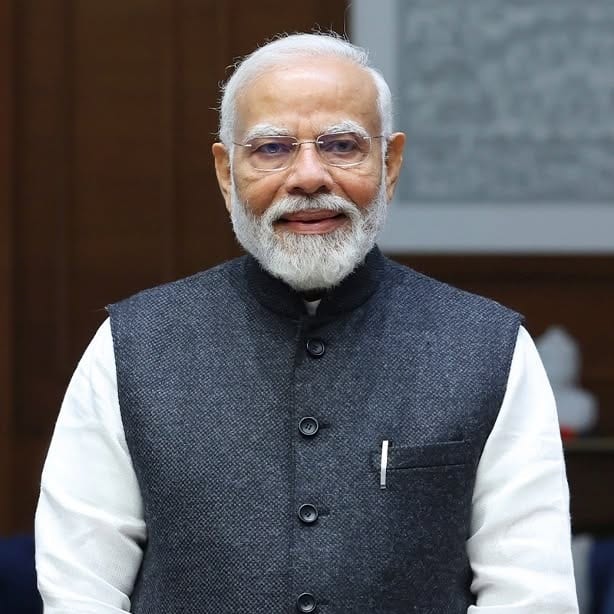
Prime Minister Narendra Modi departed for a six-day tour of Indonesia, Australia, and New Zealand on July 6. Each stop appears routine on its surface — a state visit to Jakarta, a CEOs forum in Melbourne, a first-ever state visit by an Indian prime minister to Wellington. Together they amount to something more deliberate: India building a bilateral network across the Indo-Pacific designed to carry strategic weight that multilateral frameworks cannot.
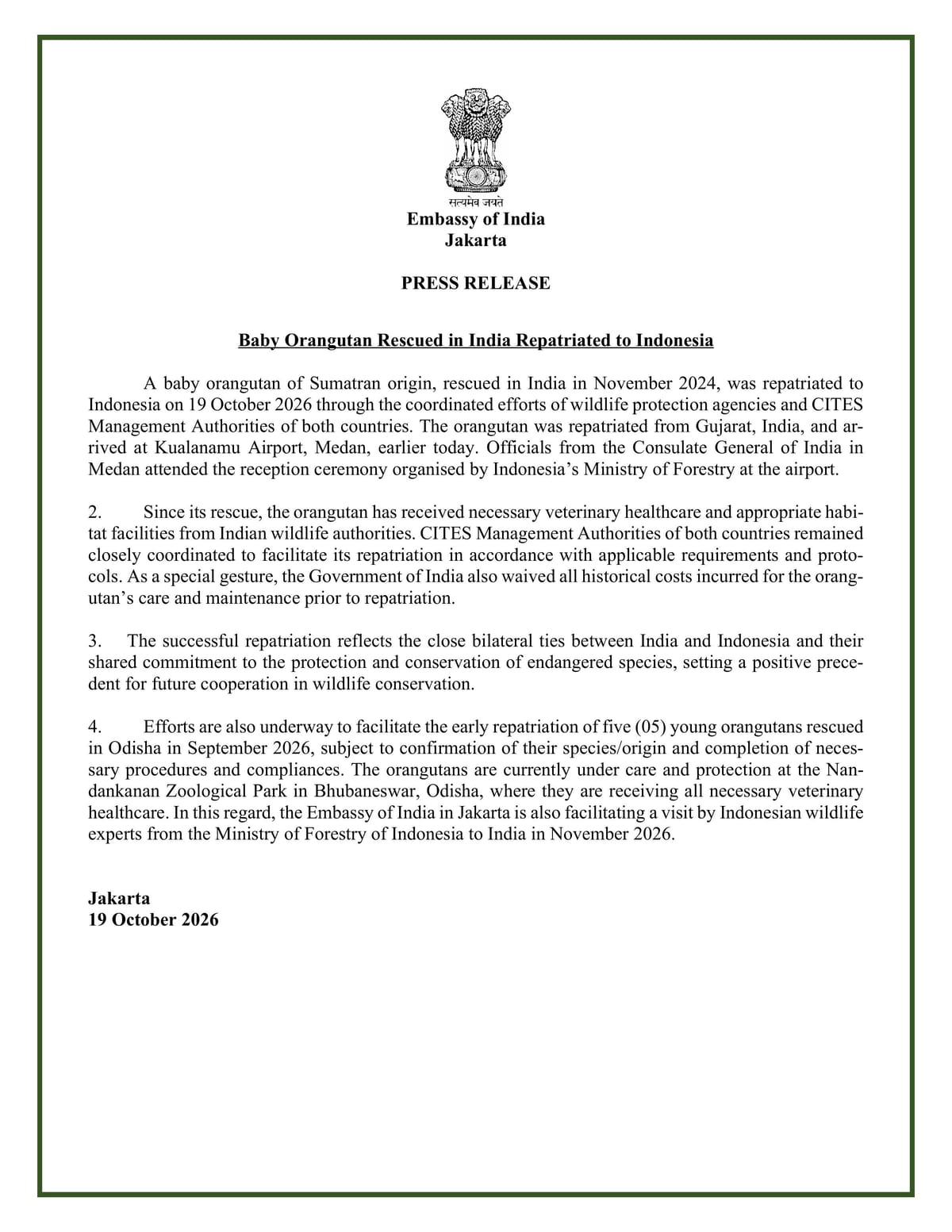
In Jakarta, Modi makes his fourth visit to Indonesia and his first bilateral visit since India and Indonesia elevated their ties to a Comprehensive Strategic Partnership in May 2018. Eight years is a long gap for a partnership bearing that label. The intervening period produced mostly warm language in joint statements with little operational follow-through. The Modi-Prabowo meeting has the opportunity to change that, particularly in the maritime domain.
The Malacca Problem, Stated Plainly
Indonesia controls the chokepoints that matter most to Indian energy security and naval planning. The Malacca Strait carries the bulk of India's crude oil imports from the Gulf; the Lombok and Sunda straits offer alternative corridors critical when Malacca faces congestion or contestation. Indonesia is not simply a neighbour to those corridors — it is those corridors, territorially and strategically. Analysts at ORF, including Harsh V. Pant, have noted that India-Indonesia maritime cooperation remains significantly under-institutionalised relative to the strategic potential of the bilateral. A visit producing only warm words about the Prambanan Temple — a UNESCO World Heritage site Modi is scheduled to visit in Yogyakarta — would represent a missed opportunity.
The consequential agenda item is defence industrial cooperation and joint maritime domain awareness in the Andaman Sea and Natuna Sea corridor. That corridor is precisely where Chinese naval assertiveness and Indonesian sovereignty anxieties converge, and where Indian and Indonesian interests naturally align. Indonesia does not want a formal alliance, and India does not offer one. Both can build a pattern of joint patrols, intelligence-sharing, and naval maintenance access that gives the partnership operational depth without requiring either side to declare a posture they are not ready to take.
Modi's departure statement captured the governing logic of the tour: "The aim of these meetings would be to boost economic and strategic cooperation with these valued developmental partners and ensure the youth of our nation get more opportunities in the times to come." That framing — economic and strategic paired together, youth opportunity as the destination — is the domestic political grammar of Indian foreign policy in 2026, and it maps onto what each leg of this tour delivers.
Melbourne and the Minerals Question
From Jakarta, Modi travels to Melbourne from July 8 to 10 at the invitation of Prime Minister Anthony Albanese. The India-Australia CEOs forum sits at the centre of the Australia leg, and the business community on both sides has concrete expectations. The Quad framework — within which India and Australia have operated since its institutionalisation across six leaders' summits and eight foreign ministers' meetings — provides the strategic foundation. But the material substance of the relationship increasingly runs through supply chains rather than summits.
Australia holds some of the world's largest deposits of lithium, cobalt, and rare earth elements — inputs that India's battery manufacturing, electric vehicle, and semiconductor ambitions require. India's domestic reserves of these materials are limited. Chinese companies have already moved with considerable aggression into Indonesian nickel and rare earth processing, locking in upstream positions that constrain everyone else downstream. India's window to secure alternative supply chains is not indefinite.
The India-Australia Economic Cooperation and Trade Agreement signed in 2022 created the legal architecture for deeper trade. The Melbourne visit is an opportunity to accelerate implementation of its critical minerals provisions before Australian domestic political cycles introduce new friction. Smita Purushottam of the Synergia Foundation has flagged that India has underutilised Indonesia's nickel and rare earth reserves compared to China's investment there — the same structural warning applies to Australia, where intent has outrun execution.
The diaspora dimension matters. The government describes the Indian community in Australia as a key pillar of India-Australia relations. A large and professionally prominent Indian-origin population generates educational, remittance, and political linkages that no bilateral treaty can manufacture. Modi's address to the diaspora in Melbourne partly activates a soft-power network that operates continuously between formal diplomatic engagements.
Wellington and the Trade Deadlock That Could Break
The New Zealand leg — July 10 to 11 at the invitation of Prime Minister Christopher Luxon — carries the most unexplored upside of the three stops. This is the first state visit by an Indian prime minister to New Zealand, remarkable mainly because it took this long. New Zealand is a Five Eyes member, an increasingly Indo-Pacific-oriented economy, and a country whose foreign policy establishment has spent the better part of a decade recalibrating away from China-heavy trade dependence.
The sticking point between India and New Zealand has been agricultural market access — specifically dairy, where New Zealand's producers are globally competitive and Indian dairy farmers are politically protected. That deadlock has run for over a decade with no obvious reason it resolves on agricultural terms now. What could break the impasse is a sequencing shift: lead with services — information technology professionals, healthcare workers, education partnerships — and defer agricultural liberalisation to a second phase with a longer implementation timeline. India's services sector has the competitive advantage; New Zealand's labour market has the demand.
Dhruva Jaishankar at BRIDGE India has argued that India's 2019 exit from the Regional Comprehensive Economic Partnership left a trade-engagement gap in the Indo-Pacific that bilateral FTAs are the practical substitute for. A concluded or near-concluded framework with New Zealand would be India's first trade agreement with a Pacific-rim economy and would signal to ASEAN capitals, CPTPP members, and observers that India negotiates trade on its own terms rather than on the terms of large blocs it finds architecturally unsuitable.
The Pattern Beneath the Itinerary
C. Raja Mohan, writing from the Institute of South Asian Studies in Singapore, has argued that India's Indo-Pacific posture requires denser bilateral frameworks beyond the Quad to give it credible regional depth. This tour operationalises that argument across three very different bilateral relationships — one maritime and security-focused, one minerals and technology-focused, one trade and services-focused. The three stops are not interchangeable; they are complementary nodes in a network that India is building with patience and urgency.
The Quad — whose fourth leaders' summit in Wilmington in September 2024 produced ambitious language on maritime domain awareness, critical technologies, and infrastructure — provides the strategic foundation. But scaffolding is not a building. What India constructs bilaterally with Indonesia, Australia, and New Zealand will determine whether the Indo-Pacific strategy has load-bearing capacity or remains an architecture of intentions. The measure of this six-day tour is not the number of agreements signed but whether the bilateral frameworks that emerge can operate when the multilateral mood music fades.