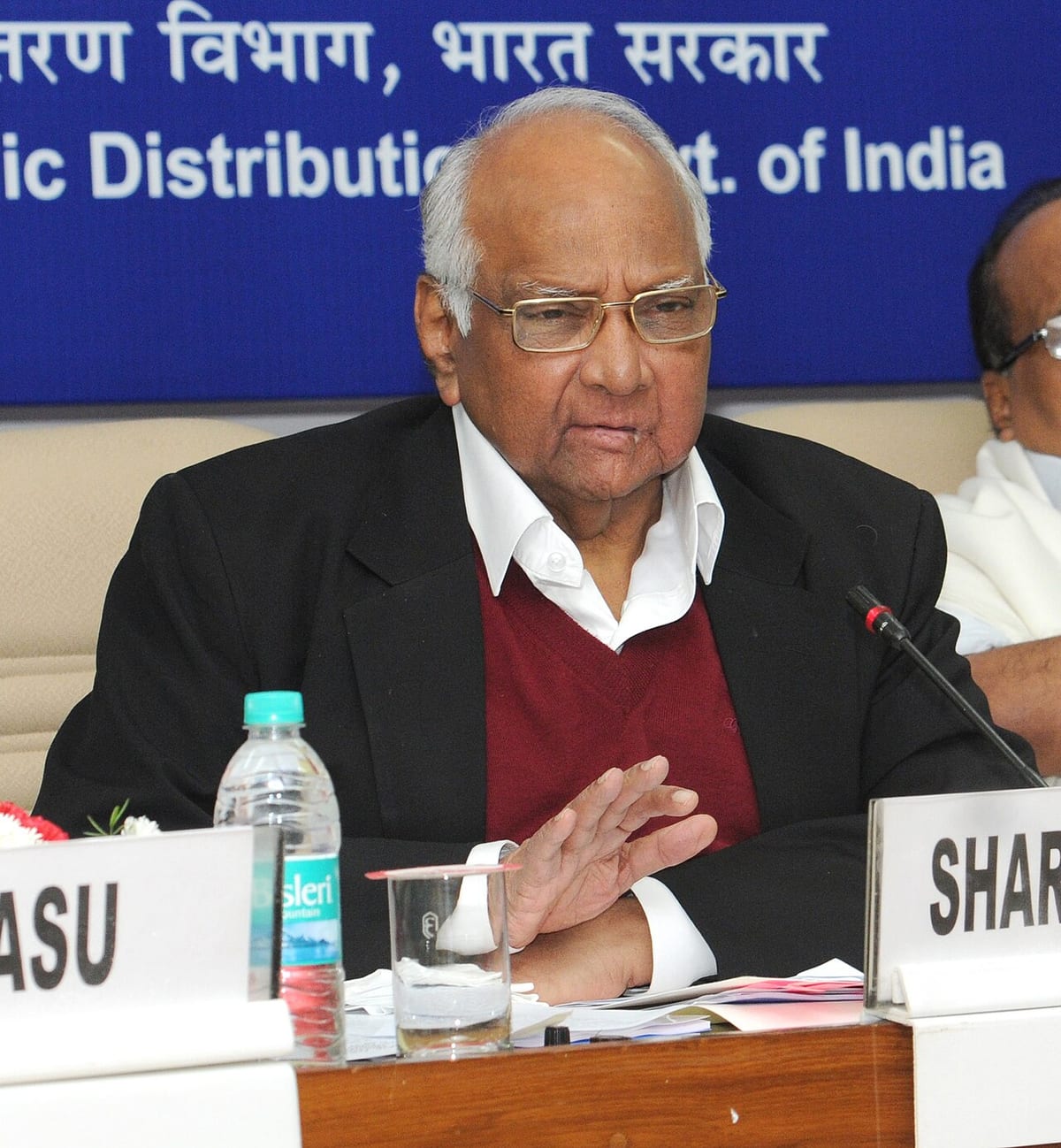
Rahul Gandhi told a Congress party meeting that the party will oppose the proposed delimitation exercise "whether we have numbers or not," establishing a parliamentary line rooted in federal equity as much as legislative headcount. NDTV reported that the delimitation bill will headline next week's Parliament session, with the BJP appearing confident of the strength needed to clear it.
The declaration came hours after Home Minister Amit Shah challenged Gandhi on the numbers, according to NDTV's feed. The Congress is anchoring its opposition in a principle rather than in the arithmetic of a no-confidence motion. In a Parliament where the government holds a comfortable majority, that is a deliberate choice. It shifts the contest from the floor of the House to the larger question of what delimitation does to India's federal design.
The exercise itself is not new. India has postponed the redrawing of parliamentary constituencies for decades because population growth has been uneven. Northern states with higher fertility rates have gained people faster than southern states that invested earlier in education and health. A straight population-based reallocation would shift Lok Sabha seats northward. That is the arithmetic. The politics is different: states that slowed population growth would surrender voice as a reward for success. No state government, regardless of party, wants to preside over that loss.
The federal compact, not just parliamentary arithmetic
Gandhi's phrase "whether we have numbers or not" is more than a rhetorical flourish. It concedes the parliamentary reality and redefines the opposition's role. The Congress cannot block the bill on its own. What it can do is force a national conversation about the federal compact before the next round of seat allocation becomes law. The BJP appears confident that the numbers will fall in line. If it has counted correctly, the bill will pass. The more consequential question is whether the manner of its passage deepens regional resentment or builds a new consensus.
India's constitutional framers understood that representation is the foundation of federal trust. A union held together by the promise that every state has a voice cannot afford to make some states permanent losers in the demographic game. The southern states have long argued that family planning is not a punishable offence; they now fear that their smaller populations will translate into smaller parliamentary footprints. The northern states, where populations are still growing, see a legitimate claim to seats that match their citizen counts. Both positions have merit. Delimitation done badly is not a technical adjustment; it is a reordering of who gets heard when central funds and constitutional amendments are on the table.
India's cooperative federalism structures operate on the principle that states with different economic capacities need to be heard. A delimitation that ignores that logic risks creating a Parliament where the southern voice is permanently subordinate to the northern demographic. This is not a hypothetical worry; it is the reason previous governments of different persuasions froze seat allocation. The Congress position now picks up that thread. The BJP's confidence may be justified in the near term, but a bill passed without addressing the regional grievance will leave a legacy that no future majority can simply set aside.
Successive governments have deferred this exercise because the political cost of reallocating seats was considered too high. Each deferral pushed the problem forward, but it also preserved a fragile equilibrium. The Congress today is inheriting that legacy; the BJP, if it proceeds, will own its resolution. That is why the phrase "whether we have numbers or not" carries weight. It signals that the opposition intends to make the regional cost visible, even if it cannot stop the arithmetic.
The price of an opposition without a formula
The Congress could propose freezing the total number of Lok Sabha seats while readjusting internal boundaries. That would preserve each state's current seat count. It could propose weightage by development indicators, though that raises its own problems. Neither has been formally adopted by any party in this dispute, but the absence of a concrete alternative from the Congress is a weakness. Opposition by slogan is easier than construction by formula. If the party wants to turn "whether we have numbers or not" into a governing philosophy, it will need to table a model that southern states can champion and northern states can accept.
The opposition's own regional allies, many of whom share the same southern anxieties, will watch whether the Congress can move beyond a slogan. If the party cannot offer a formula, it may find itself leading a protest rather than a coalition.
Central transfers, infrastructure spending, and even the weight given to a state in national security debates all flow from parliamentary voice. A state that loses seats does not just lose MPs; it loses the ability to shape the standing committees that scrutinise budgets and the legislative coalitions that decide which parts of the country get priority. The southern states understand this. That is why their leaders, regardless of party label, have warned against a straight population formula. The Congress's new line gives them a national platform.
What the voter will feel
For the ordinary voter, delimitation is not an abstraction. It decides whether a resident of a fast-growing district in Bihar gets the same parliamentary attention as a resident of a slower-growing district in Kerala. It decides which states get heard when central funds are divided. The current seat allocation has been frozen for so long that a generation of Indians has never voted in a constituency whose boundaries reflect present population. The bill before Parliament, if it proceeds, will begin to change that. But the change will not be neutral. It will produce winners and losers, and the losers will remember.
The debate about delimitation is not solely a north-south contest. Within northern states, caste and community groups watch seat redrawings closely because they can shift the balance among backward, scheduled, and general constituencies. Within southern states, the anxiety is not just about numbers but about the erosion of a political model built on education and economic competitiveness. A purely demographic formula ignores these differences. It treats citizens as units to be counted rather than as communities with histories and futures. Gandhi's line, then, asks for a more capacious definition of representation.
The count that matters
The coming session will show whether Parliament can handle a redistributive moment without breaking the federal trust that holds the republic together. The BJP's confidence about numbers may clear the bill, but the deeper arithmetic, of voice and legitimacy, will be counted over decades. The opposition has found a phrase; it now needs a plan. Those who care about India's federal design should watch not just the vote count but the quality of the argument.