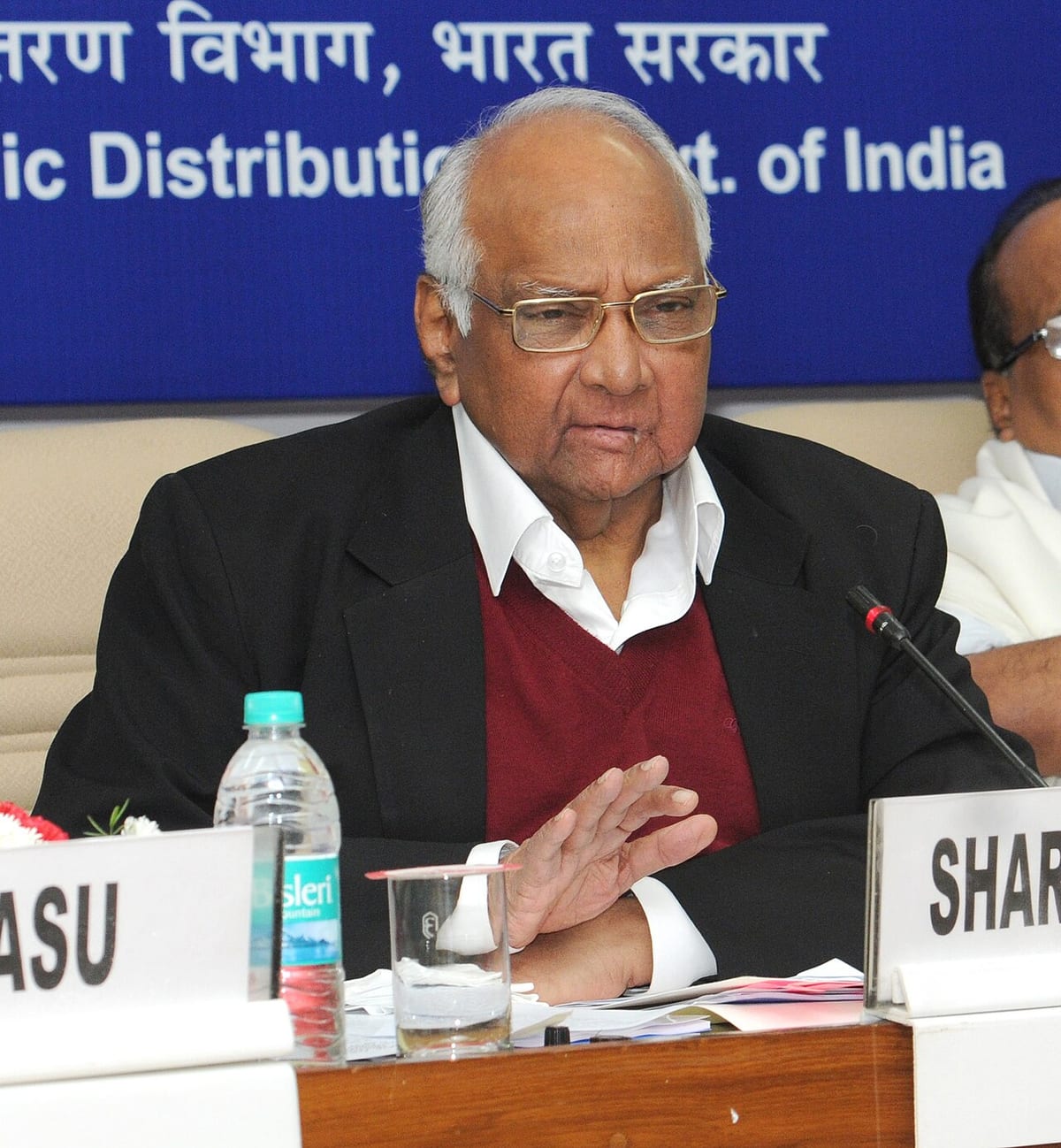
Sharad Pawar, the 85-year-old chief of the Nationalist Congress Party (Sharadchandra Pawar), spent the evening of November 27 on the telephone with Congress leaders, explaining why he will support the Centre's delimitation-linked women's reservation bill when Parliament convenes next week. The call, described by sources as a conversation about his "compulsion", was not a courtesy; it was damage control after a party MP announced on the floor of the Lok Sabha that the NCP(SP) would vote for the bill. Sources told NDTV that Pawar telephoned the Congress leadership to explain the political necessity behind the decision.
Simultaneously, a second NDTV report said the NCP(SP) is negotiating two portfolios in the Maharashtra council of ministers, and a Union cabinet berth for Pawar's daughter Supriya Sule, in exchange for the party's backing of the bill. The reported deal would give the Pawar family a tangible stake in the national government for the first time since 2014.
The sequence fractures the INDIA opposition bloc on a question of constitutional architecture and exposes the transactional core of what its defenders call coalition dharma. Pawar, who has navigated every coalition government since the 1980s, understands that legislative support is a currency; he is spending it while it still has value.
The Federal Arithmetic
Delimitation will redraw the parliamentary map after the next Census, directly determining how many Lok Sabha seats each Indian state receives. Maharashtra, Pawar's political base, sits at the centre of this arithmetic. Northern states with higher population growth stand to gain seats at the expense of southern states that have controlled fertility. The government has argued that no state will lose seats in absolute terms, only that the overall House strength will expand. That assurance has not quieted the anxiety.
Southern chief ministers have articulated their fear with unusual candour: population-based delimitation punishes states that implemented family planning. Tamil Nadu and Kerala have called any reduction in their seat share a penalty for good governance. Pawar's decision to support the bill aligns his party with a coalition that prioritises demographic weight over the federal compact's historical guarantees.
The Congress, on the receiving end of Pawar's call, registered its disagreement. Sources told NDTV that Congress leaders expressed their opposition during the conversation. The party has already resolved to oppose the bill regardless of its strength in Parliament. Rahul Gandhi has framed the contest as one of federal principle over legislative arithmetic. Pawar's move leaves that framing intact but empties it of the coalition pressure that might have forced the government to negotiate.
The Compulsion at 85
Why would a leader of Pawar's vintage, with nothing left to prove, risk his legacy on a bill that southern allies detest? The answer lies in the two portfolios reportedly on offer in Maharashtra, and the Union cabinet berth for his daughter. The NCP(SP) currently has no representation in the state cabinet; the deal would bring it back into the governing structure after years on the outside. For a party whose survival depends on remaining relevant, the arithmetic is simple.
Pawar's career has been a study in political reinvention. He split from the Congress in 1999 to form the NCP, then allied with the Congress for fifteen years. In 2023, his nephew Ajit Pawar walked away with the party's name and symbol, leaving the 85-year-old to start over with a breakaway faction. The delimitation support is another reinvention, this time toward the BJP-led NDA. Not everyone will be convinced that principle drove the phone call.
The episode also reveals how the opposition bloc has calcified. The DMK, Tamil Nadu's ruling party and a key INDIA ally, has signalled it may not stand with the Congress on delimitation. With the NCP gone, the bloc's ability to project a united position on a core constitutional process erodes. The government gains room to frame delimitation as a settled administrative exercise rather than a contest over representation.
A Question of Representation
The real tension is between one-person-one-vote majoritarianism and a federal compact that gives smaller or slower-growing states a voice. India's constitutional design has always leaned toward the latter, carving out special provisions for regions that would otherwise be swamped by numbers. Delimitation done purely on population would tilt that balance in ways that have not been fully debated in public.
The debate is not new. Former Chief Election Commissioner S.Y. Quraishi and other electoral experts have argued that delimitation must combine population with performance on social indicators to avoid penalising better-governed states. Their argument has found little purchase in a government that sees demographic weight as the primary measure of democratic legitimacy. Pawar's support makes that argument harder to press.
What the phone call does is expose the transactional underbelly of constitutional change. A parliamentary map that will shape Indian politics for a generation is being negotiated through the allocation of cabinet berths and state portfolios. The process is legal, but it is not particularly deliberative.
For Indian readers, the takeaway is this: the delimitation fight will not be settled by grand speeches or street protests. It will be settled in the quiet bargaining of coalition arithmetic, where an 85-year-old leader's phone call can matter more than a hundred opposition rallies. Sharad Pawar has reminded his colleagues that politics is about power, and power has a price.