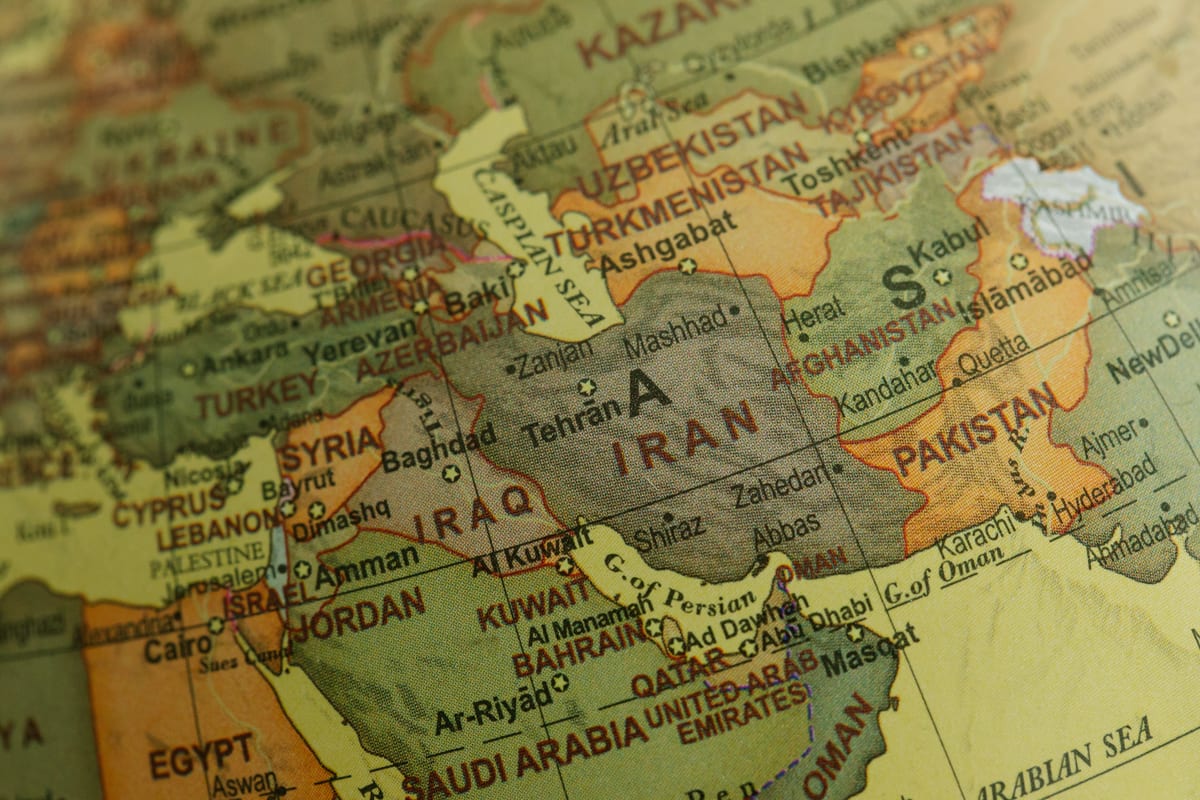
The United States Senate voted 86-11 on August 8, 2026 to pass the Lindsay O. Graham Sanctioning Russia and Iran Act of 2026 — a sweeping bipartisan bill that would authorise President Donald Trump to impose 100% tariffs on the goods of any country ranked among the top five buyers of Russian petroleum. That list includes China, India, Azerbaijan, Hungary, and Slovakia. The bill now travels to the House of Representatives; if it clears that chamber, it reaches Trump's desk with overwhelming congressional consensus behind it.
The vote was framed as a tribute to the late Senator Lindsey Graham, who had championed the legislation alongside Democrat Richard Blumenthal before his death on July 11, 2026, following a visit to Kyiv. His sister Darlene Graham, appointed to his seat, stated the bill's logic with unusual directness: countries buying Russian energy face a choice between trade with America or discounted Russian oil. The bill also extends the Iran Sanctions Act of 1996 through 2031, tightening restrictions on Iran's energy sector. The secondary-tariff mechanism targeting energy buyers carries the most significant geopolitical weight — and India, named explicitly in the bill's operative logic, is at the centre of it.
The Energy Arithmetic Delhi Will Not Abandon
Russia's emergence as a leading crude supplier to India since 2022 is a commercial calculation: discounted crude, delivered reliably, at a moment when global energy markets were convulsing and Indian consumers were absorbing inflation in real time. India's share of Russian oil in its total crude import basket has risen substantially since the Ukraine war began — numbers that make India one of Moscow's most important petroleum customers by volume.
External Affairs Minister S. Jaishankar has argued that India's purchases of discounted Russian crude are, in principle, no different from European countries' long-standing reliance on Russian pipeline gas — decisions made on economic grounds, by sovereign governments, in their national interest. Europe's purchases of Russian gas sustained Moscow's revenues for years, with far less protest from Washington. India, Jaishankar has stated plainly, will not apologise for acting in its national interest.
The Senate bill's proponents argue that the post-2022 context changes the calculation — that purchases of Russian energy now directly finance a war on a European democracy. India rejects that framing. It has consistently maintained, at the United Nations and in bilateral formats, that it is not a party to the Ukraine conflict, that imposing third-party sanctions contradicts principles of sovereign equality, and that energy procurement decisions are a domestic matter. The Senate has now converted that long-running diplomatic argument into a live legislative threat.
The Tariff Weapon and Its Structural Problem
A 100% tariff is a trade wall. Applied to Indian goods entering the American market, it would render entire export categories uncompetitive overnight — pharmaceuticals that supply American generic drug chains, textiles feeding American retail, engineering components embedded in American supply chains, IT-enabled services contracted by American corporations. The bilateral trade relationship, valued in the hundreds of billions annually, would absorb damage that neither side can fully predict, because the interdependence runs deep in both directions.
Analysts like C. Raja Mohan at Carnegie India have identified a structural contradiction: U.S. secondary sanctions threats against India risk undermining Washington's strategic objective of drawing New Delhi into closer alignment on Indo-Pacific security architecture. The Quad — the quadrilateral security framework linking India, the United States, Japan, and Australia — rests on strategic convergence. Threatening India's export economy to punish its energy procurement policy corrodes the trust that makes convergence operationally possible.
Harsh V. Pant at the Observer Research Foundation has argued that India must leverage its indispensability to American strategy in the Indo-Pacific to ensure that congressional overreach does not damage the bilateral relationship. India should activate the India-U.S. Strategic Trade Dialogue, direct MEA-State Department communication, and, if necessary, signal WTO dispute-readiness on any tariffs that actually take effect. India has the institutional standing to contest these measures in multilateral fora and should make that capability visible before the bill advances further.
The Binary Delhi Refuses
Darlene Graham's formulation — trade with America or buy Russian energy — cleanly states what the bill demands. It is also the framing that India's foreign policy establishment has consistently refused to accept as legitimate. The premise assumes India's strategic choices must be ratified by Washington; that American approval is the standard against which Indian economic decisions are measured. India has never conceded this premise — not in defence procurement, not in its United Nations voting record on Ukraine, not in its refusal to join Western sanctions regimes — and it will not concede it here.
Analysts at the Takshashila Institution have noted that India's diversification of oil suppliers after 2022 is a textbook energy-security strategy — what any responsible government would do when global prices spike and discounted supply becomes available. The idea that Washington should penalise that strategy through tariffs on unrelated export sectors is strategically self-defeating for U.S. interests in South Asia; it is economic coercion that India's domestic political consensus will not tolerate, regardless of which party is in power in New Delhi.
The deeper structural recommendation concerns rupee-trade settlement mechanisms and payment infrastructure with Russia — reducing the degree to which dollar-denominated transactions create leverage points that make sanctions threats credible. This is not an abstract future project; it is an active policy direction that the bill's Senate passage should accelerate. Every quarter that India remains heavily dependent on dollar-clearing for Russia-linked transactions is a quarter in which American legislators can credibly threaten consequences. Removing that vulnerability is both a trade-policy imperative and a sovereignty exercise.
Congress, the White House, and What Happens Next
The bill still faces the House of Representatives and then the president's signature before it becomes law. Trump's relationship with both sanctions and tariffs is characteristically complex — he has shown reluctance to tie his own hands on Russia policy, and a 100% tariff regime affecting a country the size of India carries economic blowback risks for American businesses that will not go unnoticed by a White House attuned to corporate interests. The bill authorises tariffs; it does not mandate them. Trump retains discretion over whether and how to apply the provision, which creates diplomatic space that India should use immediately.
What the Senate vote establishes, regardless of what the House or the White House ultimately does, is that a significant and bipartisan segment of American legislative opinion now regards India's energy relationship with Russia as a legitimate target for economic pressure. That is the shift that matters for India's long-term trade diplomacy with Washington — not whether this particular bill becomes law, but whether the logic it embeds in congressional thinking becomes durable. India's task is to make that logic expensive enough to sustain that it recedes on its own merits, without ever accepting the binary premise that produced it.