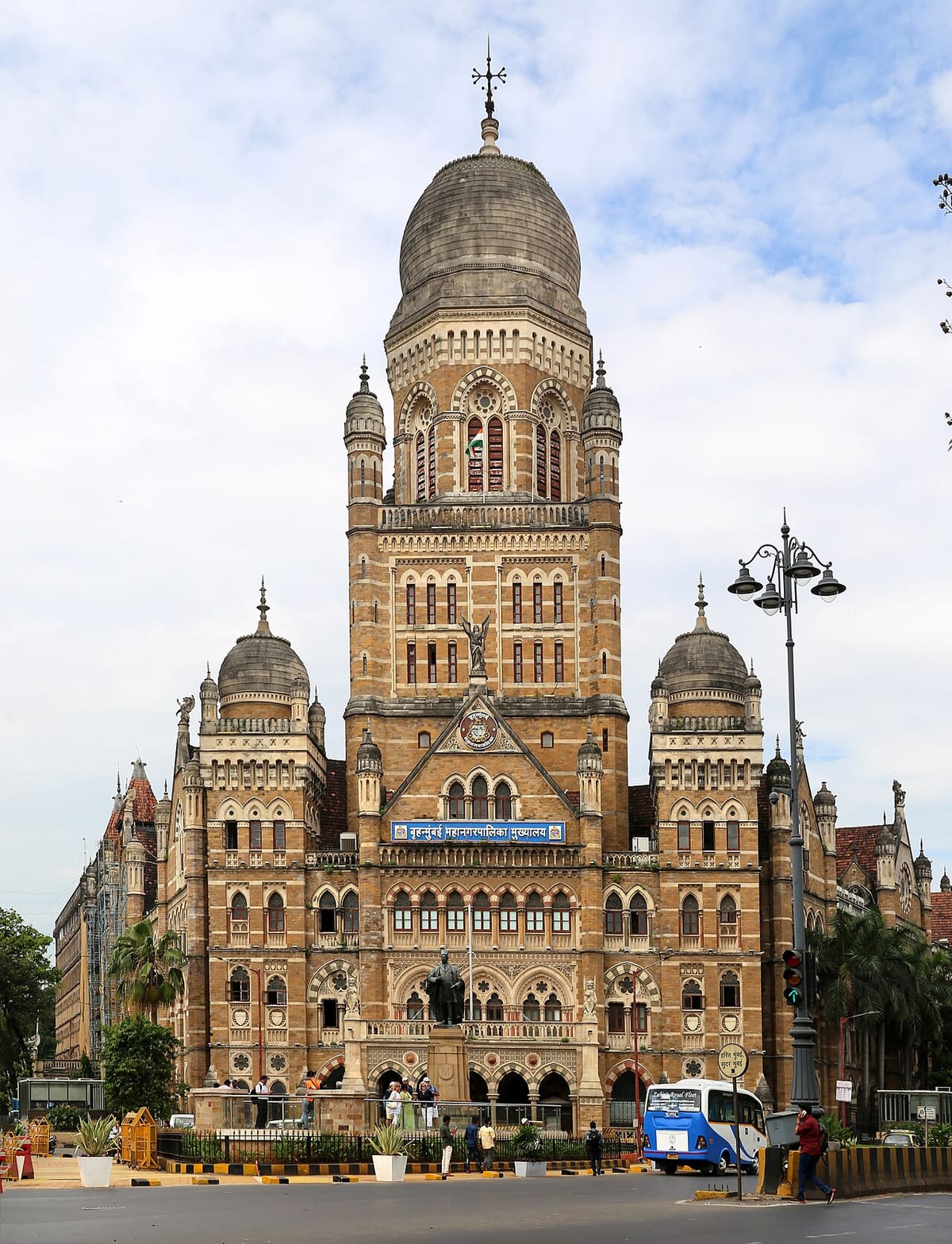
The Brihanmumbai Municipal Corporation removed encroachments from a 3,400-square-metre plot in Borivali East on Tuesday, clearing land reserved for a Brihanmumbai Electric Supply and Transport bus station under Town Planning Scheme-II. The demolition drive followed a sharp reprimand from the Supreme Court, which had grown impatient with the civic body's inaction on earlier directives. The clearance targeted illegal structures that had occupied the reserved plot, restoring it for its intended public transport use.
The court's intervention escalated last week when a three-judge bench paused the salary of the BMC chief and rejected the civic body's plea for an additional 30 days to complete the task. The bench said the BMC must comply with its earlier directions before seeking further relief. That rare step, freezing a top bureaucrat's pay, turned a routine encroachment matter into a test of judicial authority over municipal governance.
The plot in question sits in Borivali East, a crowded western suburb where public bus services run at the mercy of available depot space. Under Town Planning Scheme-II, the land had been earmarked decades ago for a BEST bus station. Encroachments had eaten into that reservation, leaving the transport utility with less room to park, maintain, and dispatch buses. The BMC, which is both the planning authority and the parent body of BEST, had done little to reclaim the land until the Supreme Court forced its hand.
Judicial Oversight Meets Civic Inertia
The sequence is familiar to anyone who tracks Indian urban governance. A public utility plot is reserved for a specific purpose. Encroachers move in, often with local political protection or at least tacit tolerance. The municipal body, wary of electoral backlash and administrative disruption, delays action. Years pass. The reservation remains on paper; the plot becomes a settlement of informal structures. Only a court order breaks the cycle.
What makes this case notable is not the encroachment itself but the Supreme Court's willingness to hold a specific bureaucrat accountable. Pausing the salary of a municipal commissioner is an extraordinary exercise of judicial power. It signals that courts will no longer accept bureaucratic inertia as a valid excuse when public land reserved for essential infrastructure is at stake. The message travels beyond Mumbai: any civic body in India that has allowed encroachments on reserved public utility plots can expect similar scrutiny if the matter reaches higher courts.
The rule of law here operates as a backstop, not a first resort. Ideally, the BMC should have cleared the plot years ago under its own town planning mandate. The fact that it required a Supreme Court order, followed by a salary freeze, exposes a structural weakness in municipal governance: the gap between planning authority and enforcement capacity, compounded by local political pressures that make elected officials reluctant to demolish encroachments. Judicial oversight corrects that failure, but the correction arrives late and at high cost to commuters who lost years of planned bus infrastructure.
What the Clearance Means for Mumbai's Commuters
The restored land belongs to BEST, Mumbai's chronically underfunded and under-spaced bus transport undertaking. A 3,400-square-metre depot site in a dense suburb can relieve pressure on existing terminals, allow better scheduling, and reduce bus idling on public roads. Mumbai's bus network carries millions daily; every additional depot space translates into fewer breakdowns, shorter turnarounds, and more reliable services. The encroachment had denied the city that capacity. Now it returns to its designated use.
But the restoration is only the first step. The cleared plot must be secured against re-encroachment, and the BMC must actually build the bus station it was reserved for. Urban transport advocates have long demanded that reserved plots for BEST depots be freed of encroachments and put to operational use. The Supreme Court's intervention gives that demand legal force. The harder test is whether the civic body will move from demolition to construction without further judicial prodding.
A Precedent for Civic Bodies Nationwide
Across India's cities, the pattern repeats: land reserved for public schools, hospitals, parks, water tanks, or transport facilities gets occupied, often with the knowledge of local authorities. Municipal bodies hesitate, citing rehabilitation concerns or political sensitivity. The result is a slow erosion of planned public infrastructure, one plot at a time. The Supreme Court's action in Mumbai offers a template for breaking that cycle, assign individual accountability to the responsible official and make non-compliance materially painful.
The structural recommendation is clear: municipal bodies should conduct periodic audits of all town planning scheme reservations, identifying encroachments early and clearing them before courts intervene. Transparent rehabilitation mechanisms must exist for legitimate occupiers, but political expediency should not stall enforcement. The constitutional requirement to protect public land for planned infrastructure is not optional; it is the baseline for a functioning city.
This case also reminds us that judicial oversight in India works best when it targets specific failures with specific consequences. A general direction from a high court to "remove encroachments" often gets lost in bureaucratic files. A salary freeze for the named civic chief does not. The Supreme Court understood that accountability requires a face, not just an order.
For India's rising urban population, the stakes are concrete. Every encroached depot plot means fewer buses, longer waits, and more crowded commutes. Every court order that forces a civic body to reclaim reserved land restores a piece of the city's planned future. Mumbai's Borivali East plot is one such piece, taken back under judicial pressure, returned to its intended purpose, and now awaiting the construction that will make the clearance meaningful. The real victory comes not when the demolition is complete, but when buses actually roll out from that depot on schedule.