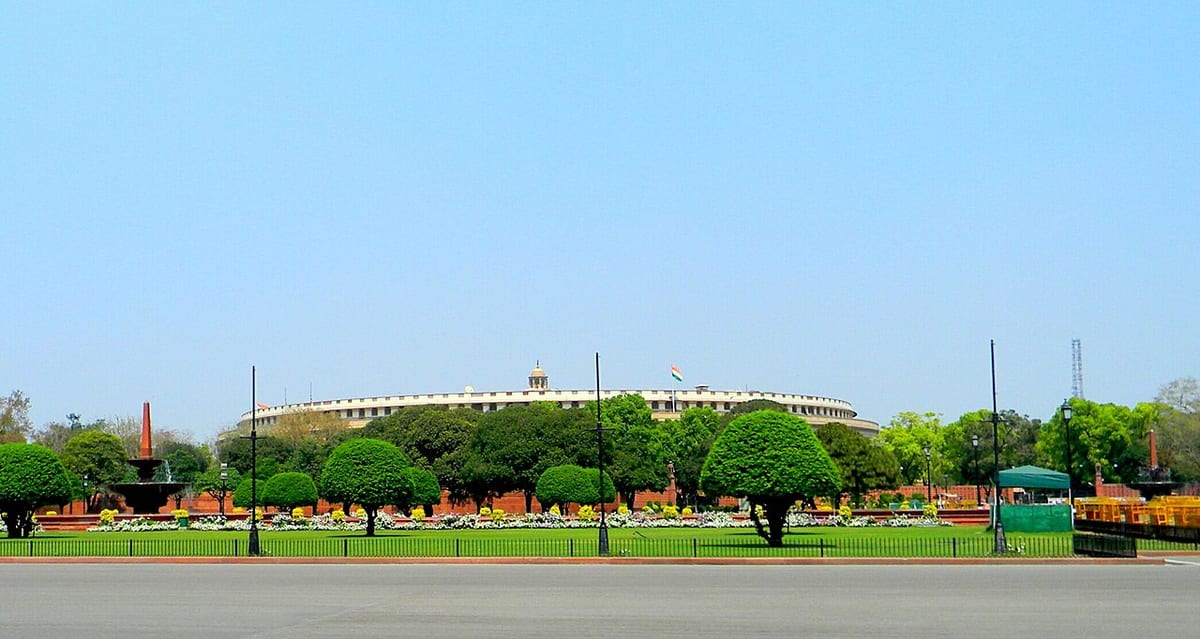
Congress president Mallikarjun Kharge has called opposition floor leaders to his residence this morning for an 11.30 am meeting to formulate a joint strategy on delimitation, as the government prepares to bring a constitutional amendment bill in Parliament, India Today reported.
The huddle will include INDIA bloc parties and, beyond them, the DMK, the AAP and the BJD, a composition that already signals how difficult the arithmetic has become. It precedes a four-day special sitting: November 30 and December 1 in the Lok Sabha, December 2 and 3 in the Rajya Sabha, with the session set to close on December 3.
Before the meeting began, two parties indicated where their votes may go. Sharad Pawar's NCP has extended support to the delimitation bill, The Indian Express reported, while the DMK hinted at backing a revised version after the Centre addressed what M.K. Stalin had insisted on, according to India Today.
Akhilesh Yadav's charge, posted on X, sought to frame the boundary exercise as an obsession with electoral maps while border questions go unaddressed. He wrote:
For the BJP, elections are everything, not the country. That is why it is concerned about the boundaries of Lok Sabha constituencies, but not the country's borders.
Tejashwi Yadav sounded a different note before the meeting: "It would have been better if the government had convened a discussion involving all political parties."
The two comments reveal the coalition's problem. The Samajwadi Party, like the NCP, operates from states that stand to gain population weight in any new map. The DMK, from Tamil Nadu, has historically resisted any formula that dilutes its parliamentary share. If all three now signal accommodation, the opposition front that has framed itself as a federal coalition has lost the ability to speak with one voice on the one issue that would reshape the federal compact itself.
Delimitation is not a dry map-making exercise. It decides which states send how many members to the Lok Sabha, which in turn decides where central resources, ministerial portfolios, and policy attention flow. A population-based redrawing would strengthen Uttar Pradesh and Bihar. It would diminish the weight of states that reduced fertility and educated their populations, the southern states that made demographic transition a governance achievement. That is the central paradox of the bill: the Constitution's equality principle, one citizen one vote, collides with the federal promise that states which plan successfully are not penalized.
The NCP and Samajwadi Party are being logical, not opportunistic. Maharashtra and Uttar Pradesh are large states; their political parties have every incentive to support a formula that increases their members in the lower house. The DMK's reported shift is more surprising, and more consequential. If Stalin has extracted a concession that preserves his state's representation, the party may avoid the isolation that threatened it when Congress vowed to oppose the bill with or without numbers.
That is how coalitions come undone: not through ideology but through survival arithmetic. Kharge's meeting may produce a joint statement, but a statement cannot paper over the fact that the bill itself rewards one set of states and punishes another. Every party has to decide whether it represents a state or a national idea.
India has argued about this before. The republic began with a commitment to redraw constituencies after every census, but chose not to readjust seats when the south's slower growth became politically salient. That choice has now lasted long enough to feel permanent, and the current move would end it. The southern states, which governed population growth, fear they will be made to pay for their own success. That is not a minor grievance; it is a constitutional wound capable of outlasting any single parliamentary sitting.
Congress searches for a common federal language
Kharge's meeting is an attempt to find language that keeps the bloc together even as its members compute different seat outcomes. Congress has made opposition to delimitation a matter of principle, but that principle means less when NCP, SP, and DMK are sending signals of support. The opposition's bargaining power depends on whether it can frame delimitation as a question of federal principle rather than a straightforward headcount. If the DMK departs, that framing collapses in the south, where it matters most.
The special sitting itself is unusual. Four days split between the two houses, with the Rajya Sabha dates following the Lok Sabha's, suggests the government expects a contested debate. An amendment of this kind demands a special majority, which gives smaller parties unusual leverage. That is why the invitation list extends beyond the INDIA bloc to the AAP and BJD. The government has not yet tabled a formal bill, but the parliamentary calendar is already doing the work of forcing parties to declare themselves.
What Indian readers should carry from this is not a prediction of votes; it is a reminder that the map of representation is the deepest political map there is. The special session will not merely debate a bill. It will argue about which India gets to count, and how much. The parties now signalling support have made their arithmetic visible. The question is whether any leader can still make the federal argument with a straight face.