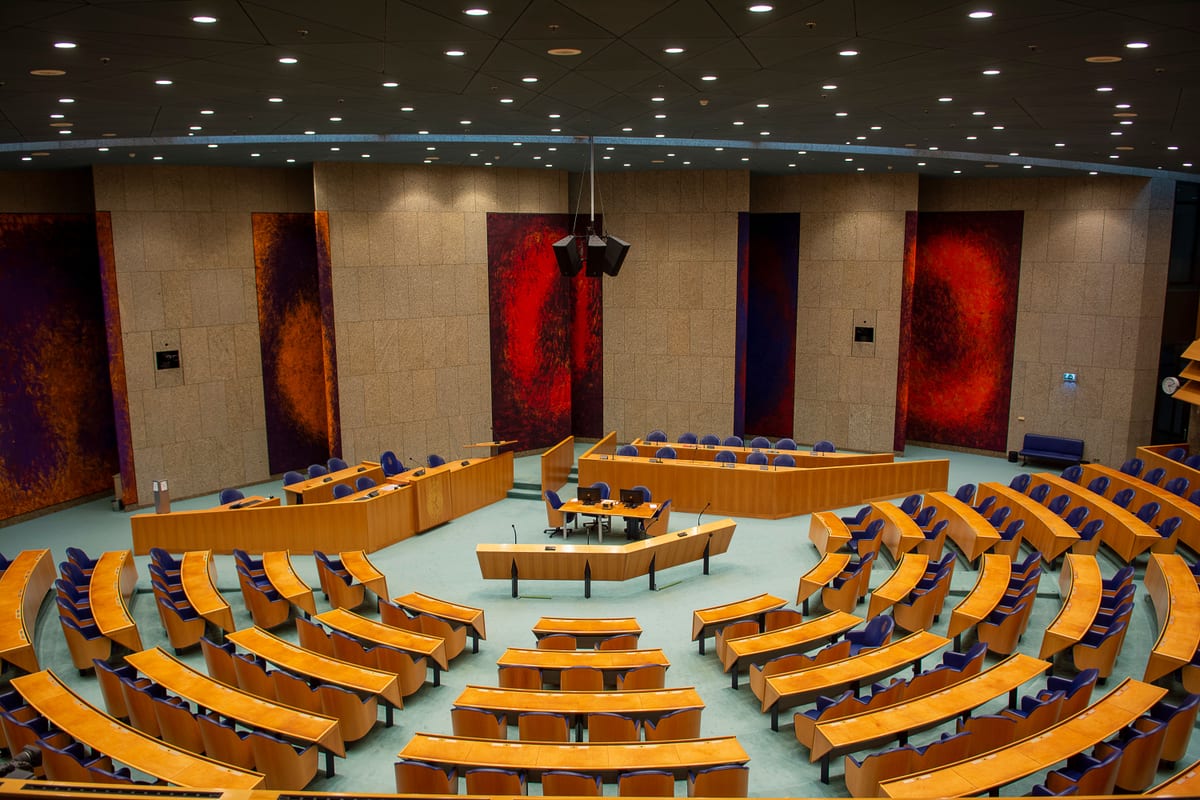
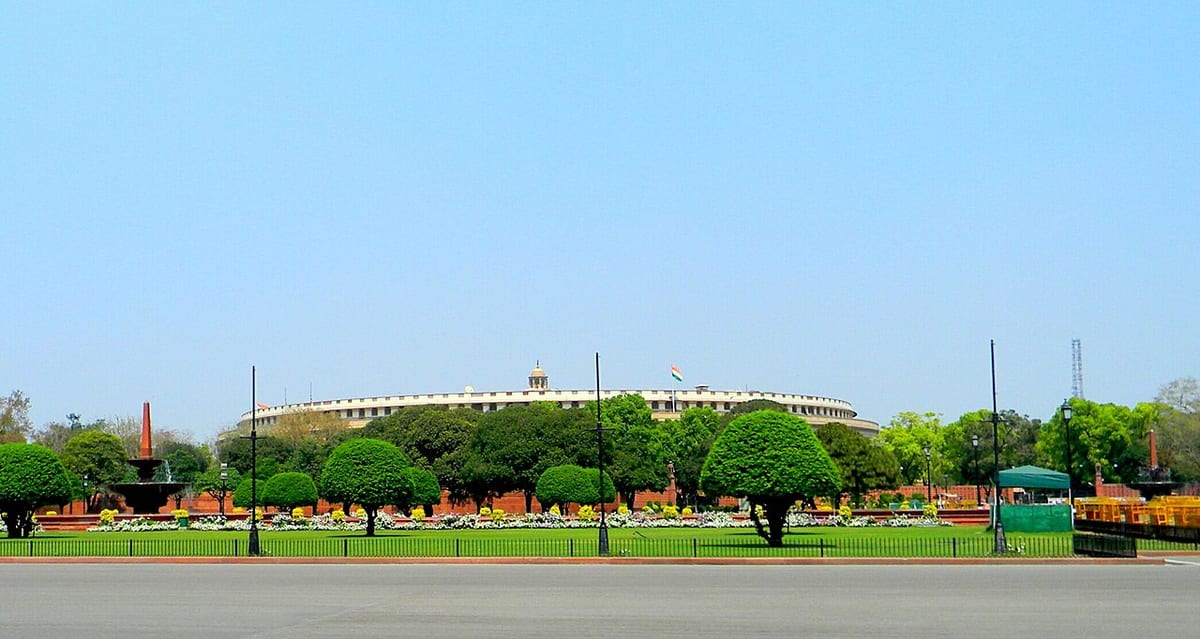
The Union Cabinet on Friday approved a proposal to increase the Lok Sabha's strength by 50 percent across all states while keeping each state's existing share of parliamentary seats unchanged until the first Census conducted after 2051, reports LiveMint. The decision comes ahead of a special sitting of Parliament from November 30 to December 3, when the government is expected to take up legislation linked to delimitation and the 33 percent reservation for women in the Lok Sabha and state assemblies from 2029.
A uniform 50 percent increase on the current 543 seats would bring the House to roughly 815 members, though the proposed constitutional amendment sets a maximum of 850. Every state and Union Territory would receive the same 50 percent bump in its existing Lok Sabha seats, according to the approved formula. The revised proposal uses the 2011 Census as the basis for redrawing constituency boundaries, while keeping the inter-state allocation of seats frozen until the first Census after 2051.
Opposition parties have questioned the timing and intent. Congress leaders demanded that the existing Lok Sabha strength and state proportions be protected; other parties flagged the numerical gap between northern and southern states, the redrawing of boundaries, and the functioning of a larger House. The government says a uniform increase preserves the existing relative representation of states and specifically addresses the fear that a population-based exercise could shrink the South's parliamentary footprint.
The demographic arithmetic underneath
Southern states have achieved below-replacement fertility. Kerala's population growth has flatlined; Tamil Nadu, Karnataka, and Andhra Pradesh have also moved past the high-growth phase. Uttar Pradesh and Bihar, by contrast, continue to add voters on a scale that makes any purely population-based seat allocation a slow transfer of parliamentary weight from the South to the Hindi heartland. That reality has shaped every delimitation debate since the freeze that kept seat shares unchanged for five decades.
The proposal is designed to neutralise that demographic disadvantage. By freezing each state's current share of seats until the first Census after 2051 and applying an identical 50 percent increase, the formula avoids the zero-sum cut that would have followed if the 2011 population shares had been used to redraw the inter-state allocation now. The redrawing of boundaries within each state proceeds, but the relative seat strength of Maharashtra, Tamil Nadu, Kerala, or Uttar Pradesh does not shift.
The internal redrawing will be contentious on its own. Since boundaries are based on the 2011 Census, new seats will be carved out of existing constituencies that may no longer reflect where voters actually live. Urban agglomerations in Bengaluru, Hyderabad, and Chennai have grown far faster than their rural hinterlands since 2011; a map drawn on the older numbers will under-represent the cities that generate much of the South's economic output. That mismatch will matter for policy attention, even before any inter-state shift is considered.
The South's real worry is fiscal, not just political
The anxiety in Chennai, Bengaluru, and Thiruvananthapuram runs deeper than the arithmetic of seats. Tamil Nadu's Finance Minister Palanivel Thiagarajan has linked the seat count to the division of centrally collected taxes: fewer MPs, he argues, would mean less voice in how those revenue pools are allocated. Tamil Nadu Chief Minister M.K. Stalin has warned that states which succeeded in family planning should not be punished with diminished political weight. Kerala's Shashi Tharoor has proposed a delimitation dividend for states that achieved replacement fertility. Niranjan Sahoo of the Observer Research Foundation has insisted that any delimitation must come with a new fiscal pact to address regional disparities.
Union Home Minister Amit Shah has repeatedly said the exercise will be fair and that no southern state will lose a seat. The assurance speaks to the political sensitivity of the moment, but it does not answer the fiscal question. A state can keep its current share of MPs while still watching its relative influence wane as the House expands and the northern bloc grows in absolute numbers.
Parliamentary arithmetic and the path ahead
The special sitting is not the first attempt to clear this reform. On April 17, 2026, an earlier effort fell short in the Lok Sabha when the NDA received 298 votes in favour and 230 against; the bill needed 352 votes, a two-thirds majority of the 528 members present and voting, and missed by 54, according to NDTV. That failure explains why the government has called a special sitting now: it needs to move fence-sitters in a House where the opposition has already fractured over the issue.
Binding the 33 percent women's reservation to delimitation has been a point of contention. The opposition alleges the government is using the promise of reserved seats to push through delimitation; the government says the two reforms belong together because women-reserved constituencies cannot be drawn until the map is redrawn. The special sitting will test whether that argument has enough cross-party traction to clear the constitutional thresholds.
A federal compact renegotiated
The larger question is not whether the Lok Sabha expands. It is whether the expansion strengthens or weakens the bargain that keeps India's high-growth southern states invested in the Union. The demographic divergence between north and south is real, and the freeze until after 2051 is a temporary reprieve, not a permanent settlement. A future government will eventually have to confront the mismatch between population weight and fiscal contribution. Every year of delay makes that conversation harder, because the South's tax base, its industrial corridors, and its export clusters are the very assets that fund the welfare transfers flowing to high-population states.
The alternative to a purely population-based formula has been debated for years. A composite index that rewards states for demographic transition, female literacy, and human development would change the terms of the next delimitation cycle. Such an approach would not be a concession to the South; it would be an acknowledgement that parliamentary representation in a federation should reflect the quality of a state's social compact, not just the quantity of its voters. That is a larger argument than the one before Parliament, but it is the argument that will determine whether the next Census after 2051 becomes a crisis or a routine adjustment.
The test for the current proposal is whether it can secure enough votes without conceding the principle that representation should reward demographic transition, not punish it. Indian federalism has survived by accommodating regional inequalities through political accommodation. The 50 percent expansion offers a path to do that once more, but only if the fiscal side of the bargain catches up with the parliamentary side. That is the work the special sitting will not finish, no matter what it passes.