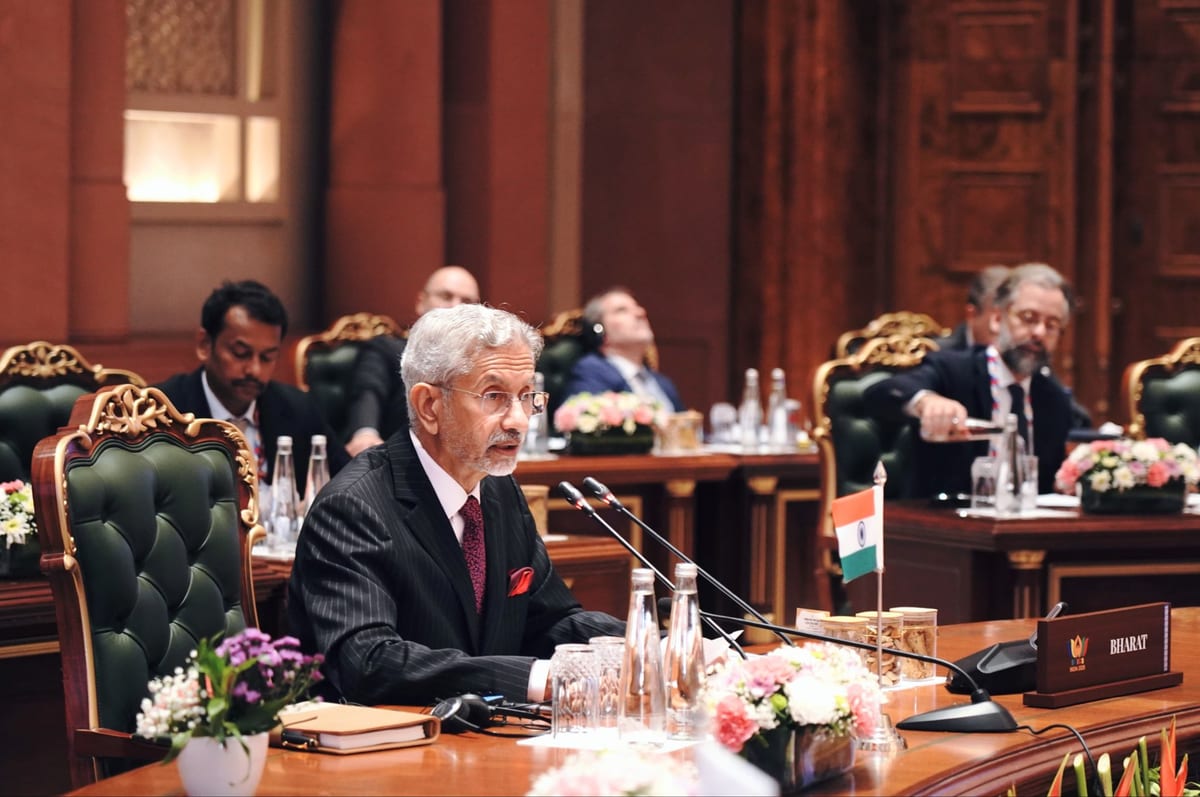
The BRICS foreign ministers' meeting in New Delhi last week reflected India's strategy to institutionalize Global South leadership through concrete multilateral frameworks. The chair's statement from the May 15 meeting shows how India is converting its Voice of Global South initiative from periodic summits into permanent institutional architecture.
Ministers from Brazil, Russia, China, and South Africa endorsed India's 2026 chairship theme of "Building for Resilience, Innovation, Cooperation and Sustainability." The deeper significance lies in how this framework advances India's ambition to position BRICS as the primary alternative to Western-dominated governance structures—the World Bank, IMF, and G7 mechanisms that have shaped global economic policy for eight decades.
Strategic Architecture Beyond Economic Cooperation
The ministers' commitment to "reforming and improving global governance by promoting a more just, equitable, agile, effective, efficient, responsive, representative, legitimate, democratic and accountable international and multilateral system" represents a direct challenge to existing power distributions. The Global South's combined economic weight—nearly 40% of global population and 35% of world GDP through BRICS alone—requires institutional expression.
This approach reflects lessons from India's own rise. The country faced obstacles within Western-led institutions despite growing economic significance; BRICS provides the framework to bypass those constraints. Where the G7 operates through informal coordination among developed economies, BRICS creates formal mechanisms for emerging economy cooperation, including the New Development Bank and the Contingent Reserve Arrangement that offer alternatives to Bretton Woods institutions.
The timing matters. As Western economies grapple with fiscal pressures and political fragmentation, emerging economies show sustained growth and increasing technological capabilities. India's Digital India initiatives, China's Belt and Road infrastructure projects, Brazil's agricultural innovations, and Russia's energy expertise create complementary strengths that traditional North-South development models cannot match.
Multi-Alignment Through Institutional Depth
Critics often frame India's BRICS engagement as balancing between competing power blocs, but this misunderstands India's strategic logic. The country is not choosing between East and West; it is creating institutional alternatives that enhance its negotiating position with all major powers. When India engages with G7 nations, it does so from a position of strengthened multilateral options.
The ministers' reaffirmation of "multipolarity and upholding international law" while respecting "diversity of national systems and development pathways" supports India's strategic autonomy doctrine. Unlike NATO or the European Union, which require convergence around shared political systems, BRICS accommodates different governance models while advancing common economic interests. This flexibility allows India to maintain partnerships with democratic allies while cooperating with authoritarian members on specific issues.
India's approach to BRICS expansion illustrates this thinking. Rather than viewing new members as diluting founding member influence, India sees expansion as extending its institutional reach across additional emerging economies. Each new member strengthens the Global South coalition and creates additional bilateral partnership opportunities for Indian businesses, educational institutions, and technological cooperation.
Civilizational Diplomacy Through Economic Frameworks
The 20th anniversary context mentioned in the chair's statement provides historical perspective on India's BRICS journey. Over two decades, the grouping has evolved from informal dialogue to concrete institutional mechanisms. The New Development Bank has approved over $30 billion in infrastructure financing across member countries, demonstrating that South-South cooperation can generate tangible outcomes without Western intermediation.
India's chairship priorities—resilience, innovation, cooperation, and sustainability—align with its domestic development trajectory and Global South challenges. The country's experience building digital infrastructure across diverse populations, managing climate adaptation while pursuing economic growth, and maintaining democratic governance offers relevant models for other emerging economies.
The emphasis on "cultural and people-to-people exchanges" within BRICS cooperation frameworks reflects India's approach to diplomacy. Unlike Western multilateralism that focuses primarily on economic and security coordination, India integrates cultural dimensions that build deeper partnerships. Lasting cooperation requires shared understanding beyond transactional agreements.
Financial Architecture and Strategic Independence
The ministers' commitment to "extensive consultation, joint contribution and shared benefits" outlines an alternative to Western-dominated decision-making. Within G7 frameworks, emerging economies participate as junior partners or observers; within BRICS, they shape agenda-setting and implementation.
India's leadership advances its vision of a multipolar international system where multiple centers of power check each other's influence. Rather than replacing Western hegemony with Eastern hegemony, India promotes institutional plurality that prevents any single power from dominating global governance.
The practical implications extend beyond diplomacy. BRICS financial mechanisms reduce member countries' dependence on dollar-denominated transactions and Western banking systems. For India, this creates options for trade finance, infrastructure investment, and monetary policy coordination that complement existing partnerships.
As Western institutions face legitimacy challenges due to their response to global financial crises, climate change, and pandemic management, BRICS institutions offer alternatives. The New Development Bank's focus on sustainable infrastructure financing, the Contingent Reserve Arrangement's crisis response mechanisms, and planned digital payment systems create parallel financial architecture that serves member interests.
India's BRICS leadership demonstrates how rising powers can reshape international institutions through patient, systematic cooperation. The New Delhi meeting outcomes position India as the primary architect of Global South institutional alternatives, enhancing the country's influence across multiple spheres. This institutional depth transforms India's international relationships from bilateral dependency to multilateral leadership, supporting its trajectory toward developed nation status by 2047.