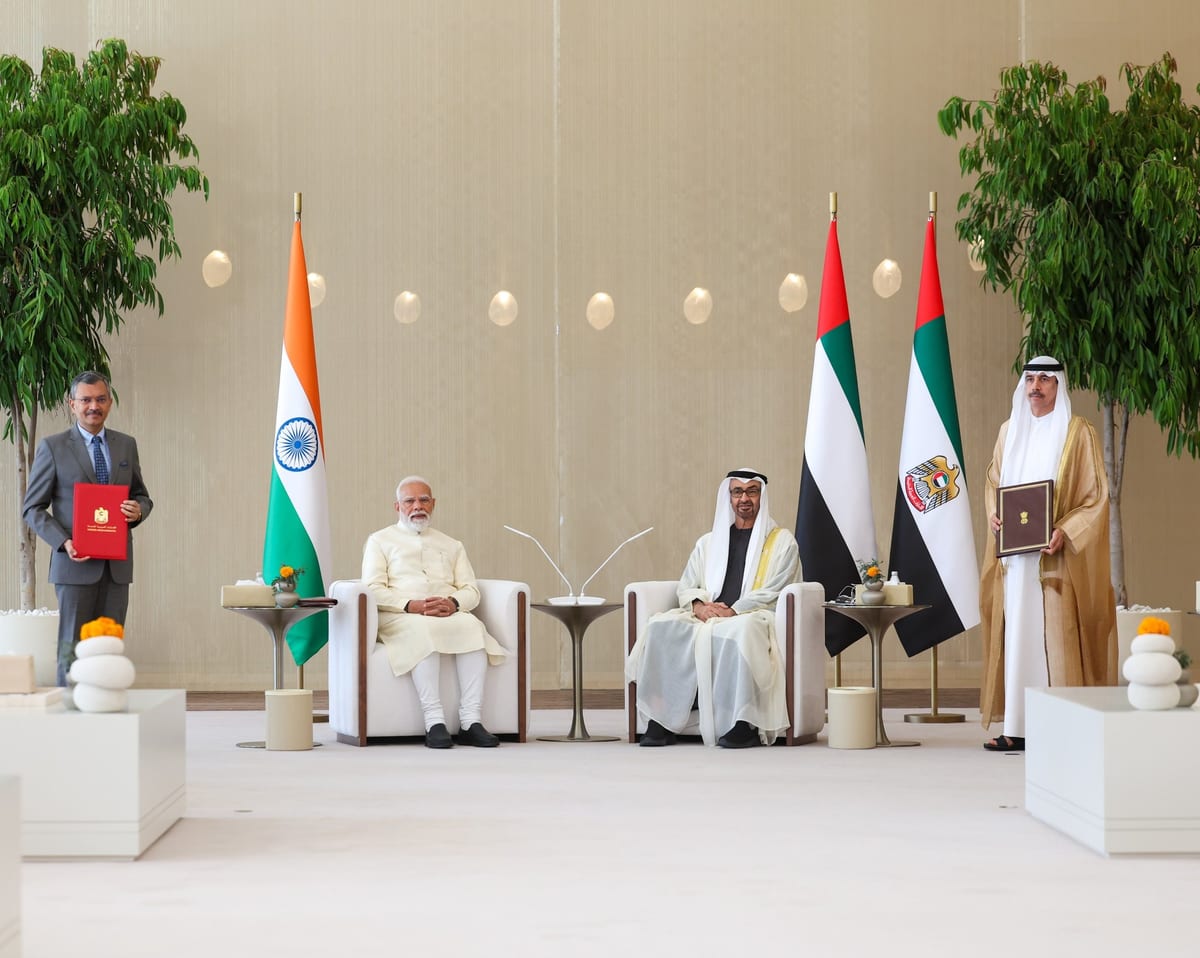
Prime Minister Narendra Modi's visit to the United Arab Emirates in May 2026 delivered a comprehensive framework for India's energy security architecture, anchored by agreements that could store up to 30 million barrels of crude oil and establish strategic defense industrial partnerships. The Ministry of External Affairs released details of seven major agreements and investment commitments spanning energy storage, defense cooperation, and technological advancement.
The centerpiece agreement between Indian Strategic Petroleum Reserves Limited and Abu Dhabi National Oil Company creates multiple storage mechanisms that address India's vulnerabilities in energy supply chains. ADNOC's participation in facilities at Visakhapatnam, Andhra Pradesh, and the development of reserve facilities in Chandikol, Odisha, expands India's strategic buffer capacity. Crude oil stored in Fujairah, UAE, will form part of India's strategic petroleum reserve, creating an offshore energy cushion in the Gulf itself.
Energy Architecture Meets Regional Realities
This storage framework positions reserves both within India and in the UAE, creating redundancy against different categories of disruption. Domestic reserves protect against import interruptions; Gulf-based reserves position energy supplies closer to extraction points while remaining under Indian strategic control.
The liquified petroleum gas collaboration between Indian Oil Limited and ADNOC Gas Limited addresses another critical vulnerability. India's cooking gas requirements make LPG supply continuity a matter of domestic political stability. The long-term supply agreement framework provides predictability in both pricing and availability, reducing volatility in global energy markets.
These energy arrangements show India's evolution from commodity purchasing to building integrated supply chain partnerships. India leverages its market scale to secure preferential access and storage rights rather than remaining a price-taker in global energy markets. The partnership creates mutual dependence that serves both countries' interests — the UAE gains a reliable long-term customer while India gains supply security and strategic depth.
Defense Industrial Collaboration Gains Strategic Dimension
The Strategic Framework for Defence Partnership expands beyond traditional buyer-seller relationships. The framework encompasses defense industrial collaboration, advanced technology transfer, training coordination, and interoperability development. Maritime security cooperation receives particular emphasis, reflecting both countries' interests in Gulf waterways and Indian Ocean trade routes.
The inclusion of cyber defense and secure communications signals recognition that modern security challenges transcend traditional military domains. For India, this partnership provides access to advanced technologies while offering the UAE strategic depth through Indian defense industrial capabilities. The framework allows both countries to develop indigenous capabilities rather than remaining dependent on external suppliers.
The focus on special operations and interoperability suggests coordination beyond procurement to operational integration. Such arrangements typically develop between countries that anticipate potential joint operations or expect to operate in complementary strategic environments.
Shipbuilding Partnerships Target Industrial Self-Reliance
The shipbuilding agreements between Cochin Shipyard Limited and Drydocks World create a foundation for India's maritime industrial ambitions. The ship repair cluster at Vadinar, developed under India's Maritime Development Fund Scheme, addresses a significant gap in India's coastal infrastructure. Currently, Indian vessels requiring major repairs often travel to Singapore or Dubai, creating both economic and strategic vulnerabilities.
The tripartite skill development agreement between Cochin Shipyard, Drydocks World, and the Centre of Excellence in Maritime & Shipbuilding addresses the human capital dimension of industrial development. The framework aims to position India as a hub for skilled shipbuilding and ship repair professionals — a critical component of broader manufacturing ambitions.
These partnerships depart from traditional technology transfer models. Rather than simply licensing foreign technology for domestic production, the agreements create joint capabilities that serve both domestic needs and export potential. The UAE brings advanced offshore fabrication capabilities while India contributes scale and engineering talent.
Technology Partnerships Signal Computing Ambitions
The announcement of an 8 Exaflop supercomputing cluster partnership between CDAC and G-42 positions India in the global race for computational supremacy. This collaboration forms part of AI Mission India, reflecting recognition that artificial intelligence capabilities increasingly determine economic and strategic competitiveness.
Supercomputing capacity serves multiple strategic functions — from weather prediction and climate modeling to defense applications and economic forecasting. The partnership with G-42, a leading UAE artificial intelligence company, provides India access to cutting-edge infrastructure while offering the UAE partnership with one of the world's largest technology markets.
The timing coincides with global concerns about AI development concentrated in a few major powers. The India-UAE collaboration creates an alternative center of AI development that serves both countries' sovereignty interests while contributing to technological multipolarity.
Investment Commitments Reinforce Infrastructure Priorities
The investment announcements, including Abu Dhabi Investment Authority's exploration of up to $1 billion in Indian infrastructure and Emirates NBD's commitment, provide capital for India's infrastructure development priorities. These investments work through established institutional frameworks — ADIA working with India's National Infrastructure & Investment Fund creates professional investment structures rather than ad hoc arrangements.
The scale and institutional character of these investment commitments reflect the UAE's confidence in India's economic trajectory. For India, Gulf capital funds infrastructure development without the political conditions often attached to Western institutional investments. The arrangement serves Indian sovereignty interests while meeting UAE requirements for stable, long-term returns.
Prime Minister Modi's UAE visit demonstrates how India leverages its economic scale and strategic position to build partnerships that advance multiple objectives simultaneously. Energy security, defense industrial development, technological advancement, and infrastructure financing all advance through coordinated agreements rather than isolated transactions. The agreements reflect India's evolution from a reactive participant in global systems to an architect of strategic partnerships that serve its development priorities while contributing to regional stability.