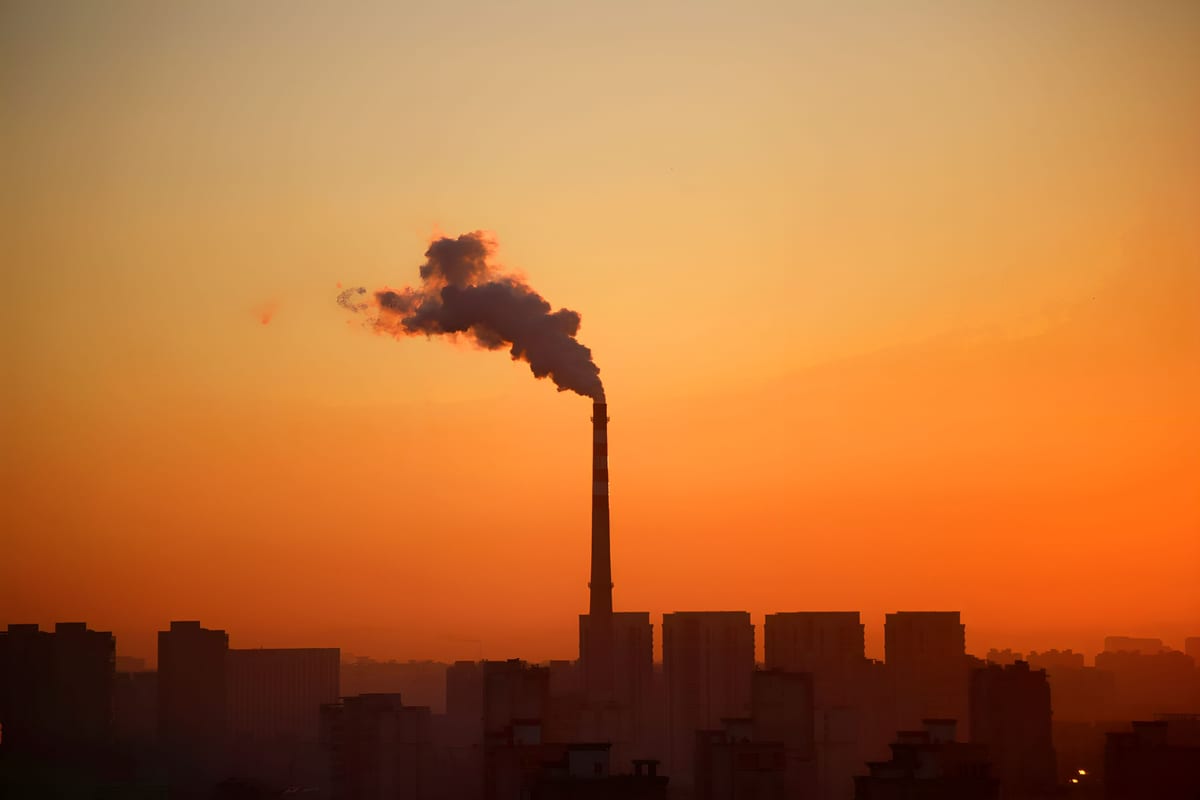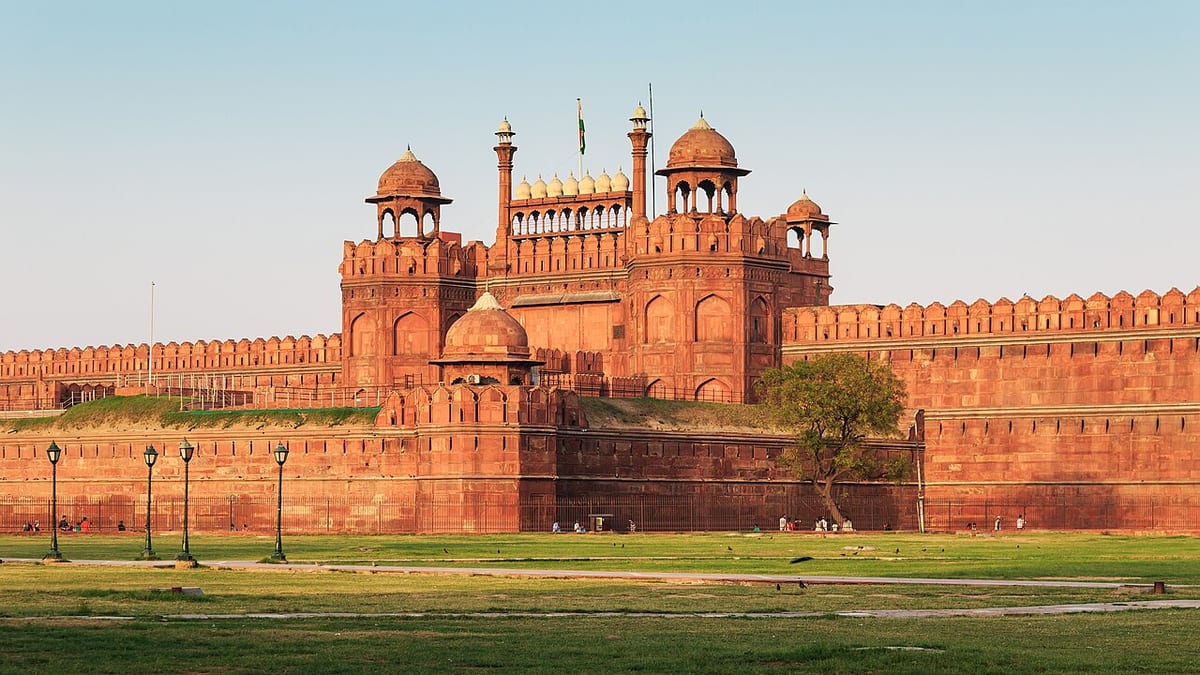
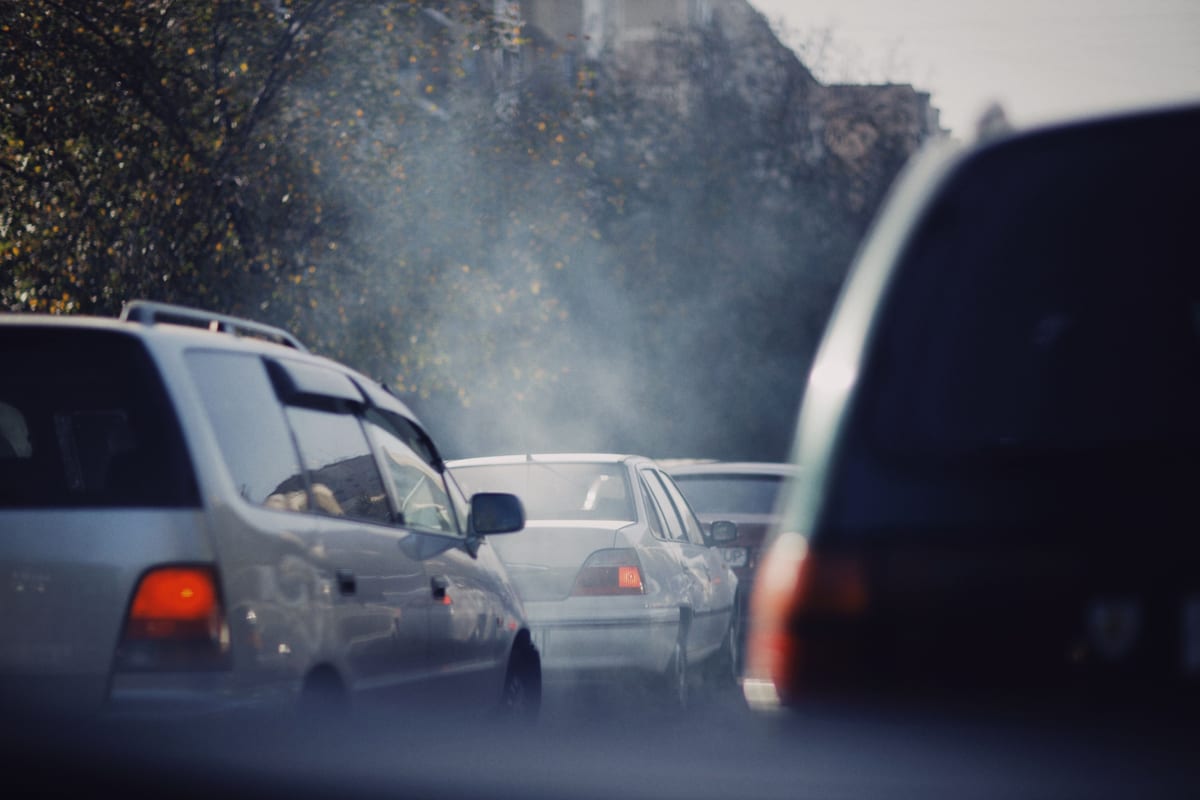
New Delhi: Delhi's air quality moved back into the 'very poor' category on Wednesday, with the citywide Air Quality Index touching 313, NDTV reported. The reading reflects another swing in the capital's late-autumn air, where a single day can shift between 'poor' and 'severe' depending on wind speed, temperature and the mix of local and regional emissions.
"The transport sector is expected to be the largest contributor to pollution on Wednesday, while the impact of stubble burning is anticipated to increase on Thursday, potentially worsening air quality further over the next few days, according to Indian Institute of Tropical Meteorology models."
India Today, tracking station-level data, reported a marginal improvement later in the day with an AQI of 299, though 28 monitoring stations still sat in the 'very poor' band. The gap between the two readings reflects both timing and the uneven geography of the capital's monitoring network.
The uneven geography matters. Delhi's monitors are not evenly distributed across income and density. A citywide average of 313 can hide stations where the AQI already exceeds 350 in industrial and traffic-heavy corridors. Policymakers who read only the average will under-protect millions who breathe the worst air.
The reading also follows a Diwali week that NDTV reported turned 'very poor' and was forecast to turn 'severe' the next day, as firecrackers, vehicular emissions and peak crop-residue burning converged. That convergence has not dissipated; it has rearranged itself.
The pattern is not unique to Delhi. NDTV reported that Chennai's air quality also crossed 300 during Diwali, with Valasaravakkam, Nungambakkam and Sowcarpet posting some of the highest readings. Coastal cities were once thought to disperse pollution faster; this Diwali showed even they are vulnerable when local emissions spike.
Transport first, stubble second
The IITM forecast puts road transport ahead of farm fires on Wednesday. That is useful precision. Delhi's winter pollution conversation tends to collapse into a single image: stubble burning in Punjab and Haryana. The model resists that flattening. On Wednesday, the dominant source is the city's own vehicles.
This matters for policy. If vehicles are the largest contributor on a day when the base AQI is already 313, any response that starts and ends with farm fires will underperform. The Graded Response Action Plan has levers for transport: restricting private vehicle movement, expanding public transport frequency, tightening entry rules for polluting trucks. Those levers work only if activated early and enforced across all NCR border points, not just at Delhi's perimeter.
The GRAP arithmetic
At 'very poor' levels, the GRAP framework triggers a set of restrictions. The Commission for Air Quality Management in NCR is the coordinating body. The recurring pattern is one of uneven enforcement across jurisdictions. One state restricts construction, another pauses diesel gensets, a third continues its industrial operations. The airshed does not respect those boundaries.
Anumita Roychowdhury at the Centre for Science and Environment has long argued that Delhi's clean fuel and vehicle policies are undermined by unaddressed freight and two-wheeler emissions. The IITM transport finding strengthens that case. Freight vehicles entering Delhi at night and two-wheelers running on older emission standards remain large parts of the transport pollution load. They seldom receive the same scrutiny as private cars during pollution emergencies.
Stubble burning enters the equation
The model's second warning concerns Thursday. Stubble burning impact is set to increase. This points toward Punjab and Haryana, where paddy straw management remains a seasonal flashpoint. Support for ex-situ procurement and bio-decomposer spraying exists, but district-level accountability is uneven. When the wind shifts, smoke arrives in the middle of Delhi's commuting hours and settles into the shallow winter boundary layer.
What gets less attention is the overlap. A city already saturated by its own transport emissions has little residual capacity to absorb an external plume. Delhi's AQI does not rise in a straight line from Wednesday to Thursday; it compounds. Wednesday's transport baseline becomes the floor from which stubble burning pushes the city toward 'severe'.
The health and economic ledger
Very poor air changes how the city works. Schools curtail outdoor activity, clinics see a rise in respiratory complaints, and workers who earn daily wages lose days. The health cost sits with outdoor labourers, delivery riders and children in neighbourhoods closest to highways and freight corridors. Those are the same populations least able to shift work indoors or buy air purifiers.
The economic arithmetic is equally unequitable. Each 'severe' day disrupts flights, slows delivery logistics, and keeps children home from school. These losses show up in cancelled contracts and longer commutes. For an economy that wants to position Delhi as a global capital, a predictable November pollution spike is a self-imposed tax on its own administrative heart.
An airshed, not a city
The geography of Wednesday's readings across NCR reinforces what repeated episodes have shown. Haryana, Uttar Pradesh and Delhi draw from the same airshed. A patchwork of city-wise responses cannot bend a regional curve. Airshed-level planning requires Delhi, Haryana, Uttar Pradesh and Rajasthan to align transport electrification, industrial zoning and land-use decisions. On paper, the institutions exist. On the ground, they meet when the AQI has already crossed 300.
The Commission for Air Quality Management and state pollution control boards publish action-taken reports. The weakness is not information scarcity; it is coordination speed. A transport-dominant Wednesday and a stubble-heavy Thursday require two different responses from two different jurisdictions. The current machinery too often produces one generalised advisory for the whole week.
The two-day window
Delhi's recurring winter crisis is a governance stress test, and IITM has just handed the system a two-day early warning. That is enough time to intensify road sweeping, water sprinkling on dust-prone stretches, and public transport frequency before stubble burning peaks. It is also enough time for Haryana and Punjab to verify which stubble-burning hotspots are active and whether bio-decomposer application actually reached the fields where burning is most likely.
The longer-term fix is more prosaic. Electrification of Delhi's bus fleet and freight corridors, tighter entry controls for old commercial vehicles, and regional land-use planning that does not spread concrete over every wind corridor. These are not dramatic interventions. They are the administrative work that determines whether an AQI of 313 is a bad day or the start of a bad fortnight.
The question for the national capital is whether a forecast this specific can change behaviour before the crisis deepens. Delhi has lived through enough Novembers to know the answer. What remains uncertain is whether the institutions that share the airshed will treat Thursday's stubble surge as a predictable event, not an emergency to be discovered at sunrise.