Sirsa in Haryana recorded an air quality index of 403 at 7.05 am on Wednesday, placing the district in the severe category while Delhi logged 299 in the poor band, according to the Central Pollution Control Board's SAMEER application. Sirsa was the most polluted among northern cities tracked that morning. LiveMint reported the figures from the official mobile application developed by the CPCB.
Hisar in Haryana ranked second with an AQI of 377, followed by Baghpat in Uttar Pradesh at 342 and Panchgaon in Haryana at 340. Bhiwani recorded 335; Ballabhgarh registered 323. Anpara in Uttar Pradesh was at 318, Karnal at 313, and Baraut and Bulandshahar at 311. Highly polluted cities were scattered across Haryana, Uttar Pradesh, and Delhi, a regional pattern driven by weather and crop burning rather than urban boundaries alone.
The CPCB categories give the numbers their meaning. An AQI from 0 to 50 is good; 51 to 100 satisfactory; 101 to 200 moderate; 201 to 300 poor; 301 to 400 very poor; and 401 to 500 severe. Sirsa's 403 sits three points into severe, a zone where even healthy people may experience respiratory effects and those with existing health conditions face more serious impacts. Delhi's 299 sits near the top of poor, which may cause breathing discomfort with prolonged exposure, particularly for those with respiratory conditions. The gap between the two readings is small numerically but large in regulatory consequence; one triggers emergency language, the other does not.
That distinction matters because the Graded Response Action Plan links specific restrictions to air quality thresholds. Stage 3 bans certain older BS-III petrol and BS-IV diesel or below-emission-standard four-wheelers in Delhi and specified NCR districts, prohibits dust-generating construction and demolition across the NCR, and restricts specified diesel goods vehicles. The legal perimeter of those controls is the National Capital Region; the atmospheric perimeter is wider. Sirsa's severe reading falls outside the strictest enforcement zone even as the same weather system pushes its particulate matter toward the capital. The question Wednesday posed is not whether Delhi will worsen, but whether Haryana's towns are governed by the same urgency that closes Delhi's construction sites.
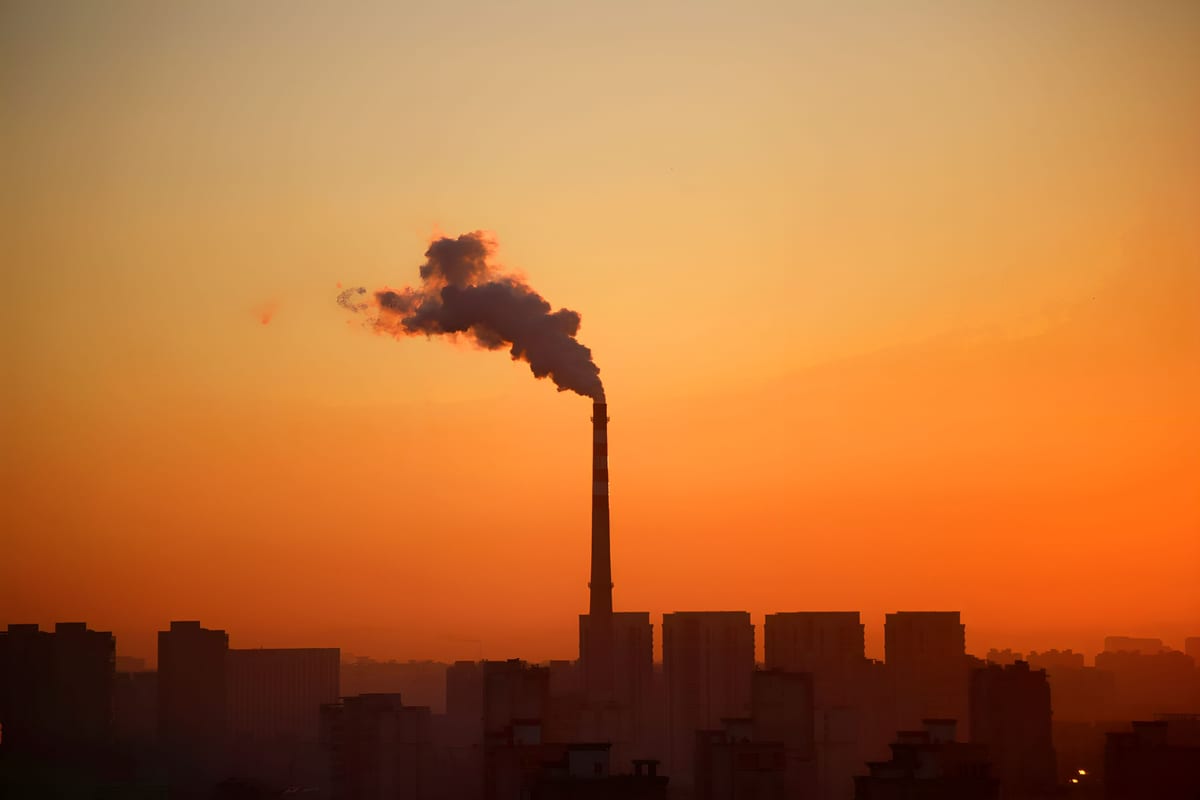
At the Akshardham flyover in Delhi, the temple was barely visible behind a thick blanket of haze, NDTV reported, and residents described struggling to run a kilometre. The haze was dense enough to erase landmarks from a short distance. But the visual spectacle matters less than the exposure. The severe category means effects are not limited to sensitive groups; healthy adults inhaling that air for hours face measurable stress on the respiratory system. For daily-wage workers, construction labourers, traffic police, and children walking to school in Sirsa and Hisar, a 403 reading has immediate consequences.
The autumn spike is associated with paddy residue burning across Haryana and western Uttar Pradesh, followed by secondary particulate formation as pollution travels and mixes with urban emissions from vehicles, industry, and dust. This is an airshed problem, not a city problem. When the highest reading appears in Sirsa rather than central Delhi, the policy reflex that concentrates enforcement inside the capital appears misaligned. The atmosphere does not recognise state borders; neither should the regulatory architecture that manages it.
That architecture has been moving toward an airshed model. The statutory framework for the National Capital Region already coordinates restrictions across Delhi and adjoining districts, and the graded response plan gives it legal force when thresholds are crossed. Wednesday's readings expose a gap between the map of authority and the map of pollution. Sirsa and Hisar sit in Haryana's grain belt; much of the region's autumn particulate load originates there. Yet the strongest emergency powers are written for the NCR's perimeter, leaving the source districts to rely on state-level enforcement that has been uneven. The institutional challenge is to extend binding compliance across the full Haryana-Delhi-UP airshed without waiting for the wind to deliver evidence into Delhi's monitoring stations.
State-level enforcement remains the weakest link in that federal design. Haryana's towns have pollution control machinery, but the incentives to shut down construction or divert diesel traffic are weaker when the AQI spike is treated as a Delhi problem. The federal airshed model begins to correct this by setting common thresholds and common penalties; it lacks a common enforcement cadre or a central finance lever that ties state compliance to measurable particulate reduction. Without that linkage, Sirsa can record 403 while the capital's graded response plan remains the only instrument anyone is watching.
At severe levels, even healthy people may experience respiratory effects, according to the CPCB's health advisory; those with existing heart or lung conditions face more serious impacts. These are not rare vulnerabilities. The Indo-Gangetic plain holds some of the world's highest ambient particulate concentrations, and the exposed population runs into the hundreds of millions. Each severe day compounds the burden on outpatient departments, schools, and households. The economic drag from reduced labour productivity and higher healthcare spending is most acute for outdoor workers who cannot choose remote work or air filtration.
The detail worth carrying from Wednesday morning is not that Delhi's air was poor; it is that Sirsa's was severe and that the worst readings were scattered across three states. Until the regulatory perimeter matches the atmospheric one, the AQI map will keep producing these outliers. The policy question is whether India's air-quality governance can treat Sirsa's 403 with the same seriousness as a future 403 in the capital; the health of millions in the corridor depends on the answer.