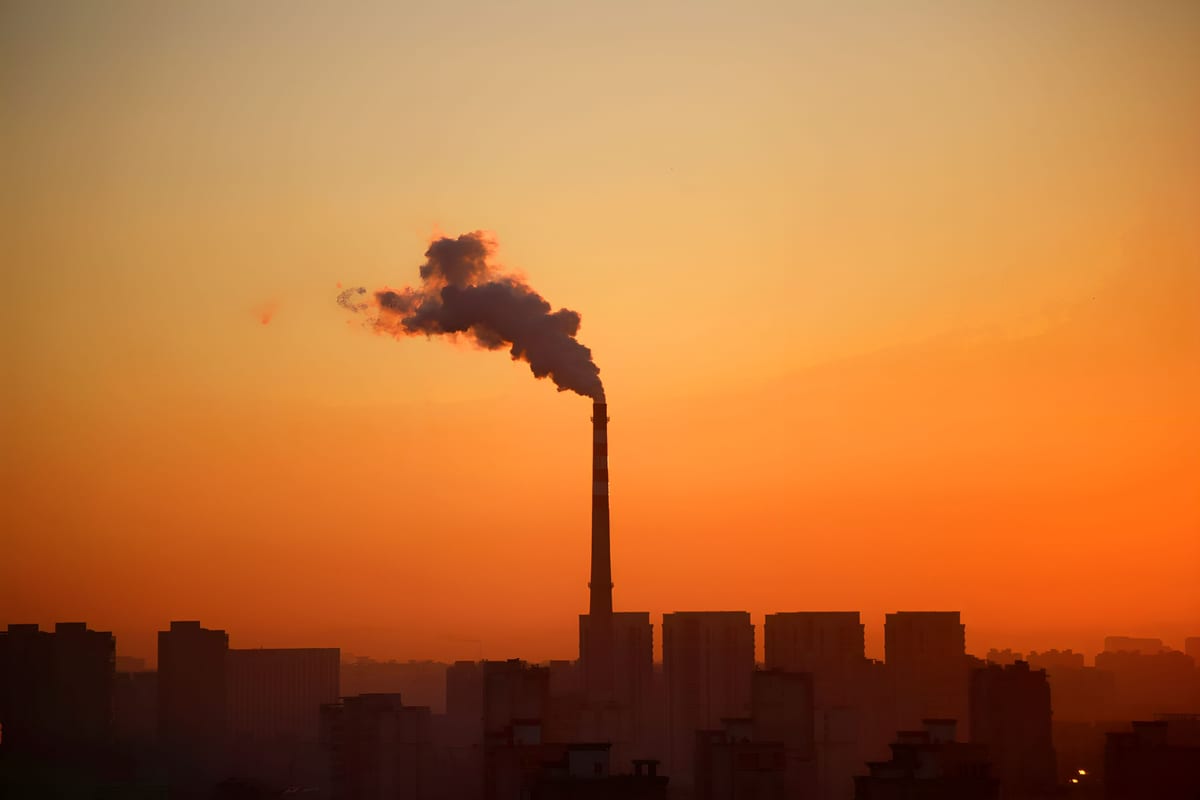
Delhi's air quality index held at 311 early Tuesday, keeping the capital in the "very poor" category, according to the Commission for Air Quality Management (CQAM). The reading was 344 at 4 pm on Monday, down from 376 at the same hour on Diwali day.
The India Meteorological Department (IMD) forecast isolated heavy rainfall over Tamil Nadu on 10 November; over the Andaman and Nicobar Islands from 10 to 14 November; over Nagaland, Manipur, Mizoram and Tripura on 11 November. The weather office also expects isolated heavy rainfall or snowfall in parts of the Kashmir Valley on 12 and 13 November under the influence of a Western Disturbance.
The warnings follow days of turbulent weather across southern India as the remnants of Cyclone Murasu moved inland, according to LiveMint.
Delhi's air quality
The IMD forecast a partly cloudy sky for Delhi with moderate fog in the morning. Maximum temperatures are likely to reach 27°C to 29°C; minimum 14°C to 16°C. The maximum will run below normal by 1.6 to 3.0 degrees Celsius at most places.
"Partly cloudy sky. Moderate fog at most places in the morning hours. The maximum and minimum temperatures over Delhi are likely to be in the range of 27°C to 29°C and 14°C to 16°C, respectively."
The CQAM reading of 311 early Tuesday differed from the Central Pollution Control Board's figure of 258 recorded earlier. The difference reflects variations in monitoring network coverage, data availability and measurement parameters. The India Today report notes no significant rain is forecast for Delhi until 15 November; the pollution load is unlikely to be washed out soon.
When two government agencies publish different numbers for the same city on the same morning, the public health message fractures. A parent deciding whether to send a child to school reads "very poor" as a stronger signal than "poor"; a physician treating asthma uses it to judge the day's caseload. The IMD's weather briefings are unambiguous; state governments read them as orders for preparation.
Southern and Himalayan alerts
In the south, the IMD's heavy rainfall warnings cover Tamil Nadu on 10 November, with additional alerts for parts of Odisha and Andhra Pradesh as the remnants of Cyclone Murasu continue to churn inland. Kerala has also been placed under a heavy rainfall watch in subsequent days. The Andaman and Nicobar Islands will see isolated heavy rain through 14 November.
Cyclone Murasu's remnants do not stay in one state. Moisture from the Bay of Bengal that floods Chennai's drains can stall highway traffic in Andhra and soak paddy fields in Odisha. The IMD's regional alerts track a single system moving across the peninsula; each district must read its own warning in that larger frame.
In the north, the Western Disturbance is expected to bring scattered to fairly widespread rainfall and snowfall over the Western Himalayan Region. Kashmir Valley will see isolated heavy precipitation on 12 and 13 November. These alerts matter for road connectivity and for orchards and winter crops in the higher reaches.
The practical stakes
An AQI of 311 means children in Delhi schools breathe air that makes outdoor play a respiratory risk; it means the elderly and those with asthma measure the day by whether they can risk a walk. The gap between official and private monitoring data reflects a city that has not settled on a single, trusted way to tell its residents how bad the air is.
The rainfall alerts carry their own weight. Tamil Nadu's farmers are in the middle of the agricultural cycle; heavy rain in November can flatten standing crops, delay harvesting of paddy, and turn district roads into mud. The IMD's bulletins give state disaster authorities their trigger for action, but the difference between warning and preparedness is local drainage, embankment maintenance, and the speed at which power lines are repaired.
India's clean-air effort has stalled on familiar obstacles. Seasonal farm fires upwind of the capital, construction dust, and a vehicle fleet still running on diesel combine each winter into the same haze. The institutional response has leaned toward school closures and ad hoc restrictions. The harder task is enforcing dust controls on every construction site, shifting freight off diesel, and giving farmers a viable alternative to burning stubble. No weather bulletin solves that.
Delhi's air quality action plan remains seasonally reactive. Stubble burning in Punjab and Haryana peaks in early November; construction dust rises with every road repair; the transport switch to cleaner fuels advances slowly. Each of these has a ministry, a scheme, a nodal officer. What the winter haze exposes is the gap between owning a programme and delivering clean air.
The week ahead
Delhi will watch the sky for a change that the IMD does not expect before 15 November. Tamil Nadu, the Andamans, and the northeastern states will watch the rivers and drains. One story is a slow accumulation of pollutants in a winter inversion; the other a fast-moving mass of moisture. Both require public institutions that can turn a forecast into protection, not just a warning.